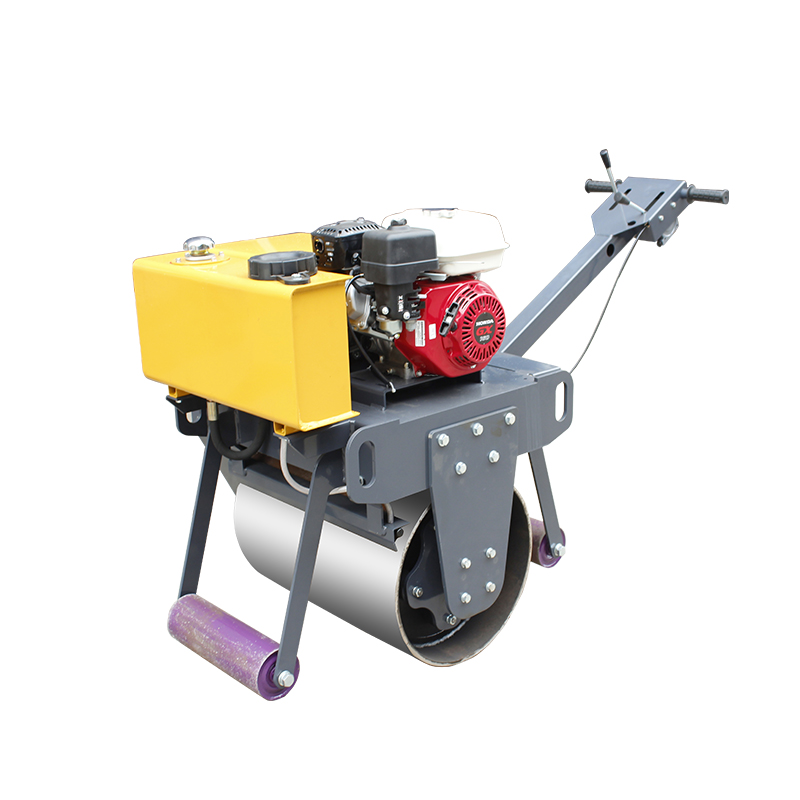
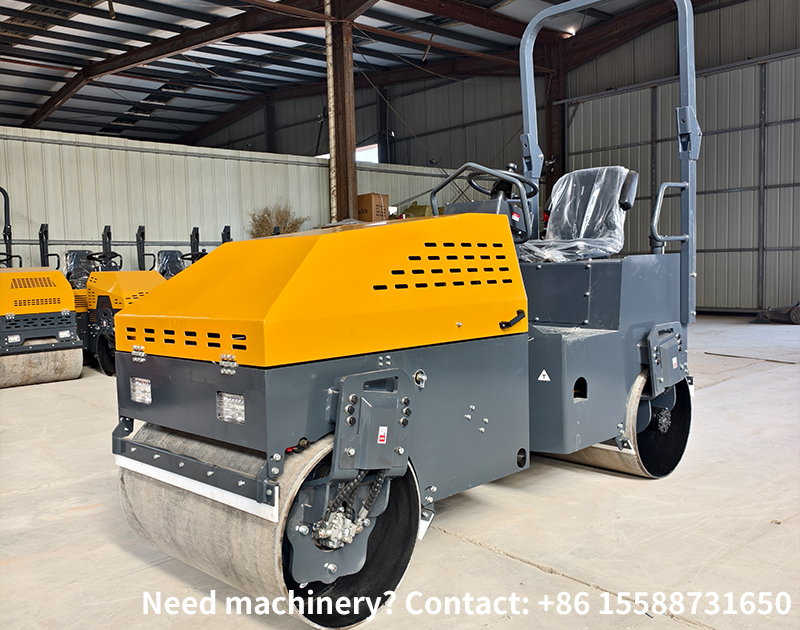
When vibratory rollers carry out compaction operations on steep slopes, the core principles are "stable speed, downhill/ uphill alignment, slip prevention, and vibration control". It is necessary to adjust the operation process according to the slope gradient and implement comprehensive safety protection measures. The specific key points are as follows:
Prioritize the use of large-tonnage, high-adhesion vibratory rollers (such as models equipped with anti-skid tires or padfoot steel drums) and avoid using lightweight rollers. Inspect the performance of the braking system, steering system, and shock absorbers to ensure sensitive braking and smooth steering; for articulated rollers, tighten the hinge point bolts.
Survey the steep slope conditions in advance: when the slope gradient exceeds 15°, vibratory compaction is strictly prohibited (as it may easily cause machine slippage), and static compaction mode should be adopted instead. When the slope gradient is ≤ 15°, the vibration function can be activated, but compaction parameters must be verified through a test section first.
Pre-treat the steep slope section: Remove loose soil and gravel on the slope surface and fill in potholes. If the moisture content of the slope filler is too high, perform static compaction 1–2 times first to stabilize the surface layer, so as to avoid "springy soil" or slippage during rolling.
Travel direction: The roller must travel uphill and downhill along the slope direction; transverse rolling (i.e., traveling horizontally along the slope surface) is strictly prohibited to prevent rollover caused by center-of-gravity shift. Maintain straight-line travel when going uphill or downhill, and avoid driving on curves.
Speed and vibration control: Use the low-speed gear throughout the operation, with the travel speed controlled at 1–2 km/h. Shifting gears or sudden acceleration/deceleration is strictly prohibited. When going uphill, first travel to the top of the slope in static mode, then activate the vibration function for downhill rolling (utilize the machine's dead weight to assist compaction and improve adhesion). When going downhill, coasting in neutral gear is strictly prohibited; engage the low-speed gear and lightly press the brake pedal to control the speed.
Rolling sequence and overlap width: Steep slope rolling shall follow the principle of "layered compaction from bottom to top", advancing from the slope toe to the slope top. The loose laying thickness of each layer should be reduced by 10%–20% compared with that on flat ground (generally not exceeding 20 cm). The overlap width of adjacent rolling strips should be increased to 1/2 of the wheel width to avoid missed compaction at the edges. The number of rolling passes should be increased by 1–2 times compared with that on flat ground to ensure uniform compaction degree.
Steering and U-turn: Steering or U-turning in the middle of a steep slope is strictly prohibited. The roller must be driven to an open area at the top or toe of the slope to complete steering on flat ground. Before making a U-turn, turn off the vibration function and operate the steering mechanism slowly to avoid sharp turns.
Uphill compaction: Prioritize static compaction; if necessary, activate the high-frequency low-amplitude vibration mode to reduce the impact of excitation force on the slope surface and prevent filler sliding. The low-frequency high-amplitude vibration mode is strictly prohibited (as it may easily loosen the surface aggregates).
Downhill compaction: The high-frequency low-amplitude vibration mode can be activated, utilizing the synergistic effect of the machine's dead weight and vibration to improve compaction efficiency. However, the speed must be controlled throughout the process to avoid increased slip risk caused by machine jolting from vibration.
3–5m area near the slope top/toe: Turn off the vibration function and switch to static compaction for surface finishing to prevent collapse of edge filler due to vibration impact.
Set up safety warning zones at both the top and toe of the steep slope, isolate the area with warning cones or warning lines, and prohibit entry of non-construction personnel and equipment. Install anti-collision retaining walls or buffer sandbags at the slope toe to prevent the roller from impacting other facilities if it slides out of control.
Install guardrails or anti-skid tooth grooves at the slope edges to reinforce slope stability. If there is an overhanging surface on the slope, lay anti-skid steel plates or geogrids on the overhanging side to improve pavement adhesion.
The driver must fasten the seat belt, maintain a stable sitting posture throughout the operation, and is strictly prohibited from leaning out of the window to observe. When working on steep slopes, keep eyes fixed on the slope surface ahead and avoid distractions.
Assign a dedicated commander, who shall stand in a safe area at the top or toe of the slope and communicate with the driver via walkie-talkies or standard hand signals. Standing near the slope surface to direct the work is prohibited.
Parking the roller on a steep slope is strictly prohibited. If temporary parking is required, the roller must be driven to a flat area, the handbrake must be engaged, triangular anti-skid wedges must be placed under the wheels, and the engine must be turned off.
If the roller slips slightly, immediately turn off the vibration function, slowly press the brake pedal (sudden braking is strictly prohibited), straighten the steering wheel at the same time, and drive slowly to the flat area at the slope toe. Do not force continued compaction.
If the machine tilts and is at risk of rollover, the driver must not jump off the machine. Instead, grip the steering wheel firmly, reduce the speed slowly, and try to drive the machine to an area with a gentler slope. If the machine cannot be controlled, call for help via walkie-talkie in a timely manner and wait for professional rescue.
If slope collapse occurs during rolling, stop the machine immediately and reverse to evacuate to a safe area. Resume operations only after the slope has been reinforced.
It is strictly prohibited to shift gears, apply sudden braking, or make sharp turns on steep slopes.
It is strictly prohibited to operate the roller overloaded or attach heavy objects to the machine body.
Suspend steep slope compaction operations in rainy, snowy, or slippery slope conditions.


 英文
英文