
 Chinese
- HOME >> NEWS >> Company news
NEWS
Latest Product
Contact Us
What Are the Differences in the Application Scenarios of Single-drum Rollers and Double-drum Rollers?
2026-01-22The differences in the application scenarios between single-drum rollers and double-drum rollers stem from the disparities in their wheel structure and compaction characteristics. They correspond to the subgrade & base course stage and the asphalt surface course stage of road construction respectively. The specific differences are as follows:
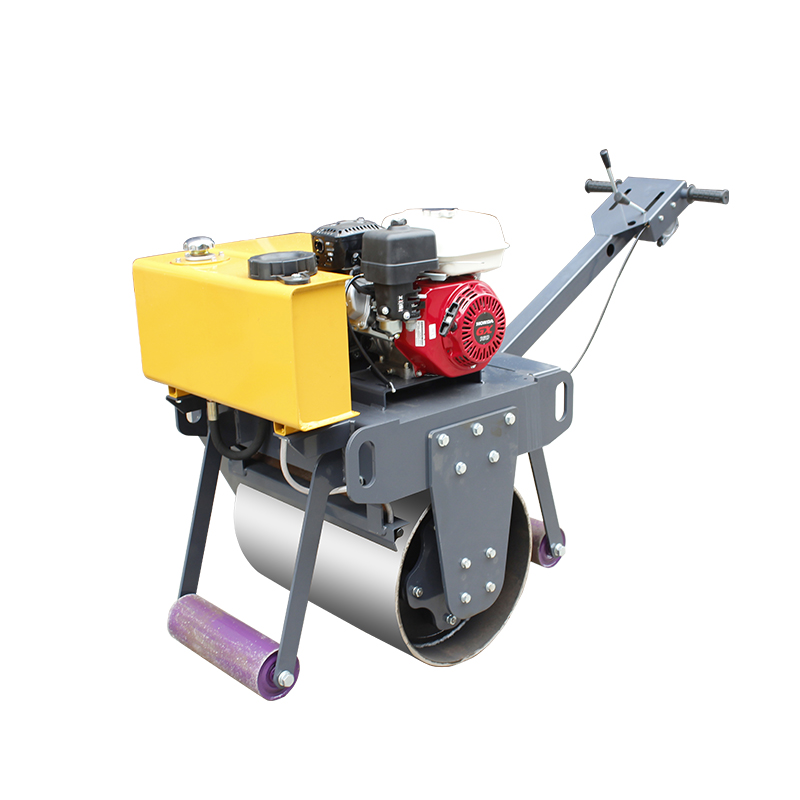
Application Scenarios of Single-drum Rollers
Core Operation Stage: Compaction of subgrades and base courses in road construction; it is the basic compaction equipment before pavement shaping.
Suitable Materials: Rigid and loose materials such as plain soil, silty clay, earth-rock mixture, cement-stabilized soil, and graded crushed stone.
Typical Application Scenarios
Compaction of subgrade fills for expressways and municipal roads: It uses high excitation force to achieve deep soil densification and reduce post-construction settlement.
Foundation compaction for water conservancy dams and airport runways: It meets the compaction requirements of large-thickness fills.
Base course crushed stone compaction for factory areas and parking lots: It provides a stable foundation for subsequent surface course construction.
Reason for Scenario Adaptability: The front wheel of a single-drum roller is a large-diameter solid steel drum with high excitation force and deep compaction depth, which can effectively eliminate the gaps between particles of loose materials. The rear wheels are mostly rubber tires, which can enhance the traction of the equipment and adapt to the uneven subgrade working environment.
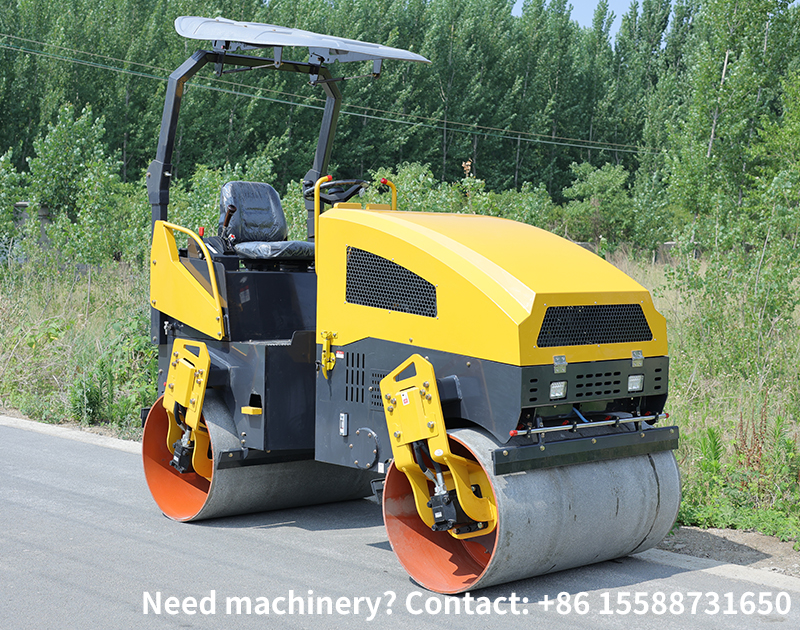
Application Scenarios of Double-drum Rollers
Core Operation Stage: Compaction of asphalt concrete surface courses in road construction; it is the key equipment for pavement shaping.
Suitable Materials: Viscous and thermoplastic materials such as hot-mix asphalt mixture and modified asphalt mixture.
Typical Application Scenarios
The entire process of initial, intermediate and final compaction of asphalt surface courses for expressways and urban arterial roads: especially in the final compaction stage, the static rolling mode can be adopted to improve pavement flatness.
Compaction of colored asphalt pavements for residential roads and pedestrian streets: it avoids damaging the color and structure of aggregates during the rolling process.
Asphalt compaction for bridge deck pavements: due to the uniform weight distribution of the equipment, it can prevent damage to the bridge deck structure.
Reason for Scenario Adaptability: Both the front and rear wheels of a double-drum roller are steel drums, which have a high wheel track overlap rate during rolling to ensure pavement flatness. Most models are equipped with water sprinkler devices to prevent asphalt from sticking to the wheels, and can adjust vibration frequency and amplitude to meet the requirements of different rolling stages of asphalt surface courses.
Scenario Complementarity Between the Two
In the construction process of a complete road, single-drum rollers are usually used first to compact the subgrade and base course, and then double-drum rollers are adopted to compact the asphalt surface course. The combination of the two achieves the construction goal of stable foundation + smooth surface.