

 Chinese
- HOME >> NEWS >> Company news
NEWS
Latest Product
Contact Us
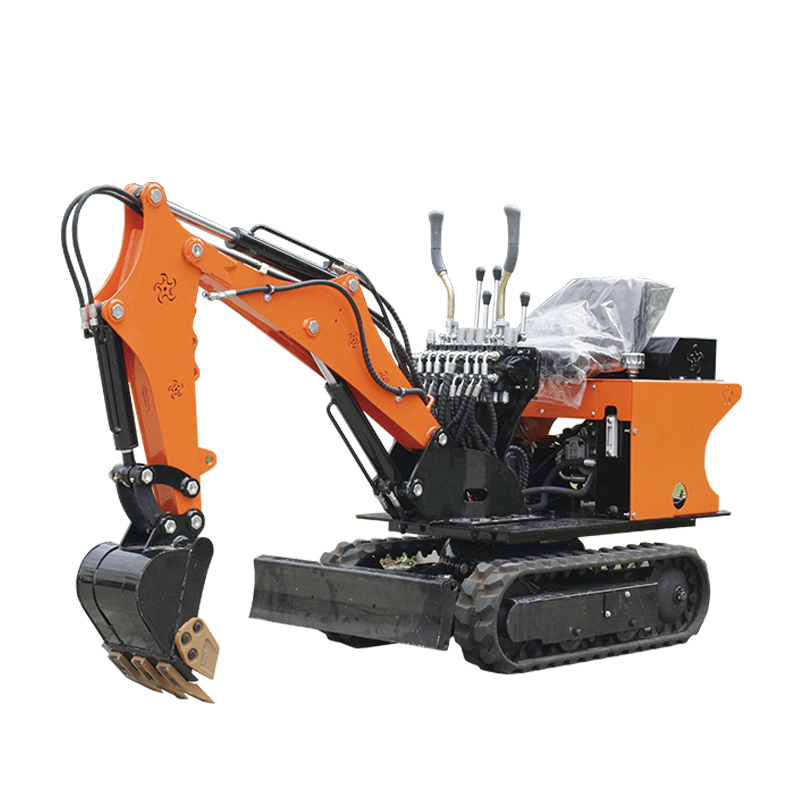
Adaptable Complex Terrain Types and Operational Advantages of Crawler Excavators
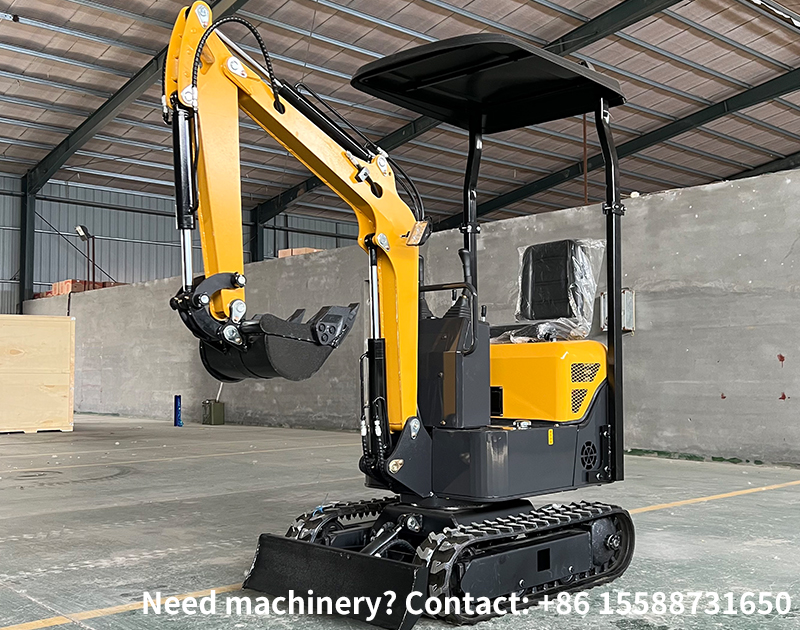
2026-01-29Relying on the core design advantages of low ground contact pressure, strong ground adhesion, and high body stability, crawler excavators have become the core equipment for complex terrain operations in projects such as mining and infrastructure construction. They are suitable for most operating scenarios with unhardened pavement and harsh topographical conditions. Compared with wheeled excavators, they offer an all-round edge in operational feasibility, efficiency and safety in complex terrain. The specific adaptable terrain types and corresponding operational advantages are as follows:
I. Core Adaptable Complex Terrain Types for Crawler Excavators
Soft and muddy terrain: Areas with high soil moisture content and poor ground bearing capacity such as paddy fields, wetlands, silt land, muddy marshes after rain, and river shoals—one of the core applicable scenarios for crawler excavators.
Loose sandy terrain: Areas prone to subsidence and skidding such as desert fringes, sand yards, river beach sand land, and sand layer operation areas in open-pit mines.
Mountain and sloped terrain: Areas with obvious slopes and large topographical undulations such as hilly mountains, foundation pit slopes, mine waste dumps, and road slopes, including gentle slopes, steep slopes (within the compliant operating slope range) and uneven mountain operation surfaces.
Rock and mixed stone terrain: Areas with a large amount of crushed stone, boulders and hard ground such as open-pit mine stope, rock foundation pits, mountain rock excavation sites, and construction waste landfills.
Rutted and uneven terrain: Areas with large height differences and no fixed operation surfaces such as unleveled construction sites, demolition ruins, and temporary construction operation areas.
Slippery and muddy steep terrain: Composite complex terrain with both slope and slippery characteristics such as mountainous areas in rainy seasons, reservoir banks, and slope maintenance sites.
II. Core Operational Advantages for Different Complex Terrain Types
All advantages of crawler excavators revolve around the crawler travel system. The crawlers adopt a design of multi-link tracks and wide track shoes, combined with an all-metal rigid chassis, solving the operational pain points of complex terrain from three core dimensions: ground contact characteristics, adhesion, and stability. The specific advantages for different terrain types are as follows:
Soft ground / Sandy terrain: Anti-subsidence, ensuring operational feasibility
The core advantage is low ground contact pressure. The crawlers distribute the excavator's self-weight over a larger ground contact area, significantly reducing the unit pressure on the ground (the ground contact pressure of conventional small crawler excavators can be as low as 0.08-0.15MPa, far lower than that of wheeled excavators), thus avoiding body subsidence. At the same time, the anti-skid patterns on the track shoes enhance the engagement with soft ground/sandy soil, preventing skidding during travel and achieving "accessibility, mobility and operability"—a feat wheeled excavators cannot accomplish, as they are prone to getting stuck and unable to move normally in such terrain.
Mountain and sloped terrain: Strong adhesion + high stability, ensuring operational safety
First, the surface contact between crawlers and the ground provides far greater adhesion than the point contact of wheeled excavators, making it less likely to skid when climbing slopes. Conventional crawler excavators can climb slopes of 30°-45° in compliant operations, a far higher range than wheeled excavators. Second, the crawler chassis features high rigidity, and the excavator has a low center of gravity combined with a large ground contact area, which drastically reduces the risk of rollover during sloped operation and enables operations such as sloped excavation and slope maintenance. In contrast, wheeled excavators are prone to rollover on slopes and can only operate on flat slopes with small gradients.
Rock / Mixed stone terrain: Impact and wear resistance, adapting to harsh operation surfaces
The crawler travel system is constructed with high-strength manganese steel track links, track shoes, and thickened support rollers/carrier rollers, boasting strong impact and wear resistance. It can walk and operate directly on crushed stone and boulder-covered ground without the risk of tires being punctured or scratched by sharp stones— a common issue for wheeled excavators. Additionally, the crawler chassis has excellent anti-jolting performance, ensuring the stability of excavation movements on uneven rock operation surfaces and avoiding reduced excavation accuracy caused by body shaking.
Rutted / Ruin terrain: High trafficability, adapting to non-fixed operation surfaces
The flexible travel characteristics of crawlers (articulated multi-section track links) allow adaptation to ground height differences, enabling the crossing of small trenches and ruin debris and flexible movement in areas with no leveled operation surfaces. Wheeled excavators, however, have high requirements for ground flatness; their tires are prone to getting stuck in rutted terrain, making normal movement impossible and limiting their operational range.
Composite complex terrain (slippery steep slopes / muddy and rutted ground): Comprehensive adaptability, improving operational efficiency
Combining the triple advantages of low ground contact pressure, strong adhesion and high stability, crawler excavators can directly access the operation surface in composite complex terrain without additional auxiliary facilities such as steel plate or crushed stone bedding, reducing construction preparation time. Moreover, travel and excavation movements do not interfere with each other, and there is no need to adjust the body center of gravity when moving, enabling continuous "excavate while moving" operation and greatly improving construction efficiency in complex terrain.
III. Supplementary: Additional Operational Advantages of Crawler Excavators in Complex Terrain
Heavy-duty operation adaptability: The stability of the crawler chassis supports the excavator in achieving high-force excavation. During heavy-duty operations such as excavating hard soil, crushed stone and construction waste in complex terrain, the body shows no obvious shaking, and the excavation force can be fully exerted, resulting in operational efficiency far higher than that of wheeled excavators.
Wide ground adaptability: Track shoes can be replaced according to different terrain types (e.g., wide track shoes for muddy terrain, reinforced track shoes for rock terrain), further enhancing adaptability to complex terrain. In contrast, wheeled excavators have limited room for tire selection and adjustment, making them unable to adapt to multiple types of complex terrain.
No site operation restrictions: No hardened operation surface is required, and normal operation can be carried out in temporary construction sites and unpaved field areas. This meets the construction demand of "developing operation surfaces while constructing" in infrastructure, mining, water conservancy and other projects.