

 Chinese
- HOME >> NEWS >> Company news
NEWS
Latest Product
Contact Us
Anti-Sinking Operation Key Points for Crawler Excavators Working on Muddy and Soft Ground
2026-01-29When crawler excavators operate on low-bearing-capacity terrain such as muddy ground, soft soil, silt flats and paddy fields, the core of anti-sinking measures revolves around reducing ground contact pressure, maintaining ground adhesion, avoiding body center-of-gravity offset, and standardizing walking and excavation movements. Practical operation key points are formulated from four dimensions: pre-operation preparation, walking operation, excavation work, and sinking prediction and emergency response. These measures not only avoid the risk of sinking but also ensure operational efficiency. The specific operation requirements are as follows:
I. Pre-operation Preparation: Pre-emptively Avoid Sinking Hazards and Adapt Terrain to Equipment
First, conduct a topographical survey of the operation area to ascertain the thickness of the silt layer and the position of the hard soil layer under the soft ground, mark dangerous areas such as deep pits and hidden ditches, and plan walking and operation routes. Try to walk along hard soil traces and existing ruts, and avoid blindly entering unknown soft ground areas.
Equipment adaptation and adjustment: Replace with wide anti-skid track shoes (to increase the ground contact area and further reduce ground contact pressure), check the track tension (keep it moderate—excessive slack causes derailment, while excessive tightness increases ground contact pressure). Meanwhile, inspect the integrity of the anti-skid patterns on the track shoes and replace them in a timely manner if damaged to enhance engagement with the muddy ground.
Clear silt and debris from the gaps of the track shoes in advance to prevent silt caking from reducing the track's ground contact area and adhesion. A small amount of lubricating oil can be applied to the outer side of the tracks before operation to reduce silt adhesion.
If the bearing capacity of the soft ground is extremely low, lay auxiliary load-bearing materials such as steel plates, crushed stone and sleepers in advance on walking routes and operation stations to form a temporary hard ground operation surface. Prioritize paving under the body's slewing center and the core ground contact area of the tracks.
II. Walking Operation: Gentle and Uniform Speed, Full Track Ground Contact, and Prohibition of Irregular Movement
Maintain a low and uniform speed when walking; sudden acceleration, sudden braking and sharp steering are strictly prohibited, as such actions will instantly increase ground contact pressure and easily cause track sinking. Adopt slow and small-angle steering when turning, avoid forced in-situ steering to prevent the tracks from rolling the ground into deep pits and damaging the ground bearing capacity.
Always keep the full width of the tracks in contact with the ground, avoid unilateral track suspension and body tilting. Keep the tracks parallel to the ground when walking. If encountering slight potholes, adjust the body slowly to make both sides of the tracks touch hard soil points at the same time, and do not forcefully cross deep soft ground pits.
Follow the principle of "straight walking first, fewer turns, no oblique movement". Oblique movement will disperse the track's ground contact area, cause center-of-gravity offset and lead to extreme sinking risk. If it is necessary to adjust the operation position, first drive straight to a hard soil area, then turn at a small angle and continue straight walking.
When slight track sinking is found (the sinking depth does not exceed 1/3 of the track shoe height), stop walking immediately and do not force continuous movement. The body can be fine-tuned to a horizontal position, and reverse slowly to the rear hard soil area to re-plan the route.
Avoid long-distance walking on pure soft ground areas. If transshipment is required, prioritize walking along the paved auxiliary materials. In the absence of paving, adopt the method of "segmented movement and multiple confirmations": pause to check the track sinking condition every 1-2 meters of movement, and continue only after confirming safety.
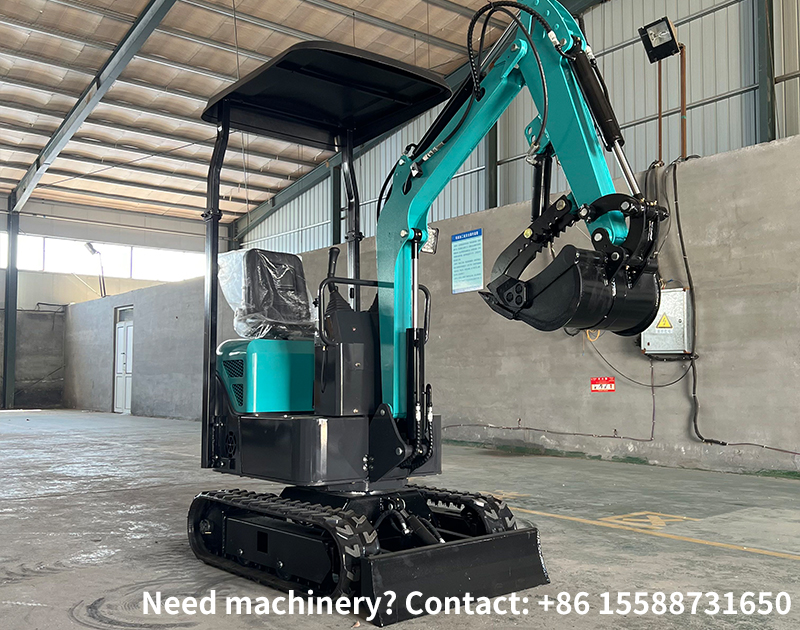
III. Excavation Work: Fixed Station, Light Digging and Slow Slewing, Prohibition of Overload and Eccentric Loading
Confirm the station stability before operation and select a relatively hard ground area as the excavation station. If the ground at the station is soft, lay steel plates/sleepers under the tracks to ensure the body is level. Start excavation only after the full width of the tracks is in ground contact without obvious sinking.
Follow the principle of "from shallow to deep, from far to near" during excavation. First dig the soft soil/silt at the edge of the operation surface and gradually advance to the core area. Avoid one-time deep and forced digging to prevent the excavation reaction force from causing the body to sink. Meanwhile, heavy-duty excavation on one side of the body is prohibited to avoid unilateral track sinking due to eccentric loading.
Control the amplitude of excavation movements: retract the bucket gently, lift the boom slowly and slew the upper structure moderately, keep all movements at a uniform speed. Avoid sudden heavy-duty movements that generate impact and cause a sharp drop in ground bearing capacity. Minimize the slewing angle during slewing operations to prevent the body's center of gravity from shifting due to slewing centrifugal force and causing sinking.
Excavating while walking is strictly prohibited; walking and excavation movements must be separated. Before moving the body, land the bucket for support (the bucket touches the ground lightly to share part of the body's self-weight), then move slowly to avoid walking with the suspended body on soft ground.
Transport the excavated muck in a timely manner and avoid piling it around the operation station to prevent the muck from compacting the ground surface and damaging the original bearing capacity, and also to avoid the body slipping and sinking when the upper structure slews over the muck.
IV. Sinking Prediction: Timely Identify Danger Signals and Conduct Emergency Response
Accurately identify the precursors of sinking: obvious sinking hazards include track sinking depth exceeding 1/2 of the track shoe height, significant body tilting, track slipping and idling when walking, and body sinking with movements during excavation. All operations must be stopped immediately when such signals appear to take emergency measures.
Emergency response for slight sinking: If the tracks sink slightly and are not completely locked, extend the bucket to the front hard soil area, land the bucket for support, lift the boom slowly, use the excavation force to jack up the body forward, and at the same time engage the forward gear at low speed to move slowly with the tracks to escape the sinking area. Forced heavy acceleration is prohibited, otherwise the tracks will sink deeper.
Emergency response for unilateral track sinking: First fine-tune the body to a horizontal position, land the bucket on the side of the sunken track for support, slowly retract the travel cylinder on that side, and at the same time turn slightly to make the other side of the track bear the force, then reverse slowly to the hard soil area. Do not forcefully lift the sunken side of the body to prevent damage to the chassis.
Handling of severe sinking: If the tracks sink completely and the body is locked, self-operation is strictly prohibited. Stop the engine immediately to prevent hydraulic system overload, call for rescue in a timely manner, and use a crane or loader for traction coordination. Meanwhile, lay steel plates/crushed stone under the tracks to provide support for traction and avoid further sinking during traction.
V. Post-operation Closure: Clean the Equipment, Check the Status and Avoid Secondary Risks
After the operation is completed, leave the soft ground area immediately and park on a flat hard soil surface. Thoroughly clean the silt on the tracks, chassis, support rollers and carrier rollers to prevent the silt from drying and affecting track rotation, which will increase the ground contact pressure for the next operation.
Inspect the track tension, track pin bushings and support rollers for damage; repair any deformation or looseness in a timely manner. At the same time, check whether the body chassis has component corrosion caused by silt accumulation, and conduct thorough cleaning and anti-rust treatment.
If there are slight sinking marks on the ground after the operation, fill them with muck in a timely manner to prevent subsequent operators or equipment from straying into the sinking areas.
Core Prohibition Summary
Sudden acceleration/sudden braking/forced in-situ steering, heavy-duty excavation on one side, excavating while walking, throttling when the tracks slip and idle, and blind operation in unknown soft ground areas are all strictly prohibited. All operations must follow the principle of "gentleness, slowness and stability". The core is to evenly distribute the body's weight on the tracks and reduce the local pressure on the soft ground surface.