
 Chinese
- HOME >> NEWS >> Company news
NEWS
Latest Product
Contact Us
What Are the Operating Objects of Road Rollers, and What Requirements Do Different Pavement Materials Impose on Road Rollers?
2026-01-22The operating objects of road rollers cover various materials of the three core layers of road construction: subgrade, base course, and surface course. Due to differences in physical properties, different pavement materials have clear and differentiated requirements for the type, parameters, and operation mode of road rollers. The specific details are as follows:
Classification of Core Operating Objects of Road Rollers
According to the road construction layers, the operating objects are mainly divided into three categories:
Subgrade materials: Mainly soil-based, including plain soil, silty clay, sandy soil, earth-rock mixture, high-fill gravel soil, etc. They are the core foundation of road bearing capacity.
Base course materials: Serving as the connecting structural layer, common types include cement-stabilized soil, lime-stabilized soil, lime-fly ash stabilized soil (lime-fly ash soil), graded crushed stone, graded gravel, etc.
Surface course materials: Directly bearing vehicle loads and environmental impacts, the mainstream types are asphalt concrete and modified asphalt mixture. In a few scenarios, they involve auxiliary compaction of cement concrete surface courses.
Specific Requirements of Different Pavement Materials for Road Rollers
1. Special Operating Objects (Trench Backfill, Courtyard Pavement)
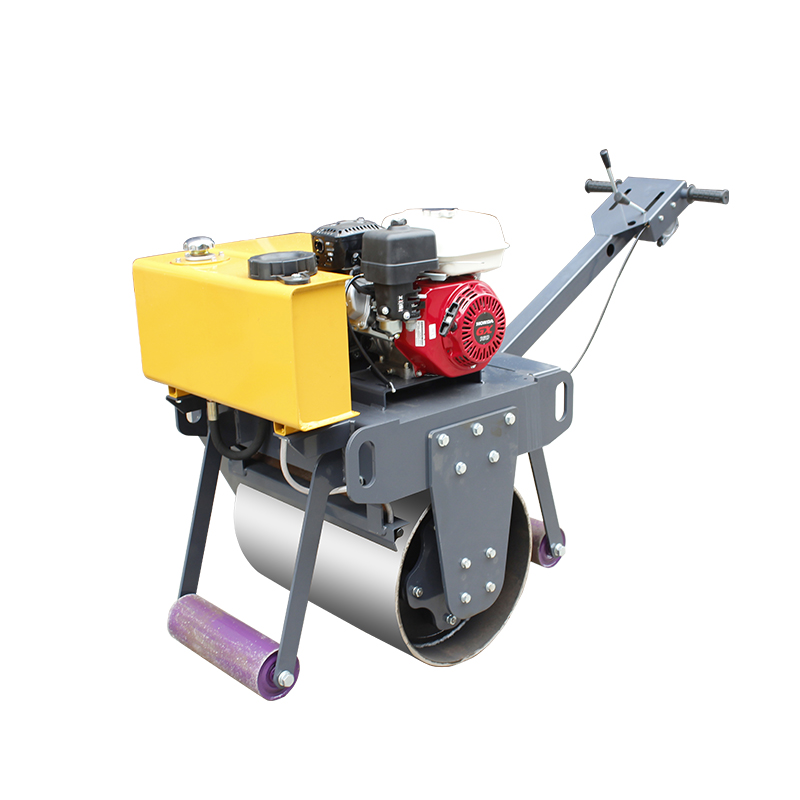
Core Requirements: Small equipment size, flexible operation, and avoiding damage to surrounding structures.Suitable Road Rollers: Small walk-behind vibratory rollers (0.3–2 tons), operating with low excitation force and low frequency to accurately compact backfill soil or small-scale pavements in narrow areas.
2. Asphalt Concrete Surface Course Materials
Core Requirements: The compaction process must protect the aggregate structure, improve surface flatness, avoid wheel adhesion, and control rolling temperature.Suitable Road Rollers:
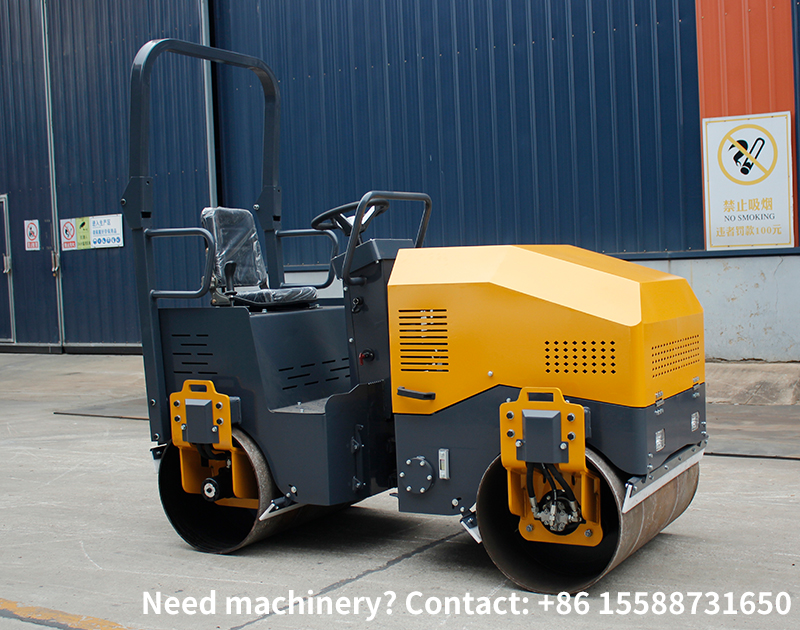
Initial compaction: Use light-duty double-drum vibratory rollers (6–8 tons) with low frequency and low amplitude for rolling to stabilize the mixture structure. The rolling temperature is about 140–150℃.
Intermediate compaction: Use heavy-duty double-drum vibratory rollers (10–15 tons) or pneumatic-tired rollers with high frequency and low amplitude for rolling to improve compactness. The rolling temperature is about 120–130℃.
Final compaction: Use static rollers or oscillatory double-drum rollers for vibration-free rolling and leveling. The rolling temperature is about 80–90℃ to avoid the loosening of asphalt aggregates caused by vibration.
Key Requirements: Road rollers must be equipped with automatic water sprinkler devices to prevent asphalt mixture from sticking to the wheels. Rolling is strictly prohibited at low temperatures (below 50℃), otherwise, it is easy to cause pavement cracking.
3. Base Course Stabilized Soil / Graded Crushed Stone Materials
Core Requirements: Balance compactness and structural uniformity to prevent material delamination or loosening.Suitable Road Rollers: Select medium-tonnage single-drum vibratory rollers (12–20 tons) with the vibration frequency controlled at 25–35Hz and amplitude at 0.5–1.5mm. Achieve the required compactness through 2–3 passes of rolling. In the final compaction stage, pneumatic-tired rollers can be paired to improve the flatness of the base course by virtue of the kneading effect.
Taboos: Avoid using high-amplitude and high-power vibratory rolling to prevent aggregate crushing of the base course materials.
4. Subgrade Soil Materials
Core Requirements: Require deep compaction capacity to eliminate gaps between soil particles and reduce the post-construction settlement rate.Suitable Road Rollers: Prioritize heavy-tonnage single-drum vibratory rollers (18–30 tons) with excitation force reaching 200–500kN to achieve deep compaction through high-frequency vibration. For high-fill subgrades, impact rollers should be paired to compact soil at a depth of 1–5 meters using impact loads.
Taboos: Avoid using static rollers, as their compaction depth is insufficient to meet the subgrade strength requirements. For cohesive soil with excessively high moisture content, avoid high-intensity vibratory rolling to prevent the occurrence of spring soil.