

 Chinese
- HOME >> NEWS >> Industry news
NEWS
Latest Product
Contact Us
What factors affect the compaction efficiency of a road roller?
2025-05-0810 Key Factors Affecting the Compaction Efficiency of Road Rollers
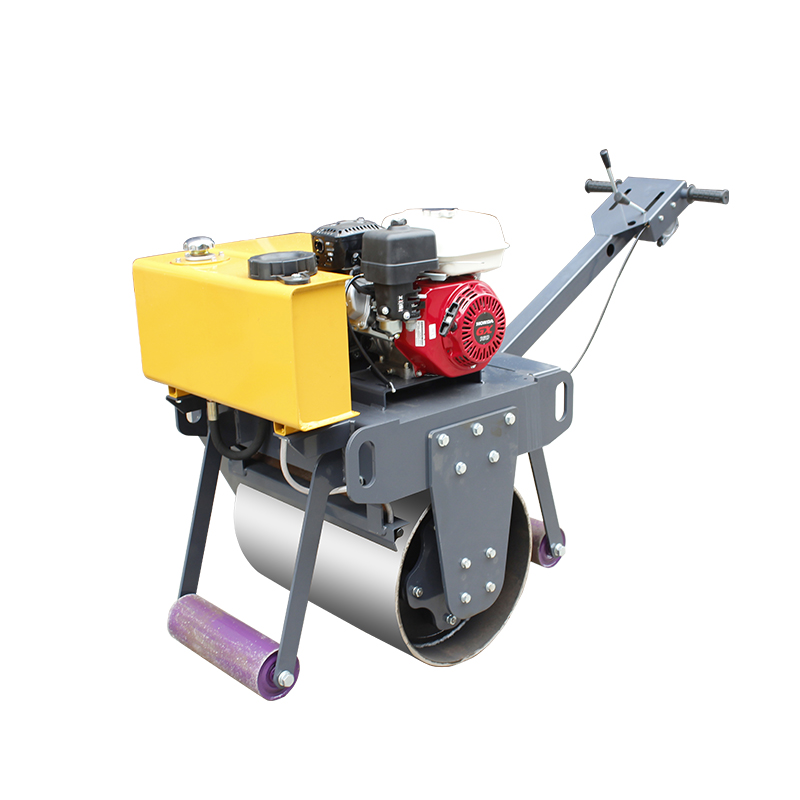
The compaction efficiency of road rollers directly impacts construction quality and project progress, primarily influenced by the following factors:
Selection of Roller Type
Vibratory Roller: Suitable for granular materials (e.g., sand, gravel), more efficient than static rollers.
Pneumatic-Tired Roller: Ideal for final asphalt compaction, improving density through kneading.
Impact Roller: Best for deep compaction (e.g., subgrade reinforcement) but may compromise surface smoothness.
Improper selection can lead to under-compaction or over-compaction, reducing efficiency.
2. Material Properties
Particle Size: Large aggregates (e.g., rock fill) require high-amplitude vibration or impact compaction.
Moisture Content:
Overly wet soil may form "springy soil," reducing compaction.
Asphalt at low temperatures becomes difficult to compact.
Cohesive Soil: Requires sheepsfoot or pneumatic rollers; sandy soil is best for vibratory compaction.
3. Compaction Layer Thickness
Too thick (>30 cm): Insufficient compaction in lower layers, necessitating layered rolling.
Too thin (<5 cm): Risks over-compaction, causing aggregate breakage (asphalt) or surface loosening (soil).
4. Rolling Speed and Passes
Speed:
Vibratory rollers: Optimal at 3–6 km/h (too fast reduces vibration energy transfer).
Static/pneumatic rollers: Slightly faster (4–8 km/h).
Passes:
Asphalt: Initial (1–2 passes), intermediate (3–5 passes), final (1–2 passes).
Excessive passes may fatigue materials (e.g., asphalt aggregate breakage).
5. Vibration Parameters (Amplitude & Frequency)
High amplitude (1.5–2.0 mm): Thick layers (e.g., subgrade fill).
Low amplitude (0.3–0.8 mm): Thin asphalt layers or surface finishing.
High frequency (40–50 Hz): Accelerates sand/gravel compaction.
Low frequency (25–30 Hz): Suitable for cohesive soils.
6. Environmental Conditions
Temperature:
Asphalt must be compacted above 120°C; low temperatures reduce density.
Frozen soil requires thawing or impact rollers.
Humidity: Overly wet soil needs drying or lime stabilization.
7. Operator Skill
Rolling Pattern:
Asphalt: "Step-ladder" rolling to avoid uneven overlap.
Subgrade: Roll from edges inward to prevent collapse.
Vibration Control: Start/stop vibration while stationary to prevent surface waves.
8. Subgrade Bearing Capacity
Soft ground (e.g., marshland) requires pre-treatment (e.g., replacement, stone columns) to prevent roller sinking.
9. Equipment Condition
Drum Cleanliness: Asphalt sticking to drums causes uneven surfaces.
Tire Pressure: Pneumatic rollers need uniform pressure (~500–700 kPa).
Vibration System: Damaged eccentric blocks reduce vibration energy.
10. Construction Management
Timely Compaction: Asphalt must be rolled immediately after laying to prevent cooling.
Coordination: Synchronize paver and roller speeds to avoid material pileup.
Practical Tips to Improve Efficiency
Material Testing: Conduct Proctor tests pre-construction to determine optimal moisture and compaction standards.
Parameter Optimization: Adjust amplitude, frequency, and speed based on materials.
Layered Compaction: Limit subgrade layers to ≤30 cm; follow asphalt design thickness.
Real-Time Monitoring: Use smart rollers (GPS + density sensors) for feedback.
Conclusion: Compaction efficiency results from the interplay of equipment, materials, environment, and operation. Optimizing these factors enhances both quality and productivity.