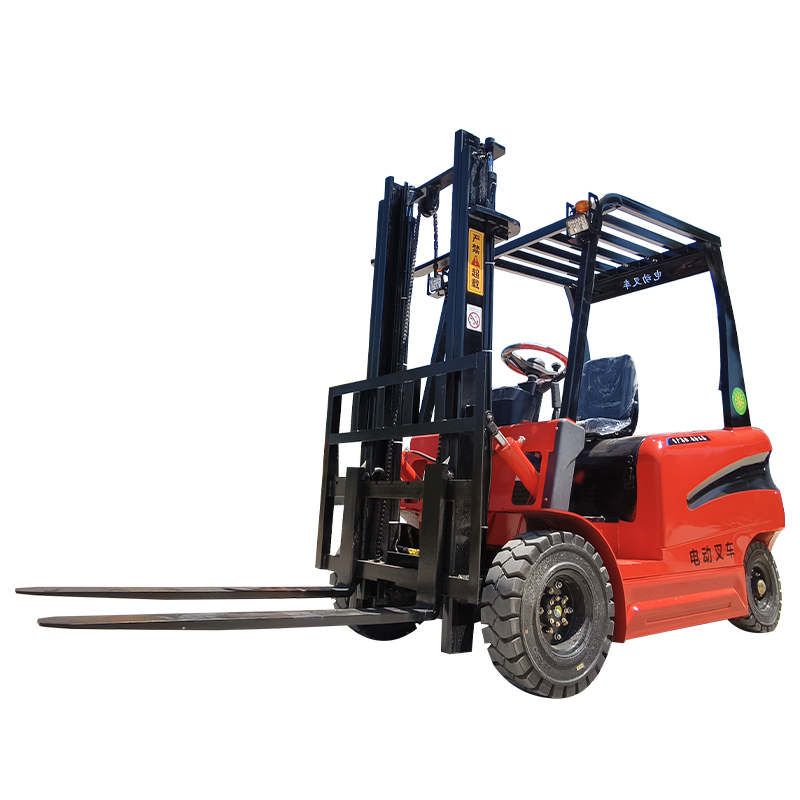
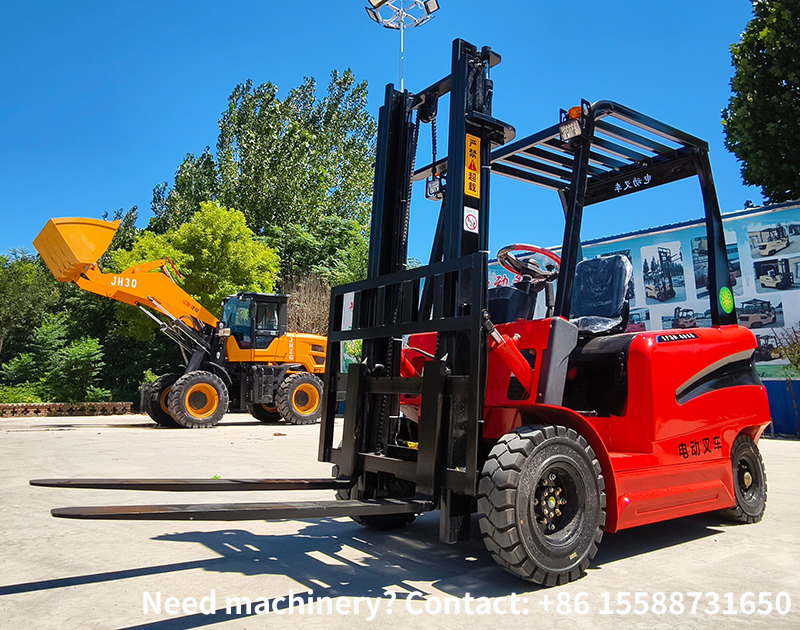
The center-of-gravity distribution, braking performance, and steering stability of an electric forklift differ significantly between full-load and no-load states. Operational skills must be adjusted according to the load condition, with the core precautions as follows:
When fully loaded, the weight of the goods shifts the forklift’s center of gravity forward (except for counterbalance forklifts), resulting in longer braking distances and a higher risk of rollover during steering. Stability must be the top priority:
Start-up and Acceleration
Start slowly by gently pushing the travel handle or pressing the pedal. Avoid sudden acceleration, which may cause goods—especially stacked cartons or loose items—to tilt forward and slide off.
Never accelerate abruptly under heavy load. The motor’s power output should be released steadily to prevent current overload and damage to the electronic control system.
Travel Speed
Strictly control the speed: ≤ 5 km/h indoors, ≤ 8 km/h outdoors, and reduce to 2–3 km/h in narrow aisles or at corners.
Maintain a constant speed during long-distance travel; avoid frequent acceleration and deceleration to minimize cargo sway.
Steering Operations
Decelerate in advance before steering; sharp turns are prohibited (centrifugal force can easily cause rollover under full load). Increase the turning radius by 30%–50% compared with no-load conditions.
Exercise extreme caution when steering on ramps. Prioritize driving straight up or down ramps. If steering is unavoidable, reduce speed to a minimum and never drive sideways across a ramp.
Braking and Parking
Anticipate braking needs in advance. Lightly press the brake pedal (or slowly pull back the travel handle) using a "pulsed braking" method. Never slam on the brakes, as sudden stops can cause goods to tip forward or even lift the forklift’s rear end.
For temporary parking, engage the handbrake and lower the forks to 10–15 cm above the ground. Confirm the goods are stable before leaving the forklift. For long-term parking, lower the forks completely to the ground and turn off the power.
Ramp Travel
When ascending a ramp, tilt the forks forward to keep goods tightly against the fork backrest. Drive straight up at low speed and do not stop midway.
When descending a ramp, tilt the forks backward (to maintain cargo balance) and drive in reverse (this shifts the center of gravity rearward for greater stability). Never coast in neutral; use the brake to control speed at all times.
Cargo Protection
Before traveling, check that goods are securely fastened—especially irregularly shaped or heavy loads. Ensure the forks extend fully into the pallet (at least 2/3 of the pallet length) and adjust the fork spacing to match the pallet size.
Avoid rough terrain during travel. If encountering uneven ground, detour or pass slowly to prevent goods from jolting off the forks.
When unloaded, the forklift’s center of gravity shifts rearward, making steering more agile but braking distances shorter. Overly aggressive operation can easily lead to loss of control, so precise handling is essential:
Start-up and Acceleration
You may moderately increase the start-up speed when unloaded, but still avoid sudden acceleration (the stepless speed change feature of electric forklifts can cause rapid, unintended speed surges).
When accelerating with no load, always observe the surrounding environment—especially warehouse columns and shelves—to prevent collisions.
Travel Speed
Maximum no-load speed: ≤ 8 km/h indoors, ≤ 12 km/h outdoors. Adjust speed based on the working environment (e.g., maintain low speed in crowded areas).
High-speed travel with no load is prohibited, especially when descending ramps, as excessive speed can cause steering loss.
Steering Operations
Steering can be more responsive, but you must still decelerate in advance. Reserve sufficient space when turning in narrow aisles to prevent the rear counterweight from hitting obstacles.
High-speed turns under no load can cause the forklift to "tail swing." Control the steering range and avoid continuous, rapid turns.
Braking and Parking
Braking response is faster—light pressure on the brake pedal is sufficient to stop the forklift, and pulsed braking is unnecessary. However, frequent sudden braking is prohibited, as it can damage the braking system.
When parking, lower the forks to 5–10 cm above the ground. For long-term parking, lower the forks completely to prevent accidental movement.
Fork Position
Keep the forks level or slightly tilted backward when traveling unloaded (to avoid front fork wear from dragging on the ground). Never travel with forks raised high—this raises the center of gravity and increases rollover risk.
If you need to adjust fork height during travel, stop the forklift first; never lift or lower forks while moving.
Operations in Special Scenarios
When ascending ramps unloaded, drive normally. When descending, lightly press the brake to control speed—reverse travel is not required.
When passing through doorways or under shelves with no load, pay attention to fork height to avoid collisions with overhead structures.
Pre-travel Inspection: Regardless of load status, always check the braking system, tire pressure, battery level, and fork integrity before operation.
Visibility Assurance: When fully loaded, goods may block forward visibility. Drive in reverse or assign a dedicated spotter to guide you.
No Passengers Allowed: Never carry passengers under any circumstances. The forklift seat is designed exclusively for the operator.
Environmental Awareness: Constantly monitor surrounding personnel and obstacles. Use designated paths in warehouses and pay attention to road conditions outdoors.
Operational Standards: Never operate the forklift with one hand—always hold the steering wheel/handle with one hand and the control lever with the other to avoid distractions.


 Chinese