Due to the differences in operating environments and working condition requirements, warehouse electric forklifts and outdoor electric forklifts need to be considered targetedly from the dimensions of structural design, performance parameters and configuration details when selecting models. The core differences are reflected in the following aspects:
Warehouse electric forklifts: Mainly suitable for indoor enclosed/semi-enclosed environments (such as warehouses, workshops and distribution centers) with flat ground (concrete floors, epoxy floors), narrow aisles (usually 2–3 meters) and limited operating space height (under shelves/warehouse door frames).Key selection points: Prioritize compact size and space utilization rate. For example, the mast of a reach forklift can move forward, enabling stacking operations in narrow aisles; three-way forklifts can side-shift forks to access goods without turning, maximizing warehouse space utilization. Meanwhile, they need to meet indoor low-noise requirements (operating noise ≤ 70 decibels) to avoid interfering with the communication of warehouse operators.
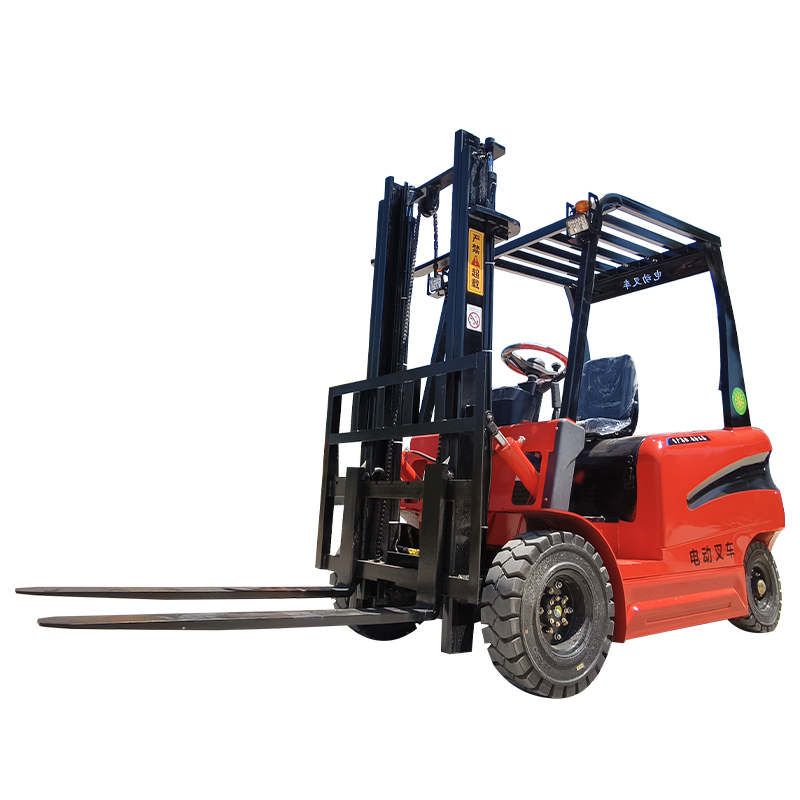
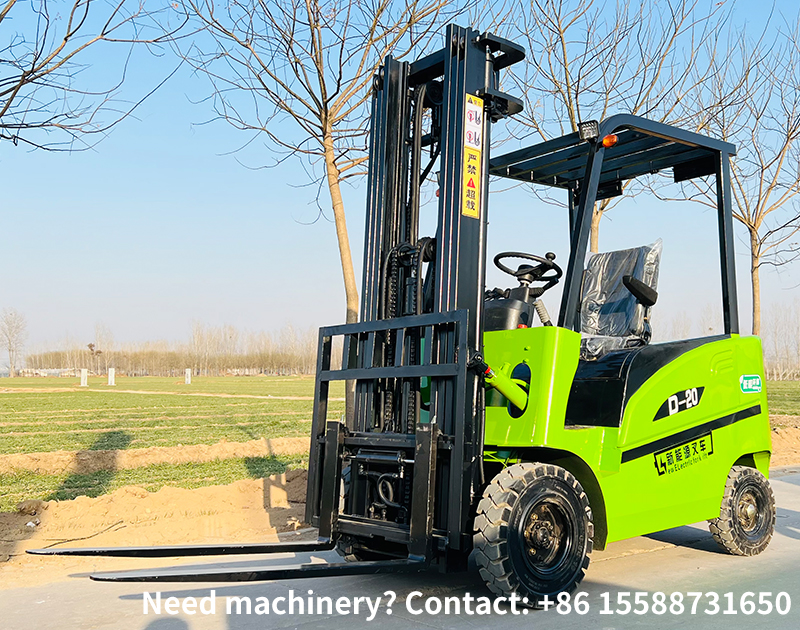
Outdoor electric forklifts: Mainly suitable for outdoor open-air environments (such as logistics parks, ports and building materials yards) with complex ground conditions (uneven roads, gravel ground, ramps), exposure to weather factors (rainy days, high temperatures, low temperatures) and long operating distances (cross-regional transfer).Key selection points: Focus on chassis passability and environmental durability. For example, equip with an elevated chassis (ground clearance ≥ 150mm) and large-pattern solid tires (anti-slip and wear-resistant) to cope with uneven roads; adopt anti-rust coating on the vehicle body, sealed motors and electrical systems to prevent water ingress or dust intrusion on rainy days; some models are equipped with sunshades/cabs to adapt to outdoor high-temperature/rainy-day operations.
Warehouse type: Focused on light-load and high-position operations, with a typical load capacity of 1–3 tons and a maximum lifting height of 6–12 meters (suitable for high-level shelves). When selecting a model, it is necessary to match the shelf height (e.g., choose a reach forklift with a 9-meter lifting height for 8-meter shelves), and pay attention to lifting precision (error ≤ 5cm) to avoid damaging shelves or goods.
Outdoor type: Focused on heavy-load and medium-low position operations, with a load capacity of 3–10 tons (some heavy-duty models can reach 15 tons) and a lifting height mostly ranging from 3–6 meters (mainly used for loading/unloading trucks and ground stacking). When selecting a model, attention should be paid to full-load climbing capacity (≥ 15°) to handle outdoor ramps; choose a high-power motor (≥ 15kW) for power to ensure stable power output during long-distance heavy-load driving.
Warehouse type: The operation mode is high-frequency and short-distance reciprocation (such as sorting between shelves), with an endurance requirement of 6–8 hours. When selecting a model, the battery can be chosen according to the operation frequency: lithium batteries are suitable for high-frequency operations (such as e-commerce promotions) (80% charged in 1–2 hours, supporting charging and use at any time); lead-acid batteries are suitable for regular operations (low cost). Some warehouse forklifts support battery quick-change to reduce downtime.
Outdoor type: The operation mode is long-distance and continuous transfer (such as round trips from warehouse to truck in the park), with an endurance requirement of 8–12 hours. When selecting a model, prioritize large-capacity lithium batteries (≥ 200Ah) or dual-battery configuration, paired with fast-charging piles (fixed outdoor charging points); if there are no charging conditions in the operation area, range-extended electric forklifts (equipped with a small generator for supplementary charging) can be selected to avoid power failure midway.
Warehouse type: Adopt a compact vehicle body (short wheelbase, small turning radius ≤ 1.5 meters). Some models feature stand-on operation (such as electric pallet trucks) to reduce space occupation; the forks can be side-shifted/width-adjusted to adapt to pallets of different sizes (1.0m×1.2m/1.1m×1.1m).
Outdoor type: Adopt a heavy-duty frame (thickened steel plate) and widened wheel track (≥ 1.2 meters) to improve driving stability; most models feature seated operation, equipped with shock-absorbing seats and power steering to reduce fatigue during long-distance operations; the forks are equipped with anti-slip pads and safety load backrests to prevent goods from slipping on bumpy roads.
Warehouse type: Collision prevention is the priority. When selecting a model, equip with laser anti-collision sensors (automatically decelerate when the distance to shelves/obstacles ≤ 0.5 meters), fork height limiters and reverse image (due to limited visibility in narrow aisles); some models integrate AGV functions to adapt to automated warehousing.
Outdoor type: Rollover and slip prevention are the priorities. When selecting a model, equip with Rollover Protective Structures (ROPS), hydraulic braking (braking distance ≤ 3 meters) and tire pressure monitoring (solid tire explosion-proof); anti-slip tires and wading protection kits (motor waterproof rating ≥ IP67) are optional for rainy-day operations.
Warehouse type: The operating environment is clean, and maintenance focuses on the battery and hydraulic system. When selecting a model, choose maintenance-free lithium batteries (no need to add water/adjust electrolyte) and sealed hydraulic cylinders (reducing dust ingress) to lower the frequency of daily maintenance.
Outdoor type: The operating environment is harsh, and maintenance focuses on the chassis and electrical system. When selecting a model, choose easily detachable dust covers and anti-rust connectors for convenient cleaning of dust/rust; select waterproof plugs for the electrical system to reduce the probability of failures.
Warehouse type: Prioritize controlling purchase costs. Economical lead-acid battery models are optional for light-load operations; high-end reach forklifts are required for high-position operations (≥ 8 meters). Although the purchase cost is high, they can improve warehouse space utilization and bring higher long-term benefits.
Outdoor type: Prioritize durability. Heavy-duty frame and high-power motor models are required for heavy-load operations. Although the initial purchase cost is high, they can reduce losses caused by fault downtime; stainless steel components are optional for outdoor corrosive environments (such as ports) to extend service life.
If the warehouse type is used in cold storage (≤ 0℃): Select low-temperature resistant batteries (lithium batteries can withstand -20℃) and anti-freeze hydraulic oil to avoid component freezing and cracking.
If the outdoor type is used in explosion-proof areas (such as chemical parks): Select explosion-proof motors and anti-static tires to prevent sparks from igniting flammable and explosive media.


 Chinese