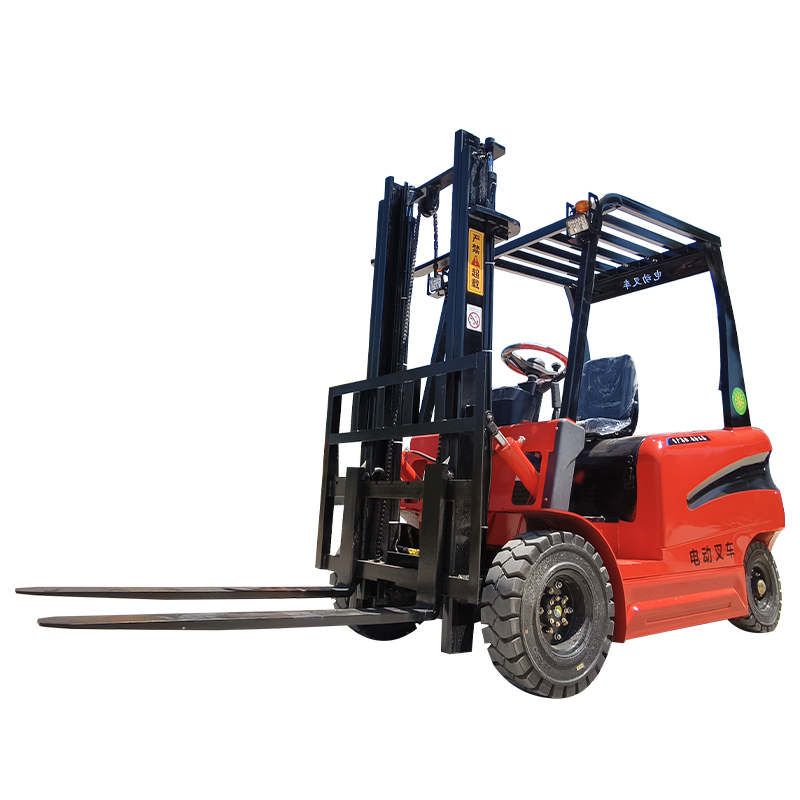
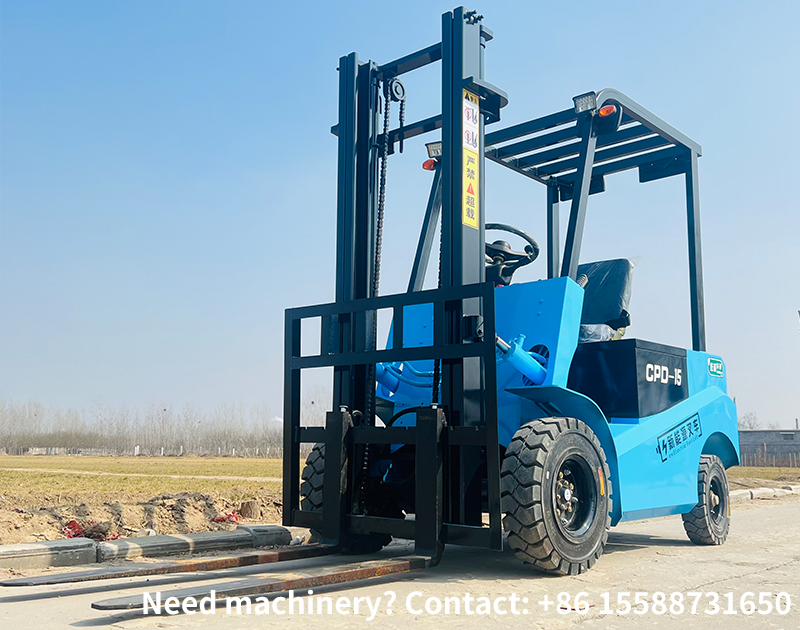
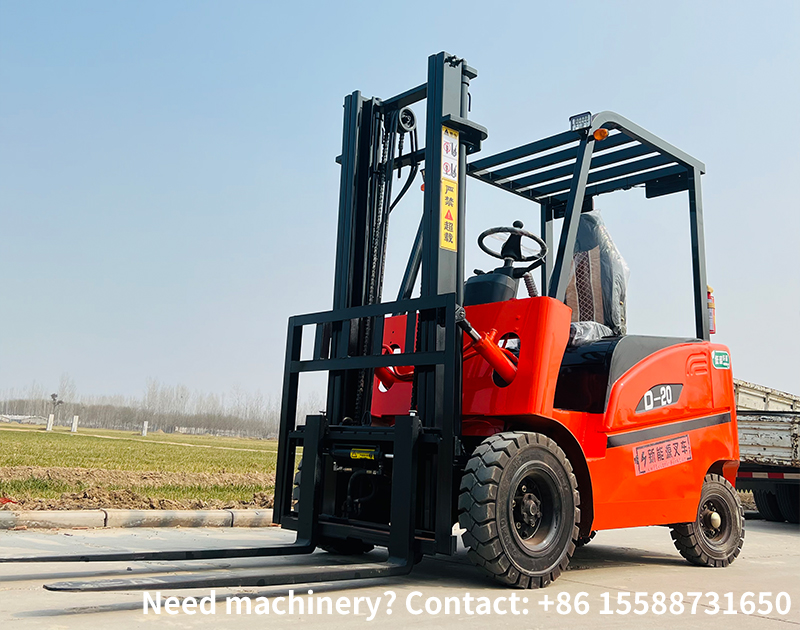
With the characteristics of zero exhaust emissions, low noise, flexible operation and simple maintenance, electric forklifts are widely used in industries that have requirements for environment, efficiency or refined operations. Due to differences in operation scenarios, cargo types and environmental conditions, the priorities for forklift selection vary significantly across different industries.
Applicable Scenarios: Cargo sorting, stacking, inbound and outbound handling in e-commerce warehouses, third-party logistics centers and distribution centers, including pallet handling, shelf stacking (high-level shelves can reach over 10 meters), and narrow-aisle operations.
Selection Priorities:
Prioritize reach electric forklifts (suitable for high-level shelf stacking, with forward-movable masts to save aisle space) or electric stackers (for light-load high-level stacking).
For narrow-aisle warehouses (aisle width ≤ 2.5 meters), choose three-way electric forklifts (equipped with side-shift forks, no need for turning, maximizing warehouse space utilization).
For high-frequency sorting operations, electric pallet trucks (walk-behind or stand-on type, flexible to shuttle between shelves) are optional.
Focus on battery endurance; prioritize lithium battery models (support fast charging and 24-hour continuous operation) equipped with a Battery Management System (BMS) to ensure stable power supply.
Equip with precise fork positioning systems and anti-collision warning devices to adapt to automated warehousing (AGV electric forklifts can interface with the Warehouse Management System (WMS)).
Applicable Scenarios: Handling of food raw materials, material distribution on production lines, stacking in cold storage areas (temperature range: -20℃~0℃), and finished product outbound transportation, involving perishable goods such as fresh produce, frozen food and dairy products.
Selection Priorities:
For cold storage operations, select low-temperature resistant electric forklifts (equipped with cold-resistant batteries, sealed motors and anti-freeze hydraulic oil to avoid performance degradation at low temperatures).
Food workshops require compliance with hygiene standards; prioritize models with stainless steel bodies (corrosion-resistant and easy to clean) and leak-proof designs to prevent oil contamination of food.
Most goods are stored on standard pallets (1.2m×1.0m); counterbalance electric forklifts (load capacity 1.5–3 tons) or electric pallet trucks are suitable, with an emphasis on stable operation to prevent cargo tipping.
Lithium battery models are more suitable for cold storage (lead-acid batteries suffer severe capacity attenuation at low temperatures), and they do not require frequent charging, reducing condensation issues caused by forklifts entering and exiting cold storage.
Applicable Scenarios: Storage and handling of medicines in pharmaceutical warehouses, workshop transfer of chemical raw materials (non-flammable and non-explosive), stacking of finished products in warehouses, and some scenarios involve explosion-proof requirements (e.g., chemical solvent warehouses).
Selection Priorities:
For general pharmaceutical warehouses, choose clean-type electric forklifts (low dust, no peculiar smell, avoiding drug contamination) with easy-to-clean bodies and anti-static tires.
For chemical explosion-proof scenarios, select explosion-proof electric forklifts (certified with Ex explosion-proof standards; motors, electrical components and hydraulic systems are all explosion-proof treated to prevent sparks from igniting flammable and explosive media).
Most goods are lightweight and high-precision (e.g., medicine boxes, reagent barrels); prioritize small-tonnage (1–2 tons) reach forklifts with an emphasis on stable fork lifting and lowering to avoid cargo damage.
Equip with positioning and tracking systems to meet the traceability requirements of GMP certification in the pharmaceutical industry.
Applicable Scenarios: Handling of auto parts in warehouses (e.g., engines, tires, interior parts), material distribution beside production lines, finished vehicle transfer (in some final assembly workshops), featuring high operation intensity and complex working conditions.
Selection Priorities:
For heavy-load handling (e.g., engines, gearboxes, load capacity 3–5 tons), choose counterbalance electric forklifts equipped with high-power motors and high-strength forks to adapt to long-distance handling.
For refined distribution beside production lines, select electric tractors (pulling multiple material carts) or stand-on electric pallet trucks, which can flexibly connect to assembly lines and reduce manual handling.
Focus on durability; the body should be collision-resistant (forklifts move frequently in workshops), equipped with shock-absorbing seats and anti-glare dashboards to improve operational comfort.
Support fast charging mode to meet the needs of 24-hour three-shift operations; some models can be customized with non-standard forks (to adapt to special parts).
Applicable Scenarios: Stacking in supermarket warehouses, shelf replenishment, cargo transfer from distribution centers to stores, involving scattered goods such as cartons, beverages and daily necessities.
Selection Priorities:
For warehouse areas, choose small counterbalance electric forklifts (1.5–2 tons) or electric stackers, suitable for supermarket shelves with relatively low heights (usually ≤ 5 meters).
For in-store replenishment, select mini electric forklifts (small size, ultra-low noise) or manual-electric dual-purpose pallet trucks to avoid disturbing customers.
Prioritize ease of operation; choose models with one-button lifting and intelligent speed regulation to reduce staff training costs.
Focus on neat appearance; the body can be customized with supermarket brand colors to enhance brand image.
Applicable Scenarios: Handling of electronic components in warehouses (e.g., chips, circuit boards), distribution of finished electrical appliances on assembly lines (e.g., refrigerators, TVs), stacking of finished products in warehouses, with extremely high requirements for electrostatic protection and cleanliness.
Selection Priorities:
Prioritize anti-static electric forklifts (equipped with anti-static tires and body grounding devices to avoid electrostatic breakdown of electronic components).
For workshop operations, select dust-free models (sealed motors and hydraulic systems to reduce dust generation) to adapt to clean workshops (Class 1000 / Class 10000).
Electronic components are mostly lightweight and small-batch; choose small-tonnage (1–1.5 tons) reach forklifts or electric pallet trucks with precise operation to avoid collision with precision equipment.
Lithium battery models have no acid mist emission and will not corrode electronic components, making them more suitable for this industry.
Applicable Scenarios: Storage and handling of ceramic tiles, plates and furniture in warehouses, store replenishment, logistics and distribution. Most goods are large-sized and heavy-load (e.g., marble plates with a load capacity of 5–8 tons).
Selection Priorities:
For heavy-load handling, choose large-tonnage counterbalance electric forklifts (5–10 tons) equipped with widened forks and anti-slip fork pads to prevent cargo slipping.
For short-distance outdoor transfer (e.g., from warehouse to delivery vehicles), off-road electric forklifts (equipped with solid tires to adapt to uneven ground) are optional.
Focus on power performance; select models with high-power motors and large-capacity lithium batteries to meet the needs of long-time heavy-load operations.
The body should be reinforced, and the fork lifting system should be equipped with overload protection to avoid malfunctions caused by overloaded goods.
Applicable Scenarios: Tobacco leaf storage, cigarette finished product sorting, finished carton stacking (high-level shelves can reach 8 meters), and distribution center transfer. Goods are highly standardized (uniform cigarette carton sizes).
Selection Priorities:
For high-level stacking, choose reach electric forklifts (mast height 8–10 meters) equipped with precise height limit devices to avoid damaging shelves.
For sorting operations, select electric pallet trucks with electronic scales (capable of real-time weighing) to meet the weight control requirements of the tobacco industry.
Prioritize lithium battery models (stable endurance, no maintenance needs) to reduce downtime.
Equip with GPS positioning and data recording functions to meet the strict management specifications of the tobacco industry.


 Chinese