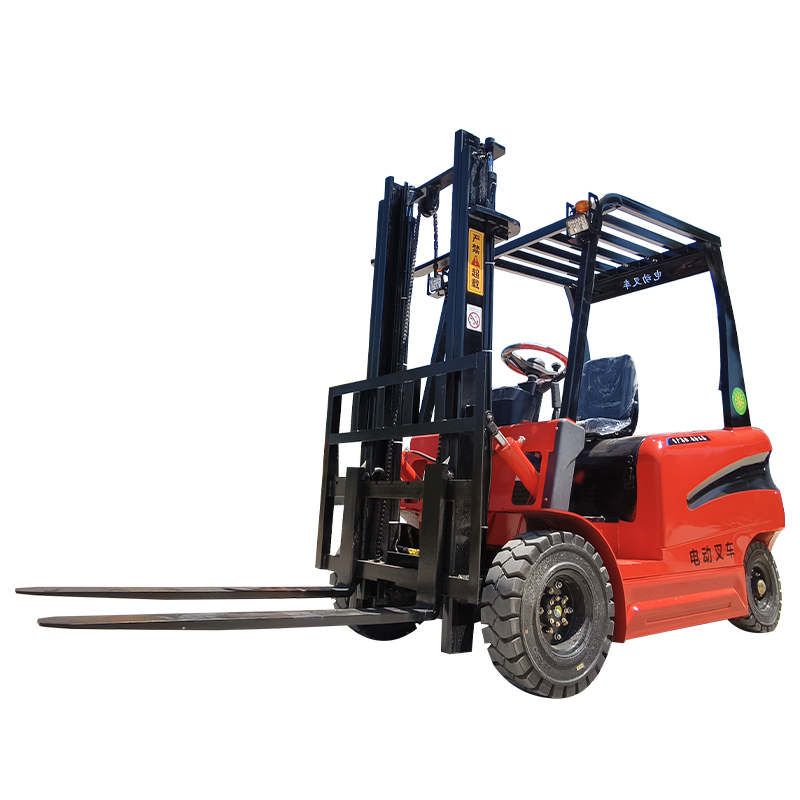
Although both electric forklifts and internal combustion forklifts belong to industrial handling vehicles, due to differences in power systems and structural designs, their operation methods vary significantly in terms of control logic, power regulation, detailed operations and environmental adaptability. The specific differences are as follows:
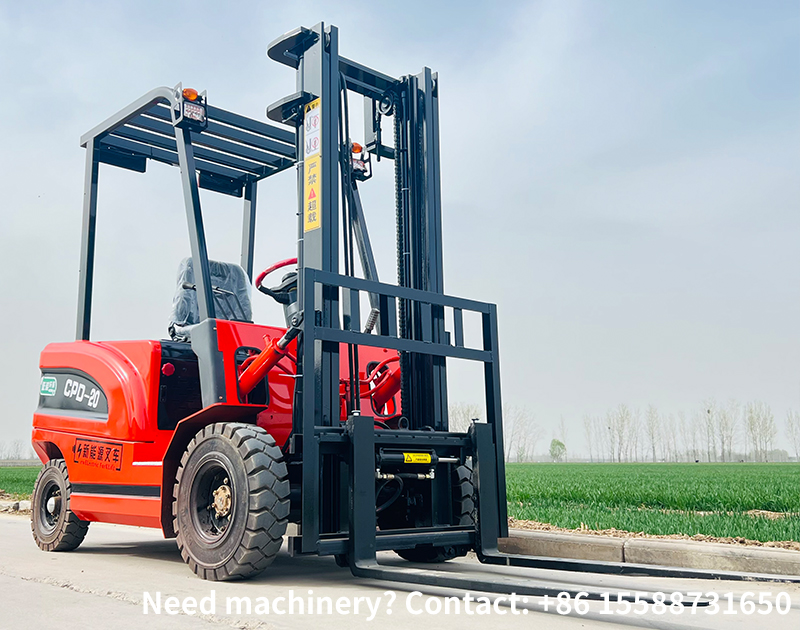
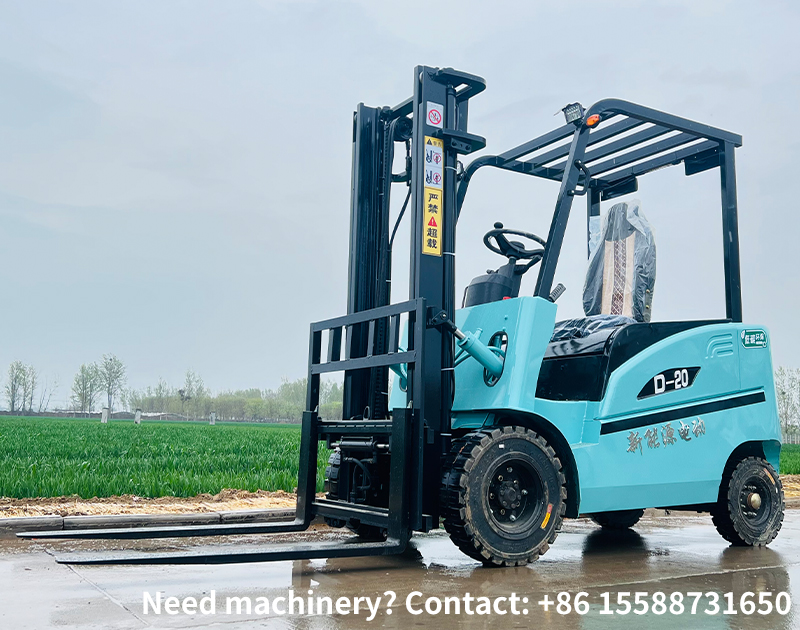
Electric forklifts: No ignition is required for start-up. Simply turn the key to the "ON" position (some models feature one-button start). Once the power indicator on the dashboard lights up and the motor self-check is completed, the forklift is ready for operation. The entire process is free of engine roar, with smooth and vibration-free start-up.There is no concept of idle speed: when the operating handle (or pedal) is released, the motor cuts off power immediately and the vehicle comes to a standstill, eliminating the need to maintain idle speed as with internal combustion forklifts. For temporary parking, only the handbrake needs to be engaged—there is no requirement to keep the throttle on. This makes the operation simpler and more energy-efficient.
Internal combustion forklifts: Start-up requires turning the key to ignite the engine (diesel forklifts may need preheating). After the engine starts, it runs continuously at idle speed even when the vehicle is stationary, accompanied by noticeable engine noise and body vibration.Idle speed must be maintained: excessively low idle speed can cause stalling, so the rotational speed needs to be adjusted via the accelerator pedal or idle speed knob. For temporary parking, the engine must be kept at idle speed, or the forklift needs to be shifted to neutral and the handbrake engaged, resulting in more operational steps.
Electric forklifts: They adopt stepless speed change (motor speed is adjusted via an electronic control system), enabling precise and linear speed regulation:
Most models use an operating handle to control travel direction (forward/reverse lever) and speed (the farther the handle is pushed, the faster the speed). No gear shifting is needed, making them easy for beginners to master.
Some high-end models are controlled by pedals (similar to cars but without gears). Releasing the pedal reduces speed immediately, and when combined with electromagnetic braking, the braking response is faster.
The maximum speed is usually lower than that of internal combustion forklifts (designed for indoor operations, generally ≤15 km/h), but they offer better low-speed maneuverability, making them suitable for precision operations in narrow aisles.
Internal combustion forklifts: They adopt stepped speed change (mostly manual transmission, with a few automatic models):
Manual transmission models require switching gears (forward 1st/2nd gear, reverse gear) using the clutch pedal and gear shift lever. Gear shifting involves pressing the clutch and releasing the accelerator, which is more complex and requires a high level of operator proficiency.
Speed is controlled by the accelerator pedal, with power output dependent on engine speed. Jerks are likely to occur at low speeds, making maneuvering difficult in confined spaces.
The maximum speed is higher (outdoor operation models can reach over 20 km/h), making them suitable for long-distance heavy-load handling.
Electric forklifts: The hydraulic system is driven by an electric hydraulic pump, requiring minimal operating force:
Lifting, lowering, forward tilting/backward tilting are all controlled via joysticks (or buttons). A light flick of the joystick triggers a response from the hydraulic system, with no force requirements, preventing operator fatigue during prolonged use.
Hydraulic speed can be adjusted through the electronic control system, ensuring smooth lifting/lowering movements and precise control of fork height, making them ideal for handling fragile and precision goods.
Internal combustion forklifts: The hydraulic system is driven by a hydraulic pump powered by the engine, with operating force correlated to engine speed:
Hydraulic actions are controlled via joysticks, but the joysticks have high resistance (dependent on hydraulic pressure) and require coordination with the accelerator (higher engine speed means stronger hydraulic power). If idle speed is too low, hydraulic movements will slow down or even stop.
Hydraulic response is affected by engine speed, with slightly lower precision at low speeds. Additional throttle input is needed for heavy-load lifting, which may cause goods to sway.
Electric forklifts: With zero exhaust emissions and low noise levels, they can operate for extended periods in enclosed/semi-enclosed spaces (cold storage, basements, food workshops) without the need to monitor ventilation conditions. In low-temperature environments (e.g., cold storage), only the battery needs to be preheated in advance (some lithium batteries have built-in preheating functions), and operation remains unaffected. However, operators need to monitor battery power—power will gradually decrease when the battery is low, and timely charging is required.
Internal combustion forklifts: With high exhaust emissions, they are strictly prohibited from operating in enclosed spaces (risk of carbon monoxide poisoning). For outdoor operations, attention should be paid to wind direction. In low-temperature environments, the engine must be preheated; otherwise, start-up will be difficult and power output will be insufficient. Fuel-powered endurance is unlimited—continuous operation is possible by refueling, but fuel levels need to be checked regularly.
Electric forklifts: Free of engine vibration and low in noise (operating noise ≤70 decibels), they offer high driving comfort. The operating handle/pedal requires minimal force, and there is no need for gear shifting or clutch operation, so operators are less likely to experience fatigue during prolonged work (e.g., 8-hour warehouse sorting tasks).
Internal combustion forklifts: With noticeable engine vibration and high noise (operating noise ≥80 decibels), they provide poor driving comfort. Frequent clutch pressing, gear shifting and throttle control can cause hand and foot fatigue during prolonged operation, placing higher physical demands on operators.


 Chinese