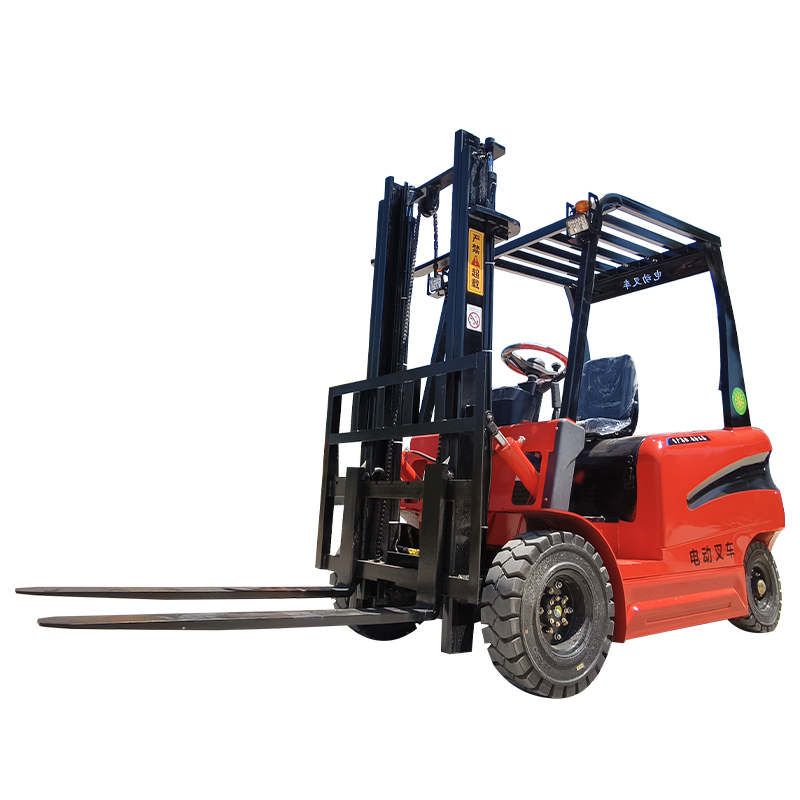
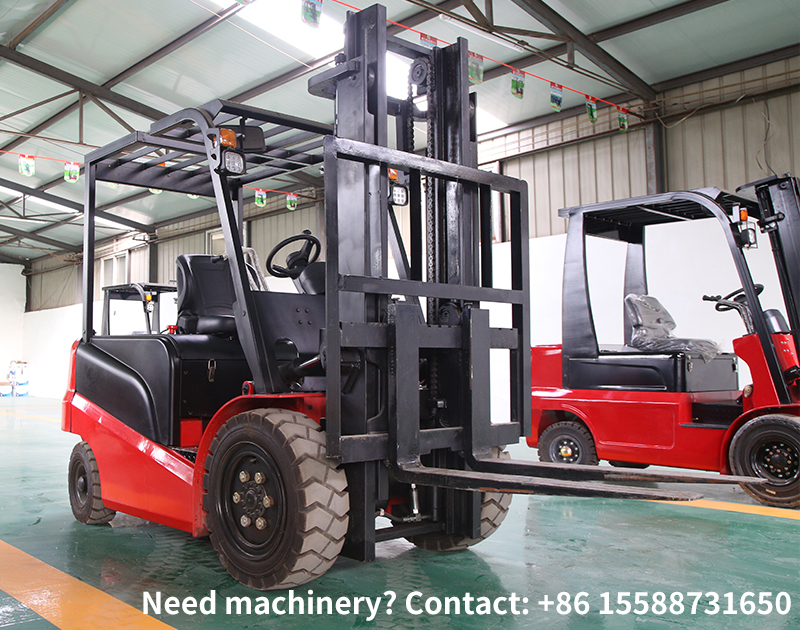
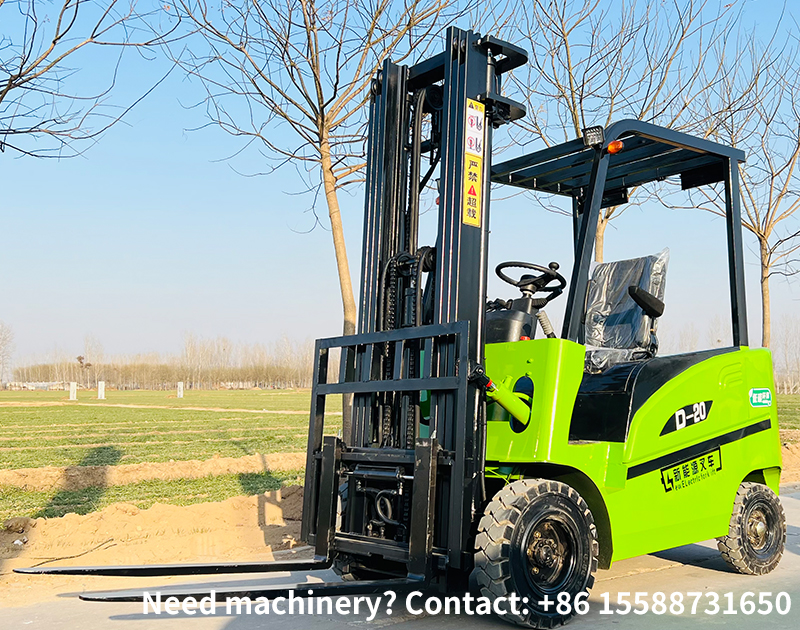
The power core of an electric forklift is the storage battery. At present, the mainstream types include lead-acid batteries (including flooded lead-acid batteries and valve-regulated lead-acid batteries) and lithium batteries (including lithium iron phosphate batteries and ternary lithium batteries). In addition, there are a small number of nickel-cadmium batteries and nickel-metal hydride batteries (which have been gradually phased out). Among them, lead-acid batteries and lithium batteries are the two most widely used types in the market.
Structural Features: The battery is filled with liquid electrolyte (sulfuric acid solution) and requires regular maintenance by replenishing distilled water. The plates are made of lead alloy.
Performance Advantages:
Mature technology and simple production process, with the lowest initial purchase cost (about 1/3–1/2 of that of lithium batteries of the same capacity).
Strong high-current discharge capability, suitable for short-term high-intensity operations.
Improved recycling system, with high residual value of waste batteries.
Performance Shortcomings:
Tedious maintenance: Regular inspection of electrolyte level and density, replenishment of distilled water, and cleaning of the battery surface to prevent corrosion are required.
Short service life: The cycle life is about 800–1200 times (deep discharge), with an actual service life of 2–3 years.
Low energy density: Large in size and heavy in weight (accounting for 30%–40% of the forklift's own weight), which affects the forklift's endurance and maneuverability.
Low charging efficiency: It takes 8–10 hours to fully charge, plus 2–3 hours of cooling time reserved; fast charging is not available.
Poor low-temperature performance: The capacity decreases significantly below 0℃, with a 30%–50% reduction in endurance in winter.
Applicable Scenarios: Scenarios with limited budgets, moderate operation intensity and dedicated maintenance personnel (e.g., general warehouses, small and medium-sized factories).
Structural Features: The electrolyte is absorbed in the separator (colloid or absorbed type), and the sealed design eliminates the need for electrolyte replenishment, hence the name "maintenance-free lead-acid batteries".
Performance Advantages:
Easy maintenance: No risk of electrolyte leakage, no need for water adding or density adjustment; only surface cleaning is required for daily maintenance.
High safety: The sealed structure reduces acid mist emission and causes no pollution to the working environment.
The initial cost is lower than that of lithium batteries, but slightly higher than that of flooded lead-acid batteries.
Performance Shortcomings:
The cycle life is slightly longer than that of flooded lead-acid batteries (about 1000–1500 times), but still shorter than that of lithium batteries.
The energy density is slightly higher than that of flooded lead-acid batteries, but still much lower than that of lithium batteries, with large volume and weight remaining.
High charging requirements: Overcharging is prone to battery bulging and service life attenuation; fast charging is not supported.
The service life decreases rapidly in high-temperature environments (e.g., high-temperature operation scenarios outside cold storage).
Applicable Scenarios: Scenarios requiring convenient maintenance and clean working environments (e.g., food warehouses, pharmaceutical workshops).
Structural Features: The positive electrode material is lithium iron phosphate, the electrolyte is organic solution, matched with graphite negative electrode, and adopts a sealed design.
Performance Advantages:
Ultra-long service life: The cycle life is about 2000–4000 times (deep discharge), with an actual service life of 5–8 years, which is 2–3 times that of lead-acid batteries.
High energy density: Small in size and light in weight (only 1/3–1/2 of that of lead-acid batteries of the same capacity), which can improve the forklift's endurance and load capacity.
High charging efficiency: Support fast charging (80% charged in 1–2 hours), can be charged and used at any time without special cooling time.
Good low-temperature performance: Can maintain more than 80% of capacity at -20℃, suitable for cold storage and winter operations in northern regions.
Maintenance-free: The sealed structure has no electrolyte loss, and no daily maintenance is required.
High safety: Good thermal stability, not easy to catch fire or explode in case of overcharging or puncture (better than ternary lithium batteries).
Performance Shortcomings:
High initial purchase cost (about 2–3 times that of lead-acid batteries of the same capacity).
Low voltage platform, need to be equipped with a dedicated BMS (Battery Management System), resulting in a slightly higher cost for adapting to the forklift electronic control system.
Applicable Scenarios: High-frequency operations, 24-hour continuous operations (e.g., e-commerce warehouses, logistics centers), low-temperature environments, and scenarios pursuing long-term operating costs.
Structural Features: The positive electrode material is nickel-cobalt-manganese (NCM) or nickel-cobalt-aluminum (NCA), with higher energy density.
Performance Advantages:
Extremely high energy density: 20%–30% higher than that of lithium iron phosphate batteries, smaller in size, lighter in weight and stronger in endurance.
Excellent fast charging performance: 80% charged in 0.5–1 hour, suitable for ultra-high-frequency operations.
High voltage platform and stable output power, suitable for heavy-duty electric forklifts.
Performance Shortcomings:
Poor safety: Low thermal stability, prone to fire and explosion under high temperature or overcharging, requiring strict BMS control.
The cycle life is shorter than that of lithium iron phosphate batteries (about 1500–2500 times).
Higher cost than lithium iron phosphate batteries, and the price of rare metals (cobalt, nickel) fluctuates greatly.
The low-temperature performance is slightly inferior to that of lithium iron phosphate batteries.
Applicable Scenarios: Heavy-duty electric forklifts with extremely high requirements for endurance and lightweight and strict safety control (e.g., port container handling forklifts), with few applications in civil warehousing scenarios.
Nickel-cadmium batteries: Resistant to overcharging and over-discharging, with good low-temperature performance. However, they contain toxic heavy metal cadmium, resulting in poor environmental friendliness, and their use has been restricted by the EU RoHS Directive.
Nickel-metal hydride batteries: Environmentally friendly, but with low energy density and high cost. They are only used in a small number of special forklifts (e.g., explosion-proof forklifts) and account for a very low market share.


 Chinese