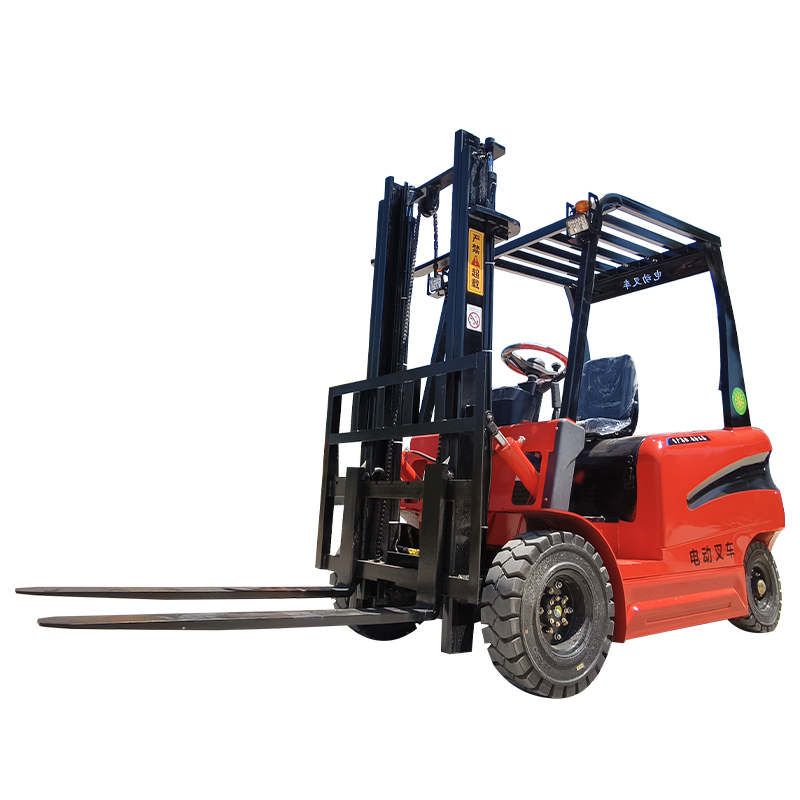
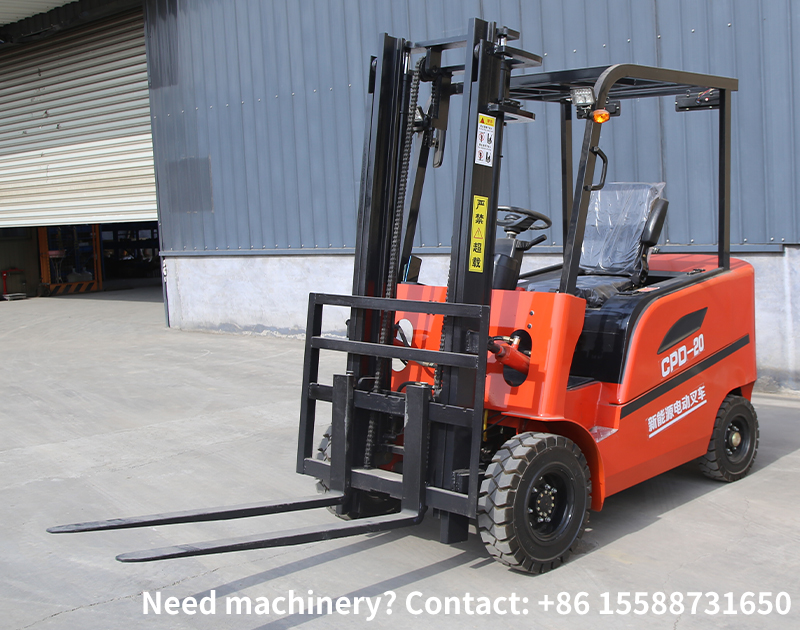
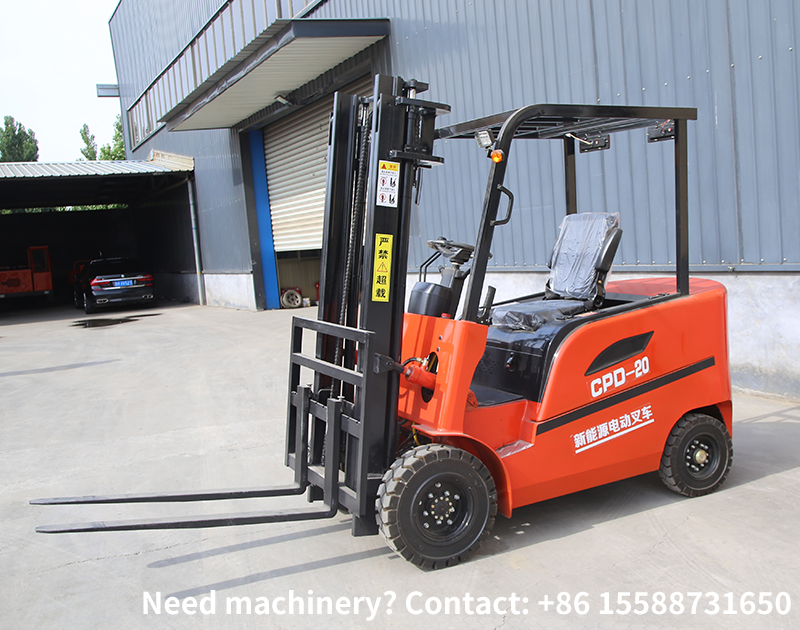
An electric forklift is an industrial handling vehicle powered by an electric motor (usually supplied by a storage battery). It drives the traveling system and hydraulic lifting system via the electric motor to realize cargo loading, unloading, handling, stacking and other operations. Operating primarily on electrical energy stored in batteries without fuel combustion, it is widely used in warehouses, workshops, indoor logistics and work scenarios with high environmental protection requirements. Common types include counterbalance electric forklifts, reach electric forklifts, electric pallet jacks, electric stackers, etc.
Electric forklifts: They use storage batteries (lead-acid batteries, lithium batteries, etc.) as the energy source. The electric motor converts electrical energy into mechanical energy to drive the wheels and power the hydraulic system for lifting cargo, with no combustion or exhaust emissions during power transmission.
Internal combustion forklifts: They run on diesel, gasoline or liquefied petroleum gas (LPG). The internal combustion engine generates power by burning fuel to drive the transmission system and hydraulic system, producing exhaust emissions during operation.
Electric forklifts: Featuring zero exhaust emissions and low noise levels (usually 60–70 decibels during operation), they are more suitable for indoor operations (such as warehouses, workshops, supermarkets), enclosed/semi-enclosed spaces (such as cold storage facilities, basements) and environments sensitive to pollution and noise (such as food processing workshops, pharmaceutical warehouses). Some outdoor electric forklifts can operate on flat outdoor ground, but their endurance and climbing capacity are limited by battery performance.
Internal combustion forklifts: With strong power output, unrestricted endurance and good adaptability to complex road conditions (such as uneven surfaces, steep slopes), they are ideal for heavy-duty outdoor operations (such as ports, mines, construction sites) and long-term continuous working scenarios. However, they cannot be used in enclosed spaces, as this may lead to carbon monoxide poisoning.
Electric forklifts: They boast smooth start-up, easy operation (stepless speed change) and precise speed regulation, making them suitable for delicate handling tasks. However, their full-load climbing capacity is relatively weak (the maximum climbing angle is usually 10°–15°), and their endurance is limited by battery capacity (lead-acid batteries offer about 6–8 hours of operation, while lithium batteries provide around 8–12 hours). Additionally, battery performance may decline in low-temperature environments.
Internal combustion forklifts: They deliver strong power output and excellent full-load climbing capacity (diesel forklifts can climb up to 20°–25°). Their endurance is unlimited (continuous operation is achievable by refueling), and their performance is less affected by high or low temperatures. Nevertheless, they produce significant vibration and high noise during operation (around 80–90 decibels), and gear shifting is more complex than that of electric forklifts.
Electric forklifts: With zero exhaust emissions, they meet environmental protection requirements (especially suitable for "carbon neutrality" scenarios). They have no risk of fuel leakage and cause no pollution to cargo (such as food, medicines) or the working environment. Standardized charging procedures should be followed (to avoid overcharging and short circuits), but overall, they have fewer potential safety hazards than internal combustion forklifts.
Internal combustion forklifts: Their exhaust contains pollutants such as carbon monoxide and nitrogen oxides, causing high noise pollution and posing risks of fuel leakage and fire. They are relatively safe for use in well-ventilated outdoor environments, but regular inspections of exhaust treatment devices are required.


 Chinese