

 Chinese
- HOME >> NEWS >> Company news
NEWS
Latest Product
Contact Us
Core Classification of Road Rollers and Their Applicable Working Scenarios
2026-01-29The core classification of road rollers is mainly based on travel mode, compaction principle and operational function. In the industry, they are mainly divided into four core categories by compaction structure + travel mode. Each category is subdivided into models with different tonnages and functions, which are adapted to different construction stages of subgrade, base course and surface course in road engineering, as well as different working scenarios such as municipal engineering, highways and construction sites. The core compaction principle followed is "light compaction for shallow layers, heavy compaction for deep layers; flexible adaptation for fragile surfaces, rigid adaptation for hard base surfaces". The following is a professional and construction-practical analysis of classification and scenario adaptation:
I. Static Compaction Road Rollers (Static-Action Road Rollers)
Core Characteristics
Compaction is achieved by static pressure generated by the machine's self-weight, with no vibration function. The compaction force is stable and gentle, causing no impact damage to the working surface. Classified by wheel type into smooth-wheel static road rollers and sheep-foot static road rollers, with a tonnage range of 3-30t, and available in walk-behind and self-propelled travel modes.
Core Applicable Working Scenarios
Smooth-wheel static road rollers: Suitable for shallow leveling and compaction in the early stage of road engineering, such as initial site leveling before subgrade construction and shallow compaction of plain soil (compaction depth ≤20cm). They are also used for light compaction of sand-stone base courses in municipal sidewalks and residential roads, as well as compaction of fragile surfaces (e.g., shallow layer of newly laid cement-stabilized soil, precast brick pavement) to avoid structural damage caused by vibration impact. Small walk-behind smooth-wheel static rollers are also suitable for small-area site compaction in landscape gardening and courtyard construction.
Sheep-foot static road rollers: Specialized in deep compaction of plain soil/clay in subgrades. The sheep-foot-shaped protrusions concentrate static pressure on local areas and penetrate the soil layer to achieve deep extrusion. They are adapted to soft soil foundation treatment of highway and railway subgrades, and layered compaction of plain soil in large-area filling projects (e.g., reservoir dams, filling sites). The soil layer has uniform compactness after compaction, making it suitable for deep consolidation of cohesive soil, but not applicable for the construction of loose materials/hardened surface courses such as sand-stone and asphalt.
II. Vibratory Road Rollers
Core Characteristics
Taking the machine's self-weight + vibration excitation force as the core compaction power, the vibrating steel wheel rearranges and tightly consolidates the particles of the compacted material through high-frequency vibration, featuring high compaction efficiency and large compaction depth (up to 10-80cm). It is the most widely used category in road engineering. Classified by wheel type into single-drum and double-drum vibratory road rollers, mainly self-propelled, with a tonnage range of 1-36t. Some models are equipped with dual modes of static compaction + vibration.
Core Applicable Working Scenarios
Single-drum vibratory road rollers: Core adapted to heavy compaction of road subgrades and base courses, serving as the main model for the construction of highways, municipal roads and expressways.
Small single-drum (1-8t): Suitable for backfilling of municipal pipe network trenches and small-area compaction of residential road subgrades;
Medium single-drum (10-20t): Adapted to compaction of subgrades (plain soil, sand-stone) and cement-stabilized base courses of Class II highways and municipal trunk roads;
Large single-drum (22-36t): Specialized in deep subgrade compaction of expressways, Class I highways and large construction sites, and can cooperate with dynamic compaction machines to complete layered compaction of high-fill subgrades, suitable for non-cohesive/semi-cohesive materials such as sand, gravel and cement-stabilized soil.
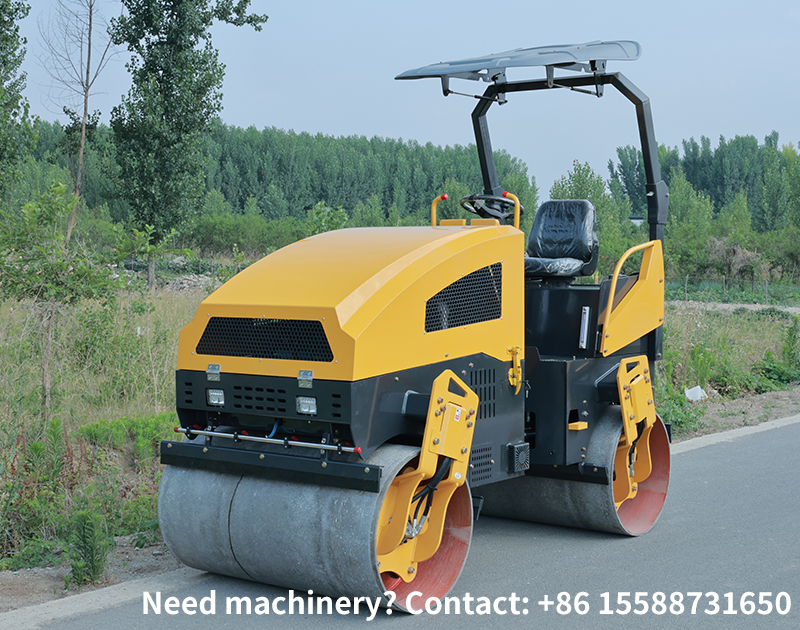
Double-drum vibratory road rollers: Core adapted to refined compaction of road surface courses. Synchronous rolling of double steel wheels ensures a smooth, track-free working surface, with adjustable vibration frequency and uniform compaction force, making it a special model for asphalt pavement construction.
Small double-drum (1-6t): Suitable for compaction of asphalt surface courses in municipal sidewalks, non-motorized lanes and residential roads;
Medium double-drum (8-14t): Adapted to compaction of asphalt surface courses (middle and upper layers) of municipal trunk roads and highways, capable of refined rolling in narrow areas such as curves and road intersections;
Large double-drum (above 16t): Specialized in compaction of the lower asphalt layer of expressways and urban express roads, and cooperates with rubber-tired road rollers to realize the combined operation of "vibration compaction + kneading for density and water tightness".
III. Rubber-Tired Road Rollers (Pneumatic-Tired Rollers)
Core Characteristics
Adopting inflatable rubber tires as compaction wheels, it generates kneading and extrusion force by the machine's self-weight and tire elasticity. The tires fit closely with the working surface during compaction, enabling all-round kneading of materials, resulting in uniform compactness and good sealing performance of the compacted layer, and can make up for the track defects of vibration compaction. Self-propelled, with a tonnage range of 10-40t, the number of tires can be adjusted according to tonnage (6-12 tires).
Core Applicable Working Scenarios
Specialized in the final compaction and finishing of asphalt pavement surface courses, serving as a supporting special model for asphalt pavement construction, used in conjunction with double-drum vibratory road rollers: after the double-drum completes vibration compaction, the rubber-tired roller performs final compaction and kneading to eliminate wheel tracks, make asphalt mixture combine closely with aggregate, and improve the compactness and water resistance of the pavement. It is adapted to the final compaction of the upper asphalt layer of all grades of highways and municipal roads, and is an essential model for the construction of asphalt pavements on expressways and urban express roads.
Adapted to the final compaction of cement-stabilized soil base courses; flexible kneading can avoid cracks in the cement-stabilized soil base course caused by rigid compaction and improve the integrity of the base course. It can also be used for the surface compaction of cohesive soil in subgrade filling projects; the kneading effect makes soil particles fit closely and improves surface compactness.
Not applicable for the compaction of sand-stone base courses and deep soft soil, as well as the initial compaction of high-temperature asphalt mixture that is easy to stick to tires.
IV. Impact Rollers (Impact Compactors)
Core Characteristics
Taking the triangular impact wheel as the core compaction structure, it generates high-energy impact pressure by the inertia of the machine's travel and the gravity of the impact wheel, with a large single impact force and a compaction depth of up to 1-5m. It can effectively crush the hard crust of the soil layer and consolidate deep fillers, making up for the deficiency of conventional road rollers in deep compaction. Tow-behind (needing to be towed by a loader/tractor), with an impact energy range of 15-50kJ.
Core Applicable Working Scenarios
Specialized in deep subgrade compaction and special foundation treatment of large-scale projects, adapted to the compaction of high-fill subgrades, soft soil foundations and large construction sites, such as deep compaction of high-fill sections (filling height >5m) of expressway/railway subgrades, airport runways, port yards and large-area filling sites in industrial parks. It can also be used for the crushing and compaction (in-situ regeneration) of original pavements in old road reconstruction projects. Not applicable for the compaction of road surface courses, small and narrow areas, and the periphery of structures vulnerable to impact damage.
Supplementary: Niche Specialized Road Rollers and Their Adapted Scenarios
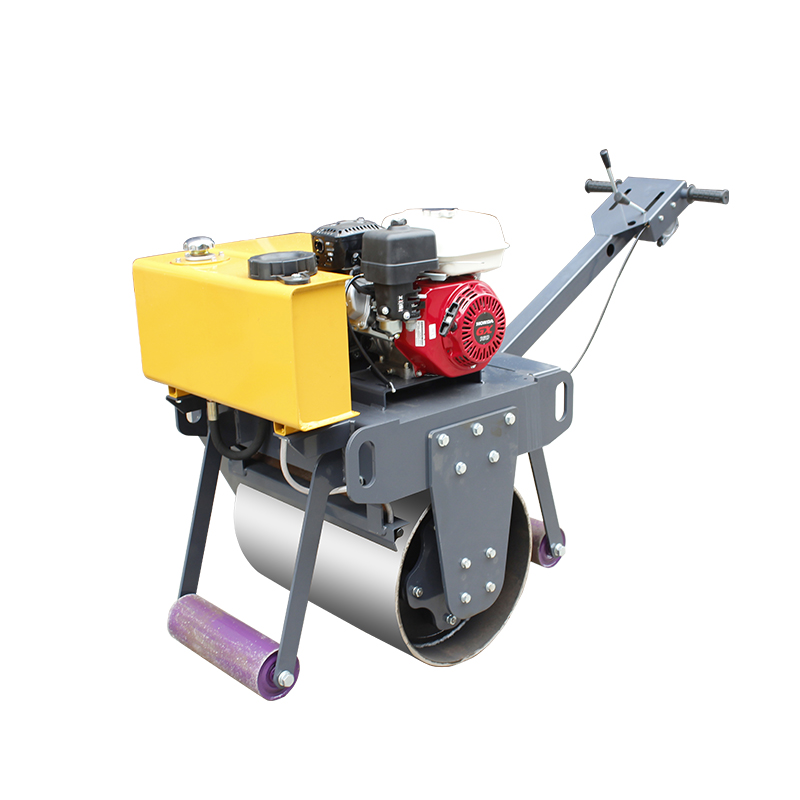
Walk-behind small road rollers (including static and vibratory types, tonnage 0.5-3t): Adapted to small-area and narrow-space compaction operations such as backfilling of municipal pipe network trenches, landscape gardening, courtyard construction and rural roads. Flexible in operation, it can complete compaction at corners, trenches and other points that cannot be covered by large road rollers.
Oscillatory road rollers: Combining the principles of vibration and oscillation, the compaction force is horizontal shear force with no vertical impact. Adapted to compaction in vibration-sensitive areas, such as subgrade construction on both sides of bridges, roads around buildings and subgrades above underground pipelines, to avoid damage to bridges, buildings and pipelines caused by vibration impact.
Trench rollers: With a narrow body and laterally movable steel wheels, adapted to the backfilling and compaction of underground projects such as municipal pipe networks and gas pipelines. It can complete layered compaction in trenches without additional manual assistance.
Summary of Core Classification and Adaptation to Construction Stages
Subgrade construction: Sheep-foot roller (deep clay) + single-drum vibratory roller (sand-stone/cement-stabilized base course) + impact roller (high-fill/deep foundation) to achieve "deep consolidation + layered compaction";
Base course construction: Single-drum vibratory roller (heavy compaction) + rubber-tired roller (final compaction), adapted to cement-stabilized soil and sand-stone base courses;
Surface course construction: Double-drum vibratory roller (vibration compaction) + rubber-tired roller (kneading and finishing), the golden combination for asphalt pavement construction;
Small/narrow areas: Walk-behind small road rollers and small double-drum vibratory road rollers, adapted to municipal maintenance, courtyard construction and other scenarios.