

 Chinese
- HOME >> NEWS >> Industry news
NEWS
Latest Product
Contact Us
Advantages of Electromagnetic Clutch Rollers
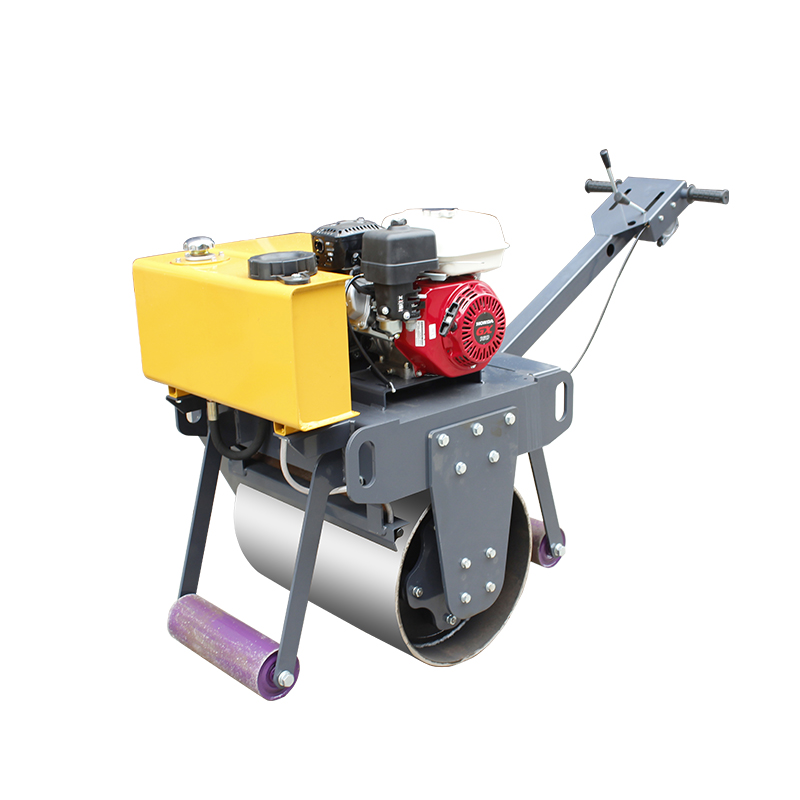
2025-04-24Electromagnetic clutch rollers (equipped with electromagnetic clutch-controlled vibration or transmission systems) offer distinct advantages in specific working conditions, particularly in response speed, control precision, and reliability. Below is a detailed analysis of their core strengths and recommended applications.
I. Core Advantages of Electromagnetic Clutch Rollers
1. Instant Vibration Start/Stop Response
Millisecond Switching: The electromagnetic clutch activates/deactivates the vibratory drum in <0.1 seconds via current control, significantly faster than hydraulic systems (which rely on valve switching and take 0.5–1 second). Ideal for high-frequency start-stop applications (e.g., bridge decks, thin asphalt layers).
Smooth Engagement: Electromagnetic force ensures shock-free vibration, preventing surface indentations or wave patterns caused by abrupt hydraulic starts/stops.
2. Precise Compaction Control
Spot Vibration Function: Enables targeted vibration at joints or edges to avoid over/under-compaction, improving uniformity.
Adjustable Frequency: Vibration frequency can be finely tuned (25Hz–50Hz) via current regulation to match material requirements (e.g., high frequency for asphalt, low frequency for gravel).
3. High Reliability & Low Maintenance
No Hydraulic Leaks: Eliminates vibration-related hydraulic lines and valves, reducing failures caused by oil contamination or seal degradation.
Long Service Life: Non-contact or semi-contact designs (e.g., magnetic particle clutches) minimize wear, supporting 100,000+ start-stop cycles.
4. Energy Efficiency
On-Demand Power: Only consumes electricity during vibration, saving 15–30% energy compared to hydraulic systems (which require continuous pump operation).
Cold-Weather Performance: Electromagnetic systems outperform hydraulics in freezing conditions (no viscosity issues).
II. Comparison with Other Vibration Control Systems
| Feature | Electromagnetic Clutch | Hydraulic Vibration | Mechanical Clutch |
|---|---|---|---|
| Response Time | Extremely fast (ms) | Slow (>0.5s) | Very slow (mechanical engagement) |
| Maintenance Cost | Low (no hydraulic parts) | High (oil changes) | Medium (clutch plate replacements) |
| Control Precision | High (frequency adjustable) | Moderate (valve-dependent) | Low (fixed frequency) |
| Initial Cost | Higher | Moderate | Low |
III. Typical Applications
High-Precision Compaction
Final asphalt compaction (prevents material displacement with rapid start/stop).
Thin-layer paving (e.g., ultrathin overlays, MMA colored surfaces).
Sensitive Zone Construction
Bridges/utility tunnels (minimizes structural vibration transfer).
Roads near buildings (controlled vibration range via spot vibration).
Special Materials
RCC (roller-compacted concrete) requiring high-frequency, low-amplitude vibration.
Modified asphalt (e.g., SMA) needing quick parameter adjustments.
IV. Key Considerations
Stable Power Supply: Requires reliable battery/generator voltage.
Thermal Management: Monitor electromagnetic coil temperature during prolonged high-frequency use (some models feature air cooling).
Brand Selection: Opt for proven technologies (e.g., Bomag’s Eco-Mode electromagnetic vibration system).
Conclusion
Electromagnetic clutch rollers are ideal for high-precision, high-frequency compaction, especially in projects demanding superior surface quality. While their initial cost is higher, their low maintenance, energy savings, and longevity deliver strong cost-effectiveness for precision work. For basic earthwork or low-frequency needs, traditional hydraulic or mechanical vibratory rollers may be more economical.