

 Chinese
- HOME >> NEWS >> Industry news
NEWS
Latest Product
Contact Us
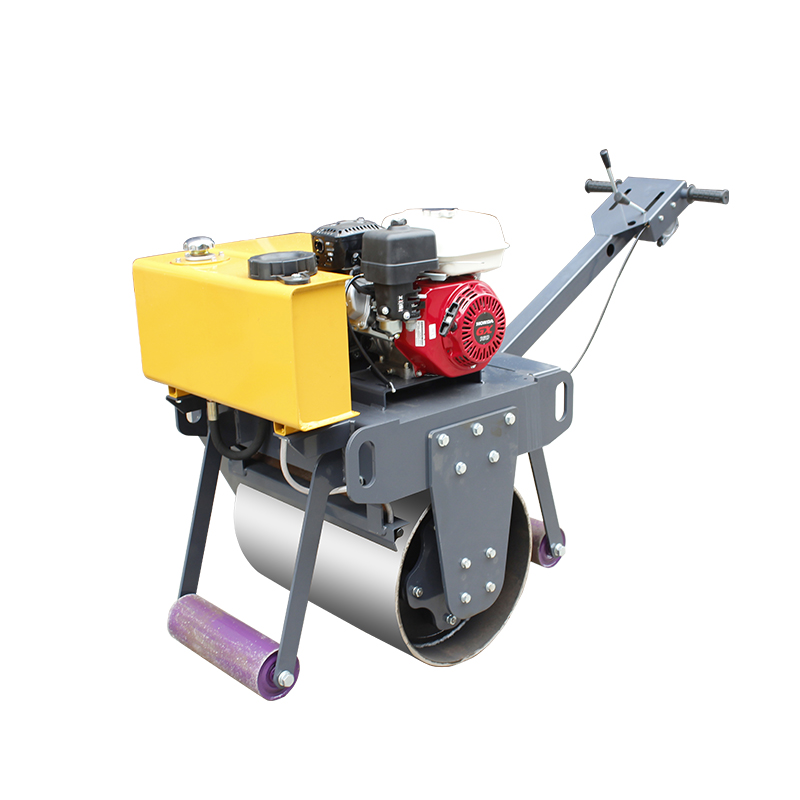
Advantages of Choosing Fully Hydraulic Rollers
2025-04-24Fully hydraulic rollers (equipped with hydraulic transmission systems) offer significant advantages over traditional mechanical or hydro-mechanical rollers, particularly in terms of construction efficiency, operability, and adaptability. Below is a detailed analysis of their core strengths:
1. High Transmission Efficiency, Minimal Power Loss
Stepless Speed Control: The hydraulic system enables infinitely variable speed adjustment by regulating pump and motor displacement, eliminating gear shifting and reducing friction losses (mechanical transmission efficiency: ~70-80%; fully hydraulic: >90%).
Fuel Efficiency: Engine power distribution is optimized with adaptive load adjustment, reducing fuel consumption by 10-20% in low-speed compaction.
2. Precise Control, Superior Compaction Quality
Wide Speed Range: Speed can be finely adjusted (0-12 km/h) to suit different compaction phases (e.g., low speed for initial passes, medium speed for intermediate compaction, high speed for finishing).
Smooth Start/Stop: Hydraulic cushioning minimizes jerks during direction changes, preventing material "shoving" or surface waves.
Accurate Vibration Control: Hydraulic vibration systems allow rapid start/stop and sensitive amplitude/frequency adjustments (e.g., dual-frequency models), adapting to asphalt, gravel, and other materials.
3. Adaptability to Complex Conditions
Slope Performance: Hydraulic transmission delivers constant torque, preventing power interruption on steep slopes (mechanical transmissions may slip).
Durability in Harsh Environments: Sealed hydraulic systems resist dust and moisture, ideal for wet or dusty sites (e.g., mines, land reclamation).
Cold-Weather Operation: Hydraulic oil warms up quickly, enabling efficient performance in freezing temperatures.
4. Easy Maintenance, Extended Lifespan
Simplified Structure: Eliminates clutches and gearboxes, reducing failure points by ~30% and lowering maintenance costs.
Automatic Protection: Overload prevention and overheating alarms minimize operator-induced damage.
Long Component Life: Key parts (e.g., piston pumps/motors) can last 8,000–10,000+ hours.
5. Smart Technology Integration
Compatibility with Automation: Hydraulic systems easily integrate sensors and electronic controls for unmanned operation or real-time compaction monitoring (e.g., GPS-guided compaction tracking).
Data Feedback: Real-time pressure/flow monitoring provides compaction quality analytics.
Disadvantages vs. Other Transmission Types
Higher Initial Cost: Fully hydraulic rollers cost 10-15% more than mechanical counterparts, but long-term savings offset this via fuel efficiency and reduced maintenance.
Technical Maintenance: Requires specialized diagnostics, though modern models feature self-diagnostic systems (e.g., CAN bus).
Recommended Applications
Prioritize fully hydraulic rollers for:
High-precision compaction (e.g., asphalt surfaces, bridge decks).
Slopes >15% or confined spaces (e.g., tunnels).
Complex terrains requiring frequent speed changes (e.g., urban roadwork with tight curves).
Mechanical transmissions suffice for:
Budget-limited, simple projects (e.g., basic earthwork).
Low-precision, intermittent operations.
Conclusion
Fully hydraulic rollers, with their efficiency, precision, and durability, are the preferred choice for high-end compaction, especially in quality-critical, long-term, or smart construction projects.