The compaction characteristics of pneumatic-tire rollers are based on the flexible kneading and compaction principle, which is essentially different from the rigid rolling of steel-wheel rollers. The specific characteristics and the logic behind their application in final compaction are as follows:
Combination of flexible kneading and static-load compactionPneumatic-tire rollers use inflatable rubber tires. During rolling, the tires undergo elastic deformation when in contact with the asphalt mixture, forming surface contact rather than the linear contact of steel wheels. On the one hand, they rely on the dead weight of the whole machine to provide static pressure. On the other hand, the tires exert kneading and extrusion forces on the mixture during rolling, which can rearrange and interlock the aggregates, while allowing the asphalt mortar to fully fill the gaps between aggregates, thus improving the pavement density.
Good compaction uniformity without local stress concentrationThe flexible contact of rubber tires can avoid the problems of shoving and cracking that may occur with steel-wheel rolling. They are particularly suitable for compacting asphalt mixtures at relatively low temperatures without causing damage to the pavement structure.
Enhance pavement skid resistance and durabilityThe kneading effect can form fine rough textures on the surface of the asphalt pavement, retaining a certain texture depth, which not only ensures pavement smoothness but also improves skid resistance. Meanwhile, the tight bonding between aggregates and asphalt mortar enhances the water stability and fatigue resistance of the pavement.
Adjustable tonnage to adapt to different working conditionsThe compaction pressure can be adjusted by increasing or decreasing the tire internal pressure or the machine counterweight, meeting the compaction requirements of asphalt mixtures with different thicknesses and types.
Asphalt pavement construction is divided into three stages: initial compaction, re-compaction, and final compaction. The core objectives of final compaction are to eliminate wheel tracks, ensure the final smoothness and density, and avoid damaging the pavement structure — characteristics that pneumatic-tire rollers are perfectly suited to meet.
Compensate for the shortcomings of steel-wheel rollers in final compactionImproper operation of double-drum steel rollers during final compaction may leave steel wheel tracks. Moreover, rigid rolling can make the surface of the asphalt mixture too smooth, reducing skid resistance. The flexible kneading of pneumatic-tire rollers can eliminate steel wheel tracks and reshape the pavement surface texture, balancing smoothness and skid resistance.
Adapt to the mixture temperature conditions in the final compaction stageDuring final compaction, the temperature of the asphalt mixture drops to 80℃–100℃, and its fluidity decreases significantly. Vibratory rolling with steel wheels tends to cause aggregate crushing or pavement cracking. The static-load kneading of pneumatic-tire rollers does not require vibration, enabling compaction at low temperatures without damaging the mixture structure.
Further improve compaction density and reduce subsequent diseasesAfter the re-compaction stage, there are still small gaps left in the mixture. The kneading effect of pneumatic-tire rollers can further interlock the aggregates and allow the asphalt mortar to fully fill the gaps, increasing the final compaction density. This effectively reduces pavement diseases such as rutting, raveling, and water seepage during service.
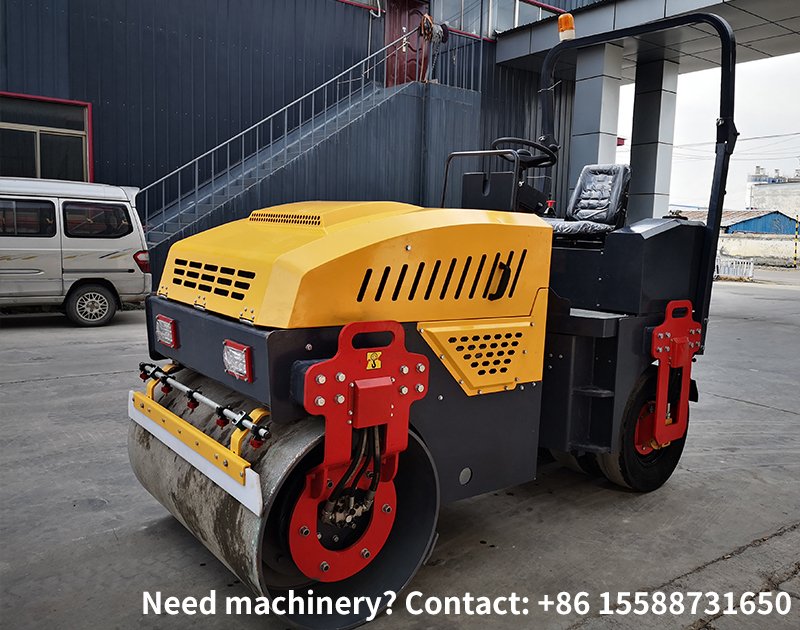
It should be noted that pneumatic-tire rollers are generally not used alone in initial and re-compaction stages, but are used in conjunction with double-drum steel rollers. Double-drum steel rollers are responsible for stabilizing the mixture in initial compaction and achieving basic compaction in re-compaction, while pneumatic-tire rollers undertake the finishing work in final compaction. This forms the "steel wheel + pneumatic tire" combined compaction process, which is also the standard configuration for asphalt surface course construction of expressways and municipal roads.


 Chinese