The differences in applicable working conditions between single-drum rollers and double-drum rollers stem essentially from the disparities in their compaction principles and force characteristics, which are specifically categorized as follows:
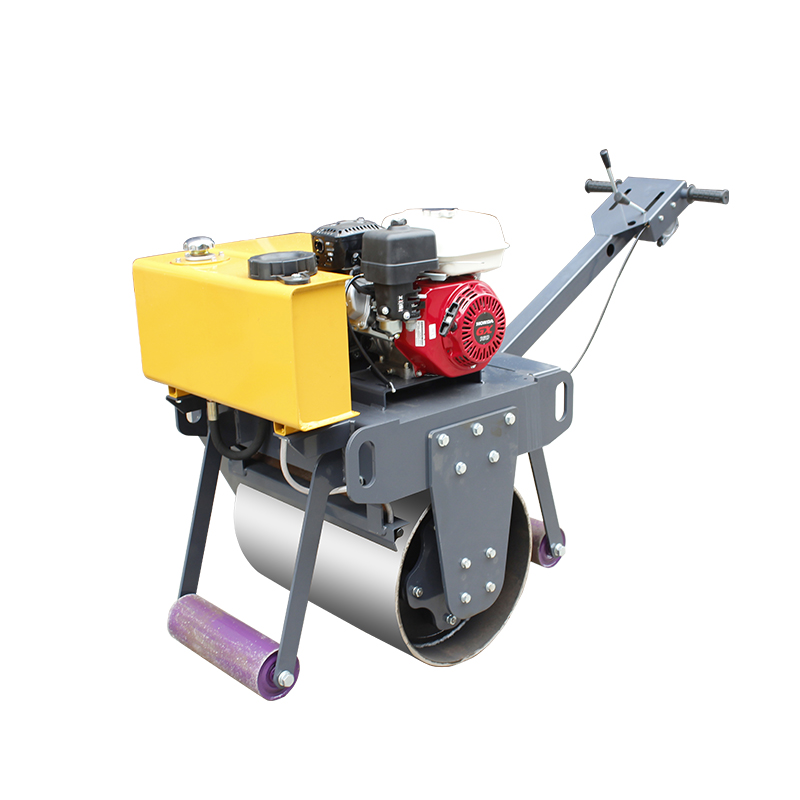
The core advantages of single-drum rollers lie in their high linear pressure and deep compaction depth. Equipped with a vibration function, they can achieve deep aggregate interlocking and densification, making them primarily suitable for the subgrade and base course stages of road construction.
Compaction of various subgrade fillings, including filled earth subgrades, filled rock subgrades, and soil-rock mixture subgrades. They are applicable for layered rolling of subgrades in highways and railways, as well as base course filling projects for dams and airport runways.
Compaction of semi-rigid base courses, such as the initial and re-compaction of cement-stabilized macadam layers and lime-fly ash macadam layers. The high-frequency and low-amplitude vibration mode can prevent excessive crushing of base course materials and ensure the strength of the base course.
Site leveling and compaction in large-scale earthwork projects, for example, foundation compaction operations in mine stockyards and industrial park sites.
It should be noted that single-drum rollers are not suitable for the final compaction of asphalt surface courses, as this may easily cause pavement shoving, cracking, and damage to the surface evenness.
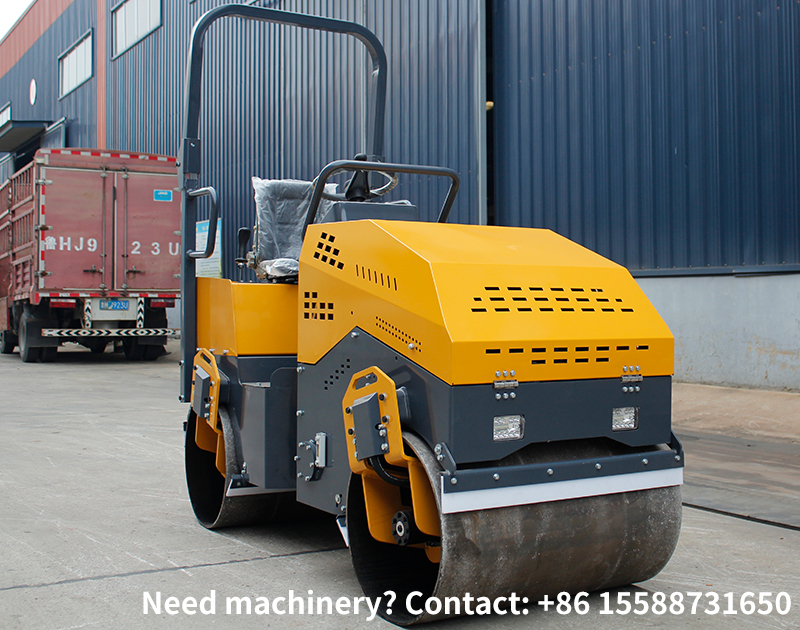
Double-drum rollers are characterized by large contact area and high compaction evenness, with both vibration and oscillation functions. Their acting force is more uniform and gentle, making them mainly applicable for the asphalt surface course stage of road construction.
Full-stage compaction of asphalt concrete surface courses, including the initial, re-, and final compaction of asphalt surface courses for expressways, municipal roads, and residential community roads. The vibration mode is adopted for initial compaction to rapidly stabilize the mixture, while the oscillation mode is used for final compaction to improve pavement smoothness.
Compaction operations with structural protection requirements, such as the compaction of bridge deck pavements. The oscillation mode generates no vertical impact force, thus avoiding damage to bridge structures. It is also suitable for the compaction of thin-layer asphalt pavements in sidewalks and squares, preventing pavement dusting and cracking.
Pavement maintenance and repair operations, such as local compaction after pothole filling. Small-tonnage double-drum rollers feature high flexibility, enabling precise compaction of small areas and ensuring smooth connection between the repaired section and the original pavement.
Double-drum rollers are not suitable for the compaction of thick subgrades or base courses, due to their limited compaction depth and much lower operating efficiency compared with single-drum rollers.
For projects focusing on subgrade and base course construction, large-tonnage single-drum rollers (18–26t) are preferred, with the vibration mode switched between low-frequency high-amplitude and high-frequency low-amplitude according to the type of filling material.
For projects focusing on asphalt surface course construction, double-drum rollers are preferred. Small-tonnage models (8–12t) are suitable for municipal roads, while large-tonnage models (13–16t) are adapted for expressways. The oscillation mode is recommended for the final compaction stage.


 Chinese