

 Chinese
- HOME >> NEWS >> Industry news
NEWS
Latest Product
Contact Us
How to Judge the Track Wear Degree of Tracked Transporters and What Standards Require Track Replacement?
2026-01-10To judge the track wear degree of tracked transporters, it is necessary to start from the wear status and dimensional changes of key parts according to the material characteristics of rubber tracks and steel tracks. There are clear differences in the wear judgment standards and replacement thresholds for different materials, as follows:
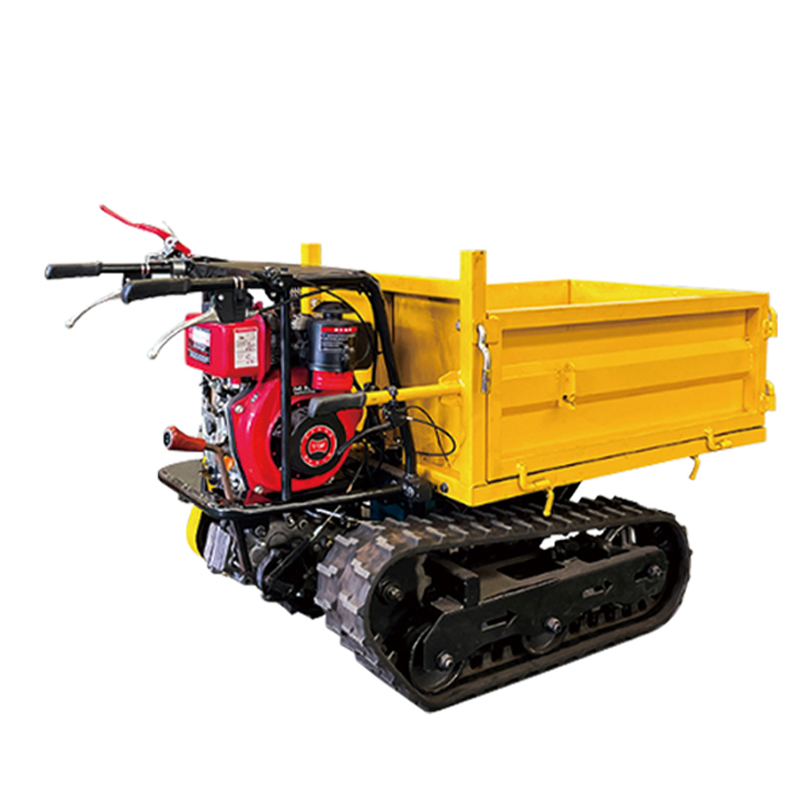
I. Wear Judgment and Replacement Standards for Rubber Tracks
The wear of rubber tracks is mainly concentrated on three parts: the pattern, rubber matrix, and skeleton layer. The judgment methods are as follows:
Pattern Wear Judgment
The anti-skid pattern of a rubber track is the core structure to enhance ground adhesion. The pattern depth of a new track is usually 15–25 mm.When the remaining pattern depth is ≤ 3 mm, or the pattern is largely flattened, cracked, or chipped, the anti-skid performance of the track will be significantly reduced, leading to easy slippage under muddy and steep slope conditions, and the track needs to be replaced.
Damage Judgment of Rubber Matrix and Skeleton Layer
Inspect the side and bottom surfaces of the track. If there are penetrating cracks (crack depth exceeding 1/2 of the rubber thickness) or exposed steel wire/fiber skeleton, it indicates that the rubber matrix has lost its load-bearing capacity. Continuous use will cause track fracture, and replacement is a must.If there is large-area degumming and delamination on the track edge, or rubber aging and cracking at the track joint, timely replacement is also required.
Abnormal Wear Judgment
If the track suffers from severe local wear on one side (e.g., the pattern on one side is flattened while the other side remains intact), it is mostly caused by uneven track tension or improper steering operation. It is necessary to adjust the equipment first, and then replace the track when the wear reaches the standard.
II. Wear Judgment and Replacement Standards for Steel Tracks
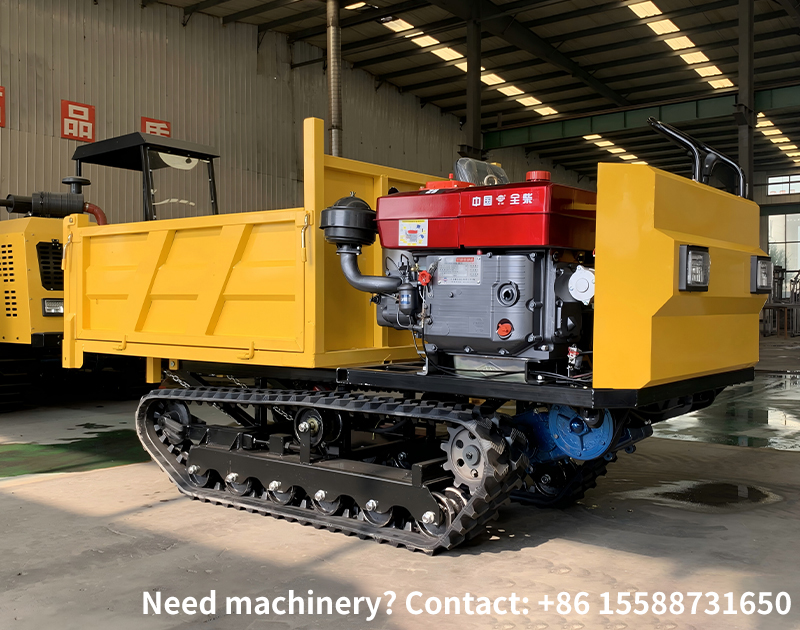
The wear of steel tracks is concentrated on three core components: track shoes, track pins, and bushings, which needs to be judged by combining dimensional measurement and appearance inspection:
Track Shoe Wear Judgment
Anti-skid tooth wear: The height of new anti-skid teeth on steel track shoes is usually 20–30 mm. When the remaining height of anti-skid teeth is ≤ 5 mm, or the tooth surface is flattened or has chipped gaps, the grip will be seriously reduced, and the track shoes need to be replaced.
Track shoe thickness wear: Measure the thickness of the track shoe with a caliper. The thickness of a new track shoe is generally 15–25 mm. When the wear loss of thickness exceeds 30% of the original thickness, or the track shoe has penetrating holes or severe deformation, replacement is required.
Track Pin and Bushing Wear Judgment
The fit clearance between the track pin and bushing is a key indicator. The fit clearance of a new bushing is ≤ 0.5 mm.When the fit clearance is ≥ 3 mm (which can be perceived by shaking the track shoe; the track shoe will be obviously loose if the clearance is too large), abnormal track noise and deviation will occur during driving, and the wear rate will accelerate sharply. In this case, the track pins and bushings need to be replaced as a set. If the track shoes are also severely worn, replace the entire track directly.
Track Deformation and Crack Judgment
If the track is twisted or bent sideways as a whole, or the track shoe weld is cracked or the track link is broken, it cannot be used continuously after repair and must be replaced immediately.
III. Universal Replacement Warning Signals
For any type of track, even if the above wear thresholds are not reached, it is recommended to replace it in advance if the following situations occur:
Frequent track slippage and deviation occur during operation, and factors such as improper tension and wheel train faults have been ruled out.
Track damage causes abnormal wear of driving wheels and idler wheels (e.g., wheel tooth chipping, bearing overheating).
The track is at risk of local fracture, which may lead to equipment shutdown or safety accidents.