

 Chinese
- HOME >> NEWS >> Company news
NEWS
Latest Product
Contact Us
What Are the Fundamental Differences Between Road Rollers and Motor Graders in Terms of Engineering Applications and Operation Methods?
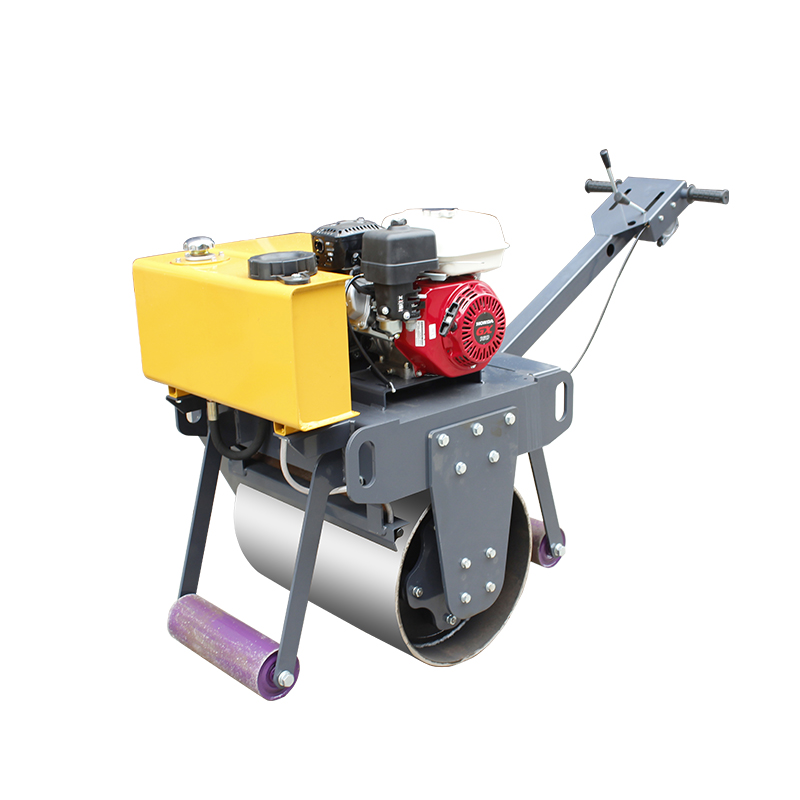
2025-11-06The fundamental differences between road rollers and motor graders lie in their core purposes and operation methods: the former focuses on "compaction," while the latter focuses on "leveling." In engineering processes, they usually work in a sequential manner, each performing its own dedicated role.
I. Core Purposes: Completely Different Engineering Problems Addressed
1. Road Roller: Core Function is "Compaction and Reinforcement"
Its purpose is to reduce the porosity of materials through mechanical force, thereby improving density and load-bearing capacity.
It is mainly used on key structural layers such as subgrades, base courses, and surface courses to ensure that subsequent projects (e.g., road paving, building construction) do not encounter quality issues due to foundation settlement or insufficient strength.
In simple terms, a road roller "lays a solid foundation" for the project, making the structure more stable and durable.
2. Motor Grader: Core Function is "Leveling and Shaping"
Its purpose is to adjust the ground elevation, slope, and flatness using a blade, ensuring that the site or subgrade meets the designed dimensional requirements.
It is mainly used for site clearing, subgrade leveling, slope trimming, or spreading materials to a specified thickness before compaction.
In simple terms, a motor grader "trims the shape" of the project, making the ground conform to the designed height, slope, and planar accuracy.
II. Operation Methods: Significant Differences in Mechanical Structure and Action Logic
1. Road Roller: Acts on Materials Through "Pressure"
2. Motor Grader: Adjusts Materials Through a "Blade"
III. Typical Sequential Coordination in Engineering Processes
In road construction, the two machines usually cooperate in the sequence of "motor grader → road roller":