This question is highly precise, directly pointing to the core control points of road roller operation quality. The key factors influencing the final compaction quality of road rollers can be categorized into four major types: mechanical parameters, material properties, operation methods, and environmental conditions, each with clear core indicators.
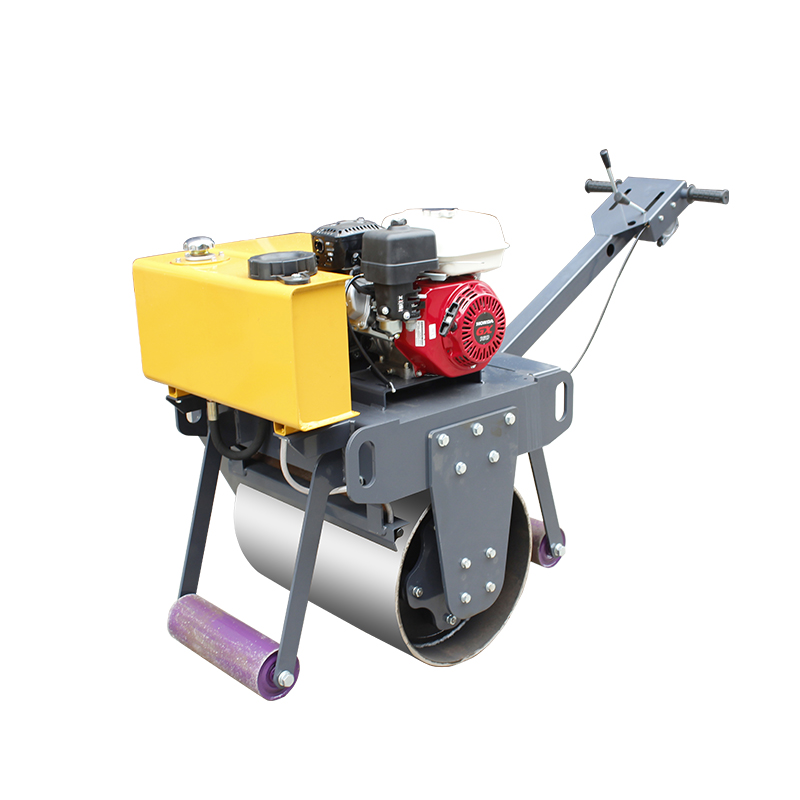
Compaction Tonnage: The greater the tonnage, the stronger the static pressure on materials, and the better the deep compaction effect. Large tonnage is suitable for foundation layers such as subgrades, while small tonnage is suitable for surface layers or narrow areas.
Vibration Parameters: Including vibration frequency and amplitude. High frequency with low amplitude is suitable for surface compaction, which can improve flatness; low frequency with high amplitude is suitable for deep compaction, which can enhance material density.
Compaction Wheel Type:
Steel-wheel rollers are suitable for rigid materials such as asphalt and cement, relying on static pressure and vibration force for compaction.
Rubber-tired rollers are suitable for soil and stabilized soil, achieving uniform compaction through flexible extrusion.
Material Moisture Content: This is a core influencing factor. Excessively high moisture content causes materials to "spring back" (rebound under pressure), while excessively low moisture content makes compaction difficult. It needs to be controlled within the optimal moisture content range to achieve the best compaction effect.
Material Gradation: The proportion of particle size distribution. Materials with uniform gradation (such as continuously graded sand and gravel) are easier to compact; unbalanced gradation tends to cause gaps or segregation.
Material Type: Different materials like soil, sand-gravel, and asphalt mixtures have significant differences in compaction characteristics. For example, asphalt needs to be compacted at a specific temperature, while the compaction method for soil needs to be adjusted according to its plasticity index.
Number of Compaction Passes: Determined based on material type and compaction degree requirements. Insufficient passes result in inadequate density, while excessive passes may damage the material structure (e.g., pushing and shifting of asphalt pavements).
Travel Speed: Excessively high speed reduces the contact time between the roller and materials, leading to insufficient compaction; excessively low speed reduces efficiency and may cause local over-compaction. It is usually controlled at 2-5 km/h.
Compaction Sequence and Route: Generally follows the principles of "light first, then heavy; slow first, then fast; edges first, then center". Disordered rolling is prone to missing compaction or repeated compaction, resulting in uneven compaction degree.
Temperature: It has the greatest impact on asphalt pavements. Compaction operations must be carried out within the optimal temperature range of 120-160℃. If the temperature is too low, asphalt will harden and cannot be compacted.
Weather: Compaction operations are strictly prohibited on rainy days or when the soil moisture content exceeds the standard; otherwise, "rubber soil" (soft, non-compactable soil) will form, damaging the subgrade structure. Windy weather accelerates the cooling of asphalt, affecting the compaction time window.
Foundation Conditions: If the lower foundation is uneven or insufficient in strength, it will cause uneven stress on the upper compaction layer, leading to local settlement or failure to meet the compaction degree requirements.



 Chinese