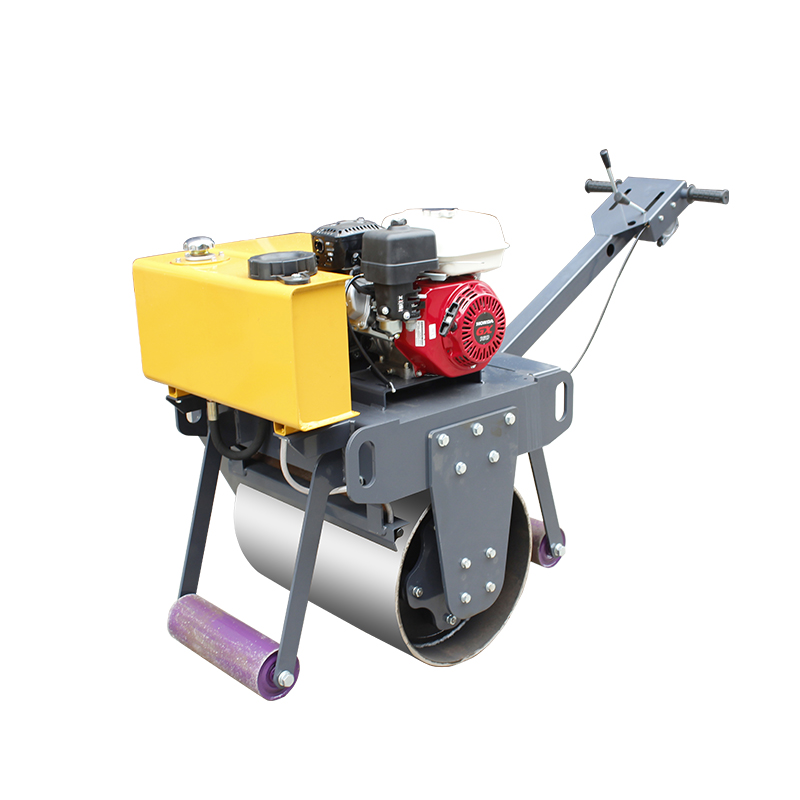
The core function of road rollers in engineering construction is to compact materials using mechanical force, and they mainly undertake two key operational tasks: laying a solid foundation for subsequent construction and ensuring road surface quality.
Subgrade Compaction: Compacts the foundation soil or sand-gravel layer of roads, bridges, and buildings to reduce soil porosity and prevent subsequent settlement.
Base/Binder Course Compaction: Compacts materials such as cement-stabilized soil and lime soil in the road base course to enhance the strength and load-bearing capacity of the base, providing support for the paving of the surface course.
Foundation Pit and Embankment Compaction: Conducts layered compaction on the backfill soil of building foundation pits and subgrade embankment areas to ensure the compaction degree of the backfill soil meets standards and prevent deformation of buildings or subgrades.
Asphalt Pavement Compaction: After the asphalt mixture is paved, steel wheel or rubber-tired rollers are used for compaction to expel air from the mixture, making the pavement flat and dense, and improving its wear resistance and service life.
Auxiliary Compaction of Cement Concrete Pavements: Performs initial compaction or re-compaction on cement concrete pavements to reduce surface air bubbles and improve the pavement's flatness and structural strength.
Compaction of Special Materials: For gravel roads, sand-gravel roads, etc., compaction is used to adjust the material gradation, enhance the integrity of the road surface, and reduce driving dust and damage.



 Chinese