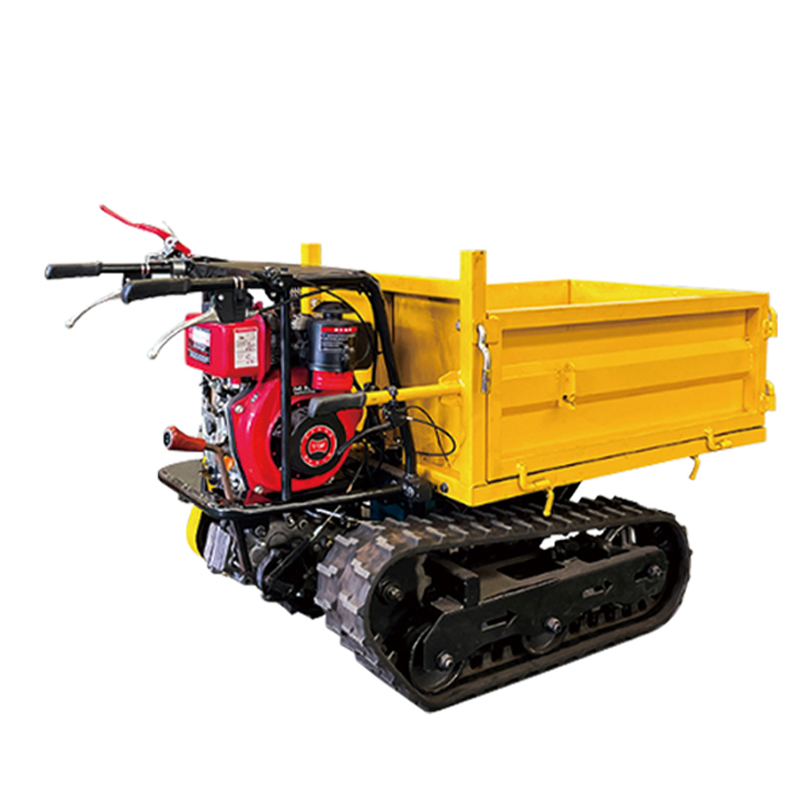
The core of basic cleaning and maintenance for a remote-controlled lawn mower after each use is "removing residues + drying protection + simple inspection". This can extend the equipment's service life and ensure normal operation next time. The specific steps are as follows:
Power-off operation: First, turn off the lawn mower's power, remove the battery or disconnect the power supply to avoid accidental activation during cleaning.
Clean the cutting deck and blades: Use a soft-bristle brush or a high-pressure water gun (in low-pressure mode) to remove grass clippings and mud adhering to the blades and cutting deck. Pay special attention to residues in the gaps of the cutting deck to prevent rusting or clogging.
Wipe the mower body: Use a dry cloth or a slightly damp cloth to wipe off dust and mud stains from the outer shell of the mower body and the surface of the tracks/wheels. Avoid water seeping into electronic components such as the motor and battery interface.
Clean the chassis: Flip the mower body (ensure the battery has been removed) and clean the entanglements (such as weeds and wires) on the chassis to prevent them from affecting the walking and cutting functions.
Air-drying naturally: After cleaning, place the lawn mower in a well-ventilated and dry area to fully dry the body and components. Pay special attention to key parts such as the battery interface and circuit interface; avoid direct sunlight exposure.
Blade rust prevention: If there is slight rust on the blades, gently polish it with fine sandpaper, then apply a small amount of anti-rust oil (or sewing machine oil) to prevent rusting from long-term exposure. Even if there is no rust, a small amount of oil can be applied to enhance protection.
Battery maintenance: Remove the battery and store it separately. Keep the interface dry and clean, avoid contact with metal objects, and charge it regularly according to the instructions (do not store it in a state of long-term low power).
Component fastening: Check the connecting parts such as the blades, tracks/wheels, and screws. If any are loose, tighten them in time to prevent them from falling off during the next use.
Function test: Turn on the power briefly (no-load operation) to check whether the blades rotate smoothly without abnormal noise, whether the remote control signal is sensitive, and whether the walking function is normal.
Consumable inspection: Check the wear condition of the blades. If there are gaps, deformation, or dull edges, replace or polish them in time to avoid affecting the cutting effect.
Storage environment: Store the lawn mower indoors in a dry, well-ventilated, and cool place. Avoid humid environments or extreme temperatures (such as high-temperature exposure and low-temperature freezing).
Avoid extrusion: Do not place heavy objects on the mower body during storage. Prevent the tracks/wheels from contacting sharp or rough surfaces for a long time to avoid deformation.



 Chinese