The core differences between road rollers of different tonnages lie in their compaction depth, operation efficiency, and applicable materials, which directly determine their application boundaries in various engineering scenarios.
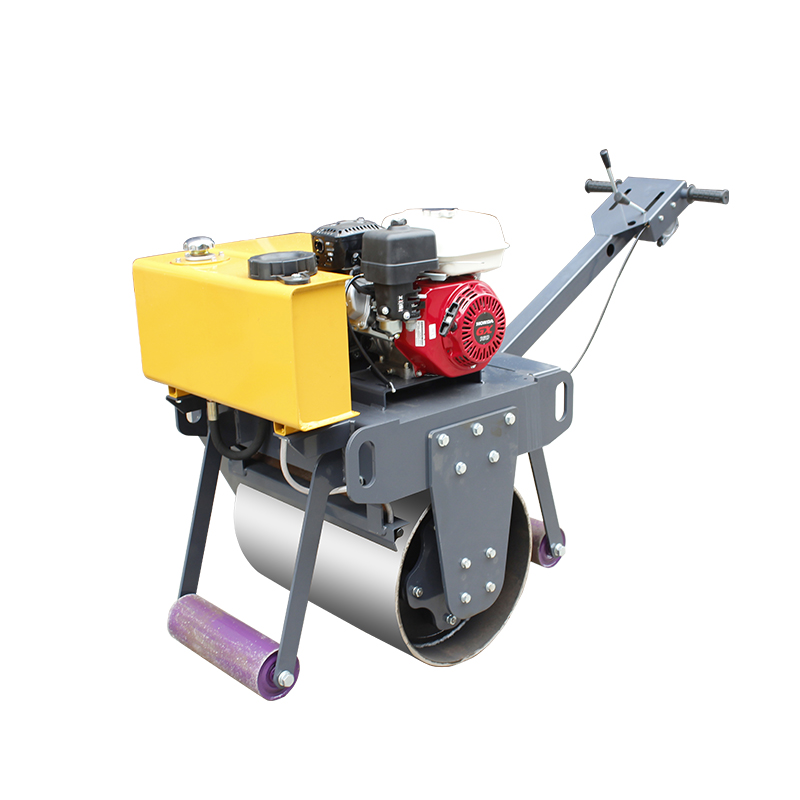
This type of road roller is lightweight with low compaction force, focusing on surface and fine compaction.
Applicable Materials: Asphalt surface layers, thin sand-gravel layers, lawn topsoil, and edge areas of subgrades.
Typical Scenarios: Daily maintenance and small-scale repairs of urban roads, paving of sidewalk tiles, site leveling in landscape gardens, and construction of footpaths in residential compounds.
Core Advantages: High flexibility, capable of operating in narrow spaces, and will not damage the base structure due to excessive pressure.
Medium-duty road rollers are the most versatile type, balancing compaction effect and operational flexibility.
Applicable Materials: Asphalt middle layers, cement-stabilized soil, graded crushed stone, and middle structural layers of subgrades.
Typical Scenarios: Main construction of municipal main roads, road construction inside residential areas, compaction of base courses for Class II highways, and ground paving of large parking lots.
Core Advantages: Wide application range; they can not only meet the compaction strength requirements of most base courses but also avoid material displacement and arching caused by excessive tonnage.
Heavy-duty road rollers have strong compaction force and large compaction depth, focusing on projects requiring deep foundation compaction and high load-bearing capacity.
Applicable Materials: Bottom layers of subgrades, rock-filled subgrades, embankment fills, and deep foundation soil in large sites.
Typical Scenarios: Subgrade construction of expressways or Class I highways, main compaction of water conservancy embankments, foundation treatment of airport runways, and site leveling of large industrial parks.
Core Advantages: Compaction depth can reach more than 1 meter, which can effectively eliminate foundation pores, reduce subsequent settlement, and meet the quality requirements of high-load-bearing projects.



 Chinese