
 Chinese
- HOME >> NEWS >> Company news
NEWS
Latest Product
Contact Us
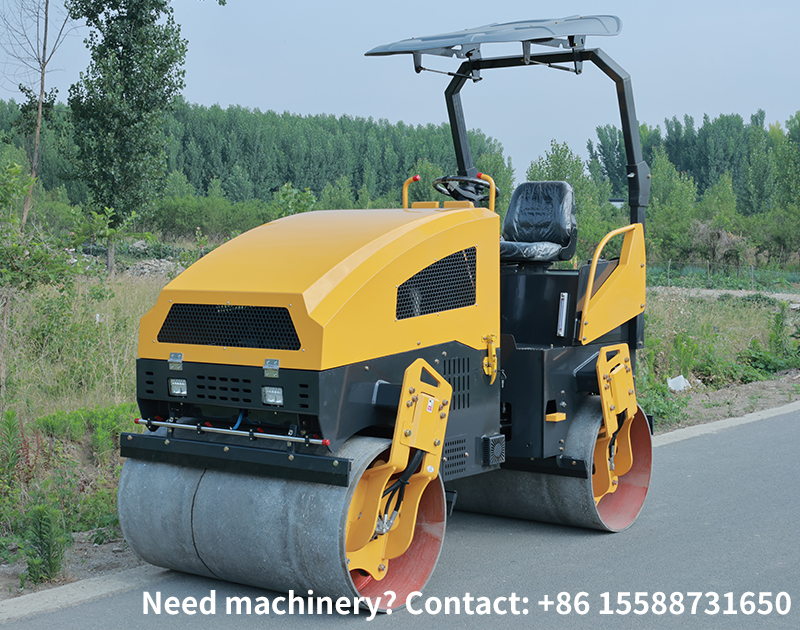
Why should rollers follow the principle of "light first, then heavy; slow first, then fast" during rolling?
2026-03-14I. Light first, then heavy
Light rolling first
Stabilizes the mixture initially and prevents shoving, bulging, and cracking.
Increases density gradually, avoiding structural damage, loose surface, and aggregate crushing caused by heavy rolling at the beginning.
Heavy rolling later
Further improves density to meet the designed compaction requirements.
Compacts on a stable basis, resulting in higher efficiency and better quality.
One sentence: Light rolling first stabilizes and prevents deformation; heavy rolling later achieves density and strength.
II. Slow first, then fast
Slow rolling first
Ensures uniform compaction without missing areas, tearing, or shoving.
Provides sufficient time for material densification to guarantee compaction quality.
Fast rolling later
After the temperature drops and the material stabilizes, the speed can be appropriately increased to improve construction efficiency.
Only performs smoothing and final rolling without affecting density.
One sentence: Slow rolling first ensures uniformity and quality; fast rolling later improves efficiency without negative effects.
III. Standard answer template
Rollers follow the principle of light first, then heavy; slow first, then fast during rolling:
Light first, then heavy: Light rolling is used first to stabilize the mixture, prevent shoving, cracking and loosening; heavy rolling is then applied to increase density and ensure compaction strength.
Slow first, then fast: Slow rolling is used initially to ensure uniformity, avoid missing compaction and damaging the pavement structure; the speed is increased appropriately later to improve construction efficiency on the premise of ensuring quality.