

 Chinese
- HOME >> NEWS >> Industry news
NEWS
Latest Product
Contact Us
What are the types of road rollers?
2025-04-15Classification of Road Rollers
Road rollers are primarily categorized based on working principle, compaction method, and application, as follows:
1. By Compaction Principle
Static Rollers
Relies on deadweight for compaction.
Suitable for cohesive soils and final compaction of asphalt surfaces.
Features: No vibration, smooth surface finish, but lower efficiency.
Vibratory Rollers
Uses high-frequency vibration from the drum to enhance compaction.
Ideal for granular materials like gravel and asphalt mixtures.
Features: Deep compaction, high efficiency, but requires careful operation to avoid material fracturing.
Impact Rollers (Tamping Rollers)
Applies dynamic impact force for compaction.
Used for deep fills, subgrade reinforcement, and special projects.
Features: High impact energy for deep layers, but slower operation speed.
2. By Structural Design
Steel Wheel Rollers
Single Drum: Mainly for subgrade compaction (e.g., 10-20 ton vibratory models).
Double Drum: Used for asphalt pavement (e.g., 6-12 ton vibratory models).
Pneumatic-Tire Rollers (Rubber-Tire Rollers)
Compacts through kneading action of pneumatic tires.
Applied in final asphalt layers or stabilized base courses.
Features: Prevents aggregate crushing, improves density and surface smoothness.
Combination Rollers
Hybrid design with a steel drum (front) and pneumatic tires (rear).
Balances vibration compaction and kneading effects.
3. By Weight & Application
Heavy Rollers (10-25 tons)
For large-scale projects like highways and airport runways.
Medium Rollers (5-10 tons)
Suitable for general roadwork and municipal engineering.
Light Rollers (1-5 tons)
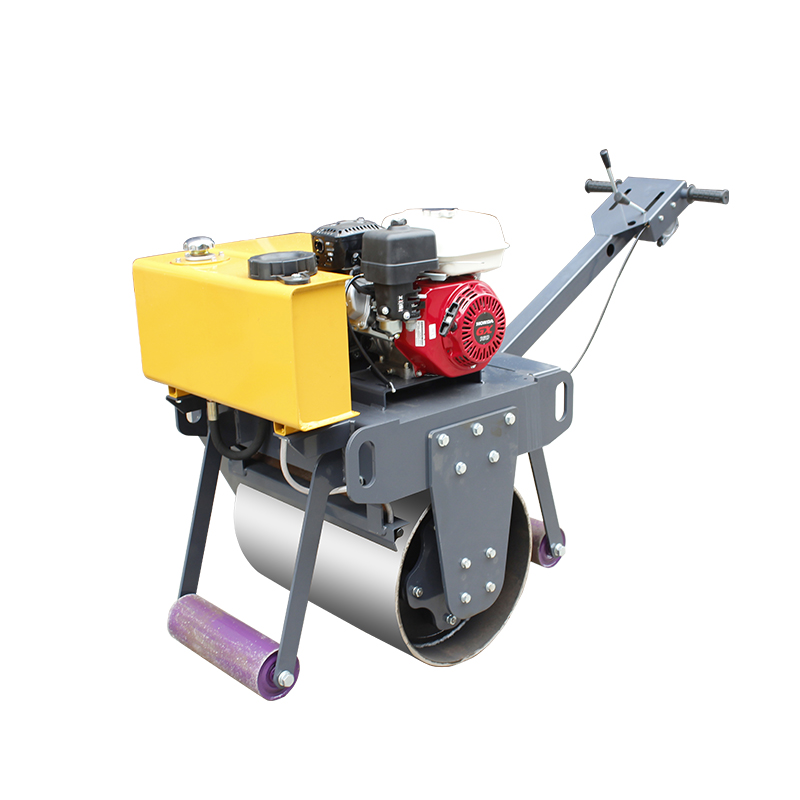
Designed for confined spaces, trench backfilling, and sidewalks (e.g., walk-behind rollers).
4. Specialized Types
Walk-Behind Rollers: 1-3 tons, agile for small-area compaction.
Slope Rollers: Equipped with anti-slip features for embankments and slopes.
Electric Rollers: Zero emissions, ideal for indoor or eco-sensitive zones.
Conclusion
Roller selection depends on material type (soil/asphalt), layer thickness, and site conditions (space/environmental requirements). Light rollers offer versatility, heavy rollers ensure deep compaction, while vibratory and static methods each suit specific scenarios.