

 Chinese
- HOME >> NEWS >> Industry news
NEWS
Latest Product
Contact Us
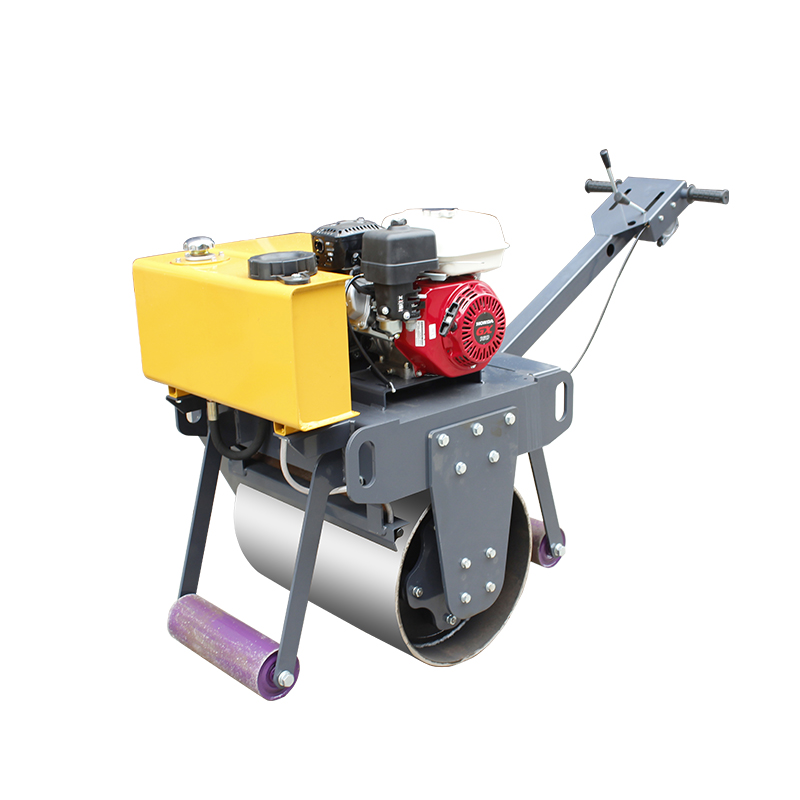
Why Are Small Road Rollers Being Used More Frequently Than Large Ones?
2025-04-15In recent years, the use of small road rollers has significantly increased, even surpassing large rollers in certain scenarios. This shift is driven by the following key factors:
1. Growing Demand for Precision Urban Construction
Narrow-space operations:
Urban roads, sidewalks, residential alleys, underground parking lots, and other confined spaces are difficult for large rollers to access. Small rollers (e.g., 1-3 ton walk-behind or mini models) offer superior maneuverability.Non-disruptive construction:
In built-up areas (e.g., utility trench backfilling, greenbelt repairs), small rollers minimize damage to adjacent structures (pipes, curbs) and reduce secondary risks.
2. Trend Toward Smaller, Decentralized Projects
Increased municipal maintenance:
Compared to large-scale highway construction, urban road repairs, manhole backfilling, and localized subgrade reinforcement now dominate, favoring small rollers for efficiency.Rise of "micro-renovation" projects:
Old neighborhood upgrades and alleyway renovations involve scattered compaction needs, making small rollers more cost-effective than transporting large equipment.
3. Efficiency and Cost Optimization
Quick deployment:
Small rollers can be transported via light trucks or trailers, eliminating the need for heavy haulers and saving time/costs.Lower operating expenses:
They consume less fuel (or use electric power) and often require just one operator, whereas large rollers demand higher labor and energy inputs.
4. Technological Advancements & Versatility
Electric/small new energy rollers:
Eco-friendly policies have boosted electric small rollers (zero emissions, low noise), ideal for indoor or noise-sensitive areas (e.g., near hospitals/schools).
Multifunctionality:
Attachments like plate compactors or trench wheels allow small rollers to handle diverse tasks, reducing equipment investments.
5. Limitations of Large Rollers
Over-compaction risks:
Large rollers may fracture thin asphalt layers or loose materials, while small rollers ensure precision.Poor cost-efficiency:
For small-scale projects, the rental/depreciation costs of large rollers are hard to justify.
Typical Application Scenarios
| Scenario | Small Roller Advantage | Large Roller Suitability |
|---|---|---|
| Sidewalk compaction | Agile, preserves curbs | Not applicable |
| Trench backfilling | Narrow wheels fit tight spaces | Requires special attachments |
| Asphalt patch repair | Targeted compaction, avoids over-pressing | May crush repaired areas |
| Indoor floor work | Quiet, emission-free | Cannot operate indoors |
Conclusion
The rise of small road rollers reflects the construction industry’s shift toward precision, sustainability, and efficiency. Their adaptability, cost-effectiveness, and eco-friendliness make them ideal for modern urban micro-projects. However, large rollers remain indispensable for heavy infrastructure, with the two types serving as complements rather than substitutes.