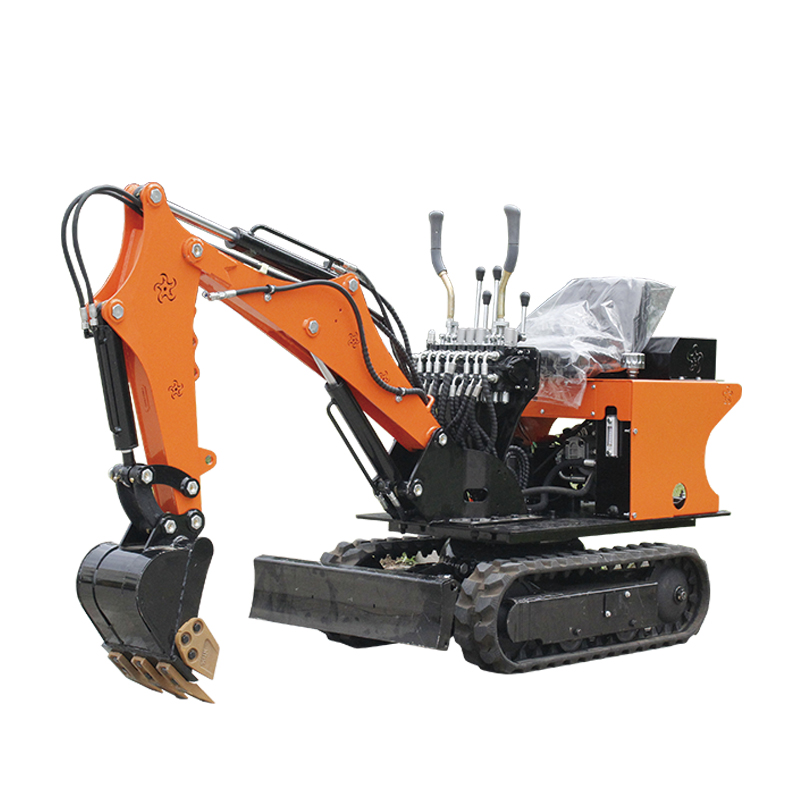
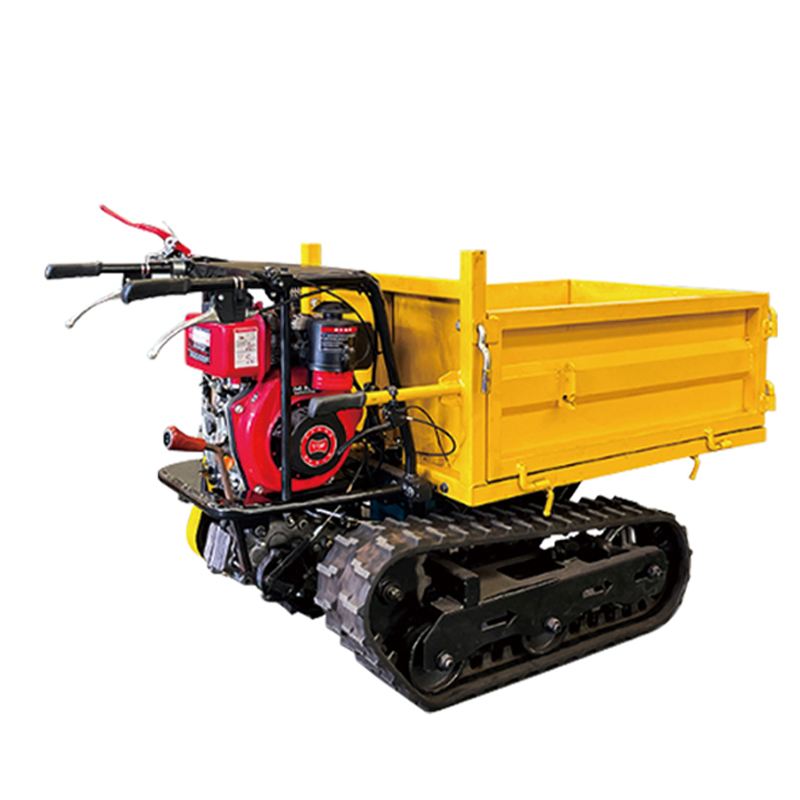
An excavator, whose full name is "Excavating Machinery", is a type of heavy construction machinery that takes hydraulic or mechanical transmission as its core power. It uses front-end working devices (such as buckets, breakers, etc.) to carry out operations like excavating, transporting, loading, and crushing materials such as soil, rocks, ores, and construction waste. It is widely used in scenarios including building construction, mining, road construction, farmland water conservancy, and urban demolition, and is one of the core equipment in the field of engineering construction.
To understand its definition, it is necessary to clarify its core structural logic of "power - execution - control", which mainly consists of 4 parts:
Power System: Usually a diesel engine (small excavators may also use electric motors). It provides power for the entire machine and drives the hydraulic pump or mechanical transmission mechanism.
Working Device: The "execution end" of the excavator, which determines its operation type. The core part is the excavating device (composed of a boom, arm, and bucket, which realizes "lifting - lowering - flipping" movements driven by hydraulic cylinders). In addition, it can be replaced with attachments such as breakers (for crushing rocks), grapples (for grabbing steel/wood), and rippers (for breaking hard soil layers) to expand operational functions.
Travel Device: It determines the machine's mobility and is divided into two types:
Tracked type: It has a large ground contact area and strong off-road performance, making it suitable for rough sites (such as mines and construction sites).
Wheeled type: It has a fast driving speed and flexible steering, making it suitable for flat roads (such as municipal engineering and short-distance transfer).
Control System: Through hydraulic valves, control levers, electronic control systems, etc., it realizes precise control of the working device and travel device (such as the excavation depth of the bucket, the lifting speed of the boom, and the steering of the entire machine).
Core Operation: It takes "excavation" as its basic function, and can be extended to crushing, grabbing, etc. by replacing attachments. However, the core logic is "changing the physical form/position of solid materials".
Power Transmission: The mainstream is hydraulic transmission (accounting for more than 90%). Relying on the large thrust and stability of the hydraulic system, it can realize heavy-load operations (such as excavating hard rocks). A small number of small excavators use mechanical transmission (with low cost and simple maintenance).
Operating Scenarios: It is mostly used in "non-road environments" (construction sites, mines, etc.) and needs to adapt to complex working conditions (high and low temperatures, dust, heavy loads). Therefore, the entire machine has high structural strength and strong protection.
In short, the essence of an excavator is "a heavy machine that efficiently completes the excavation and handling of engineering materials by driving specific working devices with power". Its design core revolves around "operation efficiency, working condition adaptability, and operation accuracy".
Do you need me to sort out a bilingual glossary of key excavator terms (including Chinese, English, and brief explanations) based on this text to facilitate your quick reference and understanding of professional vocabulary?



 英文
英文