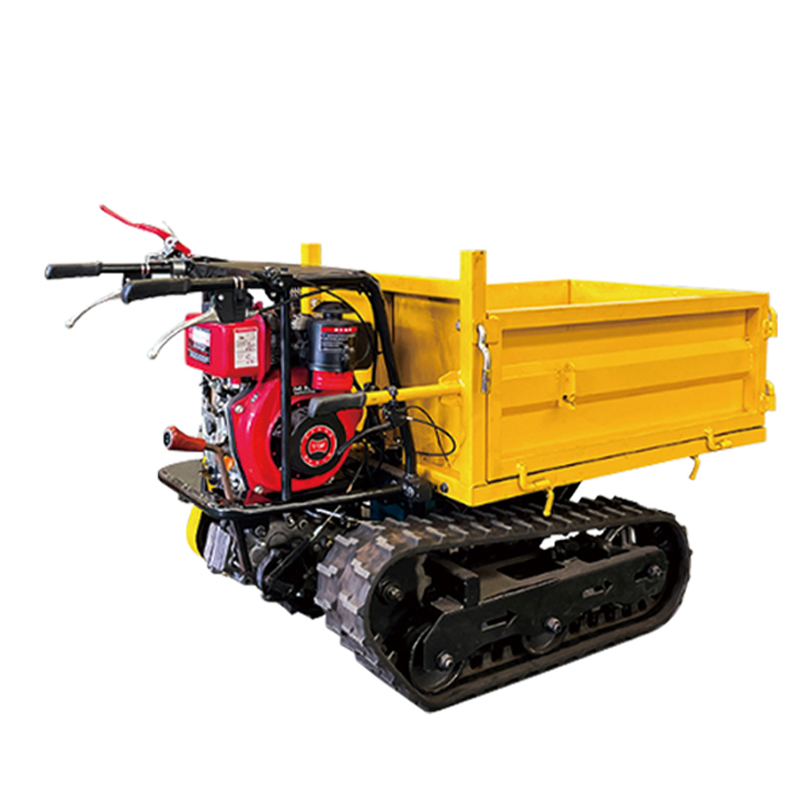
The core differences between tracked excavators and wheeled excavators are mainly reflected in the following aspects:
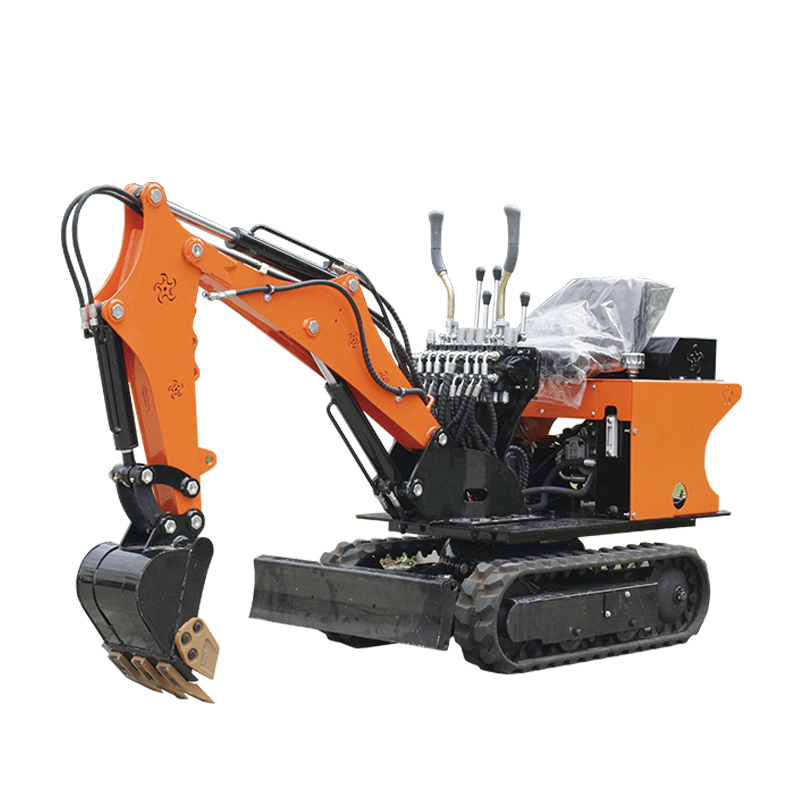
Tracked excavators: They use tracks as their travel device. With a large ground contact area and strong trafficability, they are not easy to get stuck in soft or rough terrains such as mines and swamps, and have good climbing ability. However, their moving speed is slow, generally around 8 km/h, and they cannot drive directly on roads. For long-distance transfers, they need to be transported by flatbed trucks.
Wheeled excavators: They adopt tires as their travel device and have a fast moving speed, usually reaching about 35 km/h. They can drive on roads by themselves, enabling quick transfers, which reduces transportation time and costs. With strong mobility, they are suitable for operations in environments like urban roads and flat pavements.
Tracked excavators: They have a large self-weight, a low chassis, a large ground contact area, and a low center of gravity. This ensures good stability during operation, allowing them to withstand large excavation forces and impact forces. They are suitable for large-scale excavation and loading tasks. Their excavation depth and force are usually greater than those of wheeled excavators, giving them an advantage when digging deeply or excavating hard materials.
Wheeled excavators: Their chassis counterweight is relatively insufficient and their center of gravity is higher, making them prone to rollover during load-bearing operations with poor stability. Their excavation force and depth are generally less than those of tracked excavators, so they are more suitable for small and medium-sized projects.
Tracked excavators: They are suitable for various harsh working conditions, such as mining, large-scale earthwork projects, and water conservancy and hydropower construction. These are places where ground damage is not a major concern, and tracked excavators can operate stably under complex terrain conditions.
Wheeled excavators: They are mainly used in projects that require high mobility, such as urban construction, road maintenance, and pipeline laying. They are particularly suitable for construction scenarios with high requirements for ground protection, such as pipeline excavation on urban roads, where they can transfer quickly and cause less damage to the road surface.
Tracked excavators: The track structure is complex, with many components that wear quickly. Regular inspections, tensioning, and replacement of components like tracks and track shoes are necessary, resulting in higher maintenance costs.
Wheeled excavators: Tire maintenance is relatively simple, and the replacement frequency is low. Moreover, the travel mechanism of wheeled excavators has fewer components, so the overall maintenance cost is usually lower than that of tracked excavators.
Would you like me to make a comparison table of tracked and wheeled excavators in English that summarizes the four core difference dimensions, so you can view and compare their characteristics more intuitively?



 Chinese