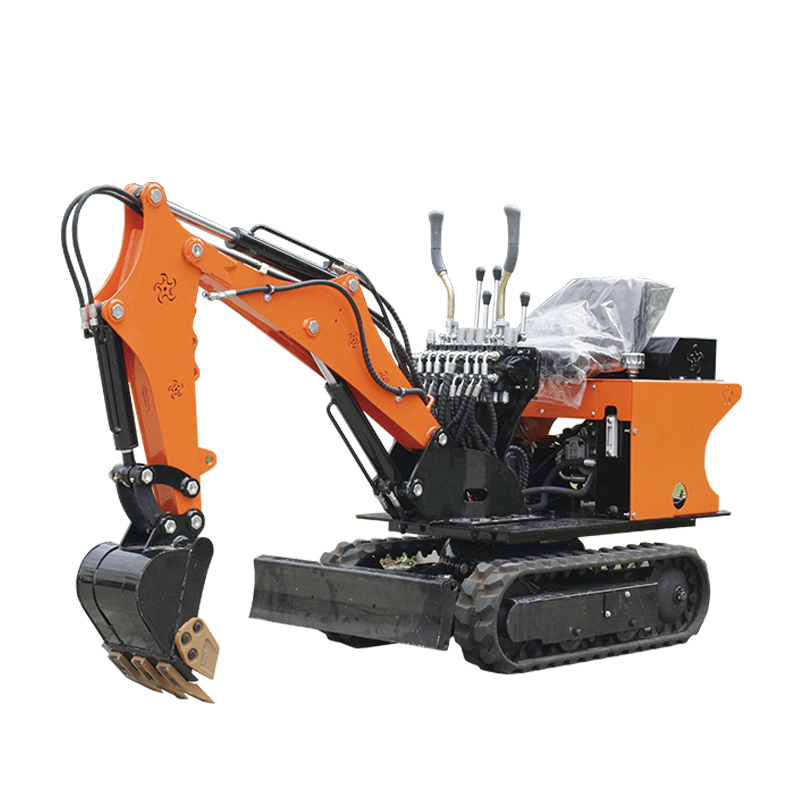
The replacement cycle and precautions for excavator hydraulic oil directly affect the service life and operating efficiency of the hydraulic system. The details are as follows:
The replacement cycle of hydraulic oil is not a fixed value. It needs to be comprehensively judged based on the operating environment, oil condition, and equipment manual. The common reference standards are as follows:
Regular working conditions:
If the excavator operates in a dry and clean environment (such as urban construction sites) and uses the original recommended hydraulic oil, it should be replaced every 2000-3000 hours (about 1 year, subject to the equipment manual).
Severe working conditions:
For long-term operation in environments with a lot of dust, humidity (such as muddy areas, rainy seasons), high temperatures (such as outdoor operations in summer), or low temperatures, the replacement cycle should be shortened to 1500-2000 hours.
If the hydraulic oil is obviously contaminated (such as mixed with water or metal debris), emulsified (showing a milky white color), discolored (turned black or has an peculiar smell), it must be replaced immediately without waiting for the fixed cycle.
When replacing hydraulic oil, it is necessary to strictly follow the operating specifications to avoid polluting the system or leaving hidden dangers. The specific precautions are as follows:
Choose matching hydraulic oil:
Must use the model specified in the equipment manual (such as anti-wear hydraulic oil HM 46#, 68#, etc.). Hydraulic oils of different brands and models must not be mixed (additive components may conflict, leading to a decline in oil performance).
Prepare tools and auxiliary materials:
Including wrenches, oil barrels, oil filters (or funnels + strainers), clean rags (without fiber shedding), sealants (if the interface gasket is aging), etc., to ensure that the tools are clean and free of impurities.
Preheat the hydraulic system:
Start the engine and let the hydraulic oil circulate in the system for 10-15 minutes (the oil temperature rises to 40-50℃) to enhance the fluidity of the oil and facilitate the complete discharge of old oil.
Completely drain the old oil:
First, open the oil drain valve at the bottom of the fuel tank to drain the old oil in the main fuel tank;
At the same time, operate various actions (such as fully extending and retracting the boom, stick, and bucket) to allow the residual oil in the cylinders and pipelines to flow back to the fuel tank and be discharged, ensuring that the old oil in the system is completely drained (needs to be repeated 3-5 times);
If the equipment has return oil filters and suction oil filters, they need to be disassembled and replaced simultaneously (the old filters will retain pollutants, and failure to replace them will contaminate the new oil).
Clean the fuel tank and strainer:
After draining the old oil, open the fuel tank cap, wipe the inner wall of the fuel tank with a clean rag (do not use cotton yarn to avoid fiber residue), and remove the impurities and water deposited at the bottom;
Check whether the strainer of the fuel tank vent is blocked. If there is dust, it needs to be cleaned or replaced to prevent impurities from being brought in during subsequent oil suction.
Correct way to fill new oil:
New oil must be filled through an oil filter (or a funnel with a strainer) to avoid direct pouring (to prevent impurities in the oil barrel from entering the system);
The filling amount must strictly follow the liquid level gauge scale (usually 70%-80% of the fuel tank volume). It should not be too much (easy to cause oil temperature rise) or too little (cavitation due to suction).
Remove air from the system:
After filling with new oil, start the engine (idle speed), slowly operate each action to the maximum stroke, and repeat it many times (about 5-10 minutes) to discharge the air in the pipelines and cylinders (if there is air, it will cause movement jamming, abnormal noise, or insufficient pressure).
Check liquid level and leakage:
After stopping the machine, wait for 5-10 minutes (let the oil flow back to the fuel tank), check whether the liquid level is within the standard range, and replenish if insufficient;
Observe whether there is leakage at each pipeline interface and cylinder seal. If there is, tighten or replace the seal.
Record replacement information:
Record the replacement date, duration, oil model, and post-replacement status to facilitate tracking of the maintenance cycle.
In daily use, it is necessary to regularly check the hydraulic oil level and condition (such as once a week). If emulsification, impurities in the oil, or abnormal drop in liquid level are found, promptly investigate the cause (such as whether there is pipeline damage leading to water or dust ingress).
The replacement cycle of hydraulic oil filters (return oil filters, suction oil filters) is usually shorter than that of oil replacement (such as every 500-1000 hours), which needs to be paid attention to separately to avoid system pressure loss or pollution due to filter blockage.
By standardizing the replacement of hydraulic oil and doing a good job in daily maintenance, the wear of core components such as hydraulic pumps and cylinders can be effectively reduced, and the service life of the equipment can be extended.



 Chinese