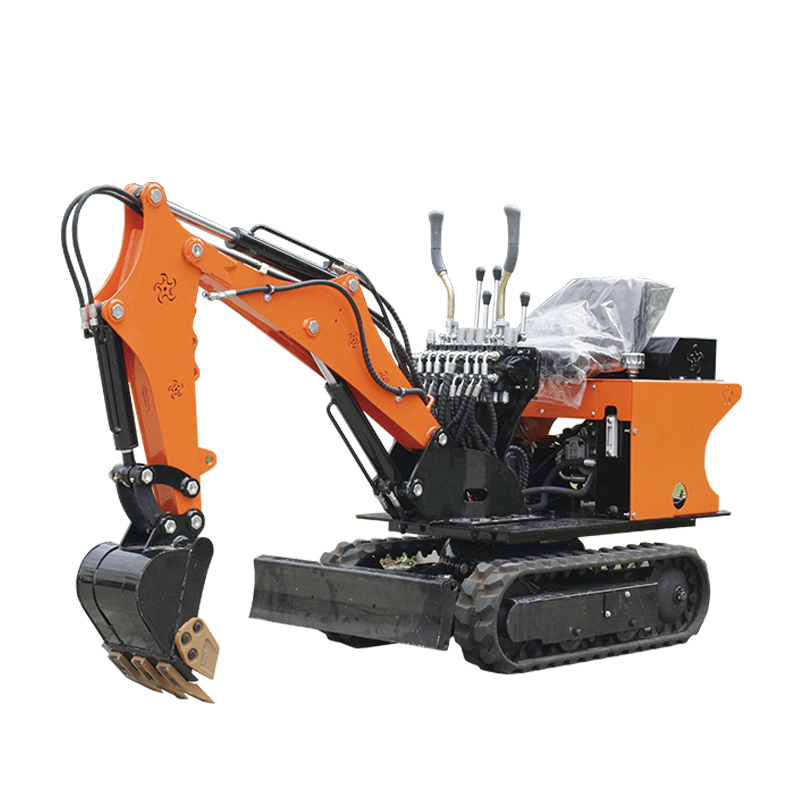
Excavators face multiple risks during demolition operations, such as structural collapse, falling object strikes, and equipment overturning. Safety measures need to be formulated from various aspects including pre-operation preparation, operational specifications, and on-site management. The details are as follows:
Conduct a detailed survey of the structural type of the object to be demolished (such as brick-concrete, frame, steel structure), its size, and the surrounding environment (whether there are adjacent buildings, pipelines, pedestrian paths). Evaluate the risk of collapse (such as whether old buildings have loose structures, damaged load-bearing components, etc.).
Formulate a special demolition plan, specifying the demolition sequence (following the principle of "demolishing from top to bottom, layer by layer" and prohibiting three-dimensional cross-operation), the operating radius of the excavator, and the safety warning range. If necessary, invite structural engineers to participate in the plan review.
Check for surrounding risk factors: Confirm whether there are gas pipelines, cables, water pipes, and other pipelines in the operation area. Contact relevant units to cut off the sources and mark them properly. Remove flammable materials and obstacles (such as billboards, scaffolding) near the demolished objects.
Check the excavator's condition: Focus on testing the hydraulic system of the boom and bucket (to prevent jamming or failure during operation), the braking system (to ensure stable parking on slopes or uneven ground), the cab protection (installation of tempered glass and anti-falling object canopies). The tracks/tires must be tightened to avoid slipping.
Equip with safety gear: Operators must wear safety helmets, non-slip shoes, and reflective vests. If demolishing high-dust or toxic and harmful areas (such as chemical plant buildings), dust masks, goggles, and other protective equipment must be worn.
Personnel training and division of labor: Clarify the responsibilities of operators, on-site commanders, and warning personnel to ensure all personnel are familiar with the demolition plan and emergency procedures. It is prohibited for unlicensed personnel to operate the excavator and for non-operating personnel to enter the warning area.
Follow the principle of "non-load-bearing first, then load-bearing; top first, then bottom": First demolish doors, windows, railings, and auxiliary components (such as billboards), then walls and floor slabs, and finally beams and columns. It is prohibited to hollow out the structure from the bottom (such as directly demolishing the bottom load-bearing wall) to prevent overall collapse.
Demolish in layers and sections: The height of each demolition should not be too high (for example, the height of each demolition of brick-concrete structures should not exceed 2 meters) to avoid large components falling and injuring equipment or personnel. When demolishing high-rise buildings, lifting equipment should be used to smoothly lift large components away, and direct pushing is prohibited.
Avoid overloading operations: The single grabbing amount of the excavator bucket should not be too large to prevent equipment overturning due to excessive load. When demolishing hard structures (such as concrete beams), a breaker can be used to break them first before transporting. Forcible dragging is prohibited.
Choose a solid operation site: The parking position of the excavator should be flat and solid, away from the collapse range of the demolished objects (at least 1.5 times the height of the demolished objects). If operating on a slope, the tracks/tires should be oriented upward of the slope and fixed with stones or pads to prevent sliding.
Maintain a safe operating radius: When the excavator rotates and the boom is extended, ensure the distance from surrounding buildings, pipelines, and other equipment (at least 1-2 meters) to avoid collision. It is prohibited to operate under overhead cables. If it is necessary to operate nearby, a safe distance must be maintained (at least 5 meters for 10kV cables) and a dedicated person should be assigned for monitoring.
Be alert to secondary dangers: During the demolition process, observe structural changes at any time. If abnormal situations such as wall cracking, component abnormal noise, or smoke are found, stop the operation immediately, evacuate to a safe area, and continue only after troubleshoot ing the risks.
Handle unstable structures: For inclined or loose walls or components, reinforce them with supports (such as steel pipes, wooden columns) before demolition. If there are signs of structural collapse, sound the horn to warn and evacuate immediately, and it is prohibited to attempt forced demolition.
Prevent object strikes: If debris splatters during demolition, the operator should close the cab doors and windows. Set a buffer layer (such as laying thick wooden boards, sandbags) under the demolished objects to reduce the impact force of falling objects.
Prohibit operation in severe weather: In case of heavy rain, strong winds (wind force exceeding level 6), dense fog, etc., stop the demolition operation, park the excavator on a flat site, retract the bucket, and cut off the power supply.
Set up a closed warning area: Use warning lines and warning signs (such as "No Entry", "Beware of Falling Objects") to delimit the operation range. Arrange special personnel to be on duty at the entrances and exits, and strictly prohibit irrelevant personnel from entering. For night operations, install warning lights and lighting equipment.
Real-time monitoring of operation status: Arrange commanders to observe the demolition progress and structural stability at a safe location, maintain real-time communication with excavator operators through walkie-talkies, and promptly stop dangerous operations.
Equip with emergency supplies: Prepare fire extinguishers, first-aid kits, hydraulic shears (for rescuing trapped personnel), cranes (for equipment overturning rescue) and other supplies on site. If there is a risk of gas leakage in the demolition area, prepare gas detectors and explosion-proof tools.
Formulate emergency procedures: Clarify the disposal steps for emergencies such as collapse, fire, and equipment failure. In case of personal injury, stop the operation immediately, call the emergency number, and organize on-site first aid. If a gas leak occurs, immediately evacuate personnel, cut off the fire source, and contact the gas company for handling.
Post-operation inspection: After daily operations, clean up scattered components and debris on the site, check whether the excavator is damaged (such as broken hydraulic pipes, deformed structural parts), and park the equipment after confirming that there are no safety hazards.
The core of safety in excavator demolition operations is: "Prevention first, control sequence and distance, real-time monitoring". Through scientific planning, standardized operation, and strict management, the risks of structural collapse, object strikes, etc. can be minimized to ensure the safety of personnel and equipment.



 Chinese