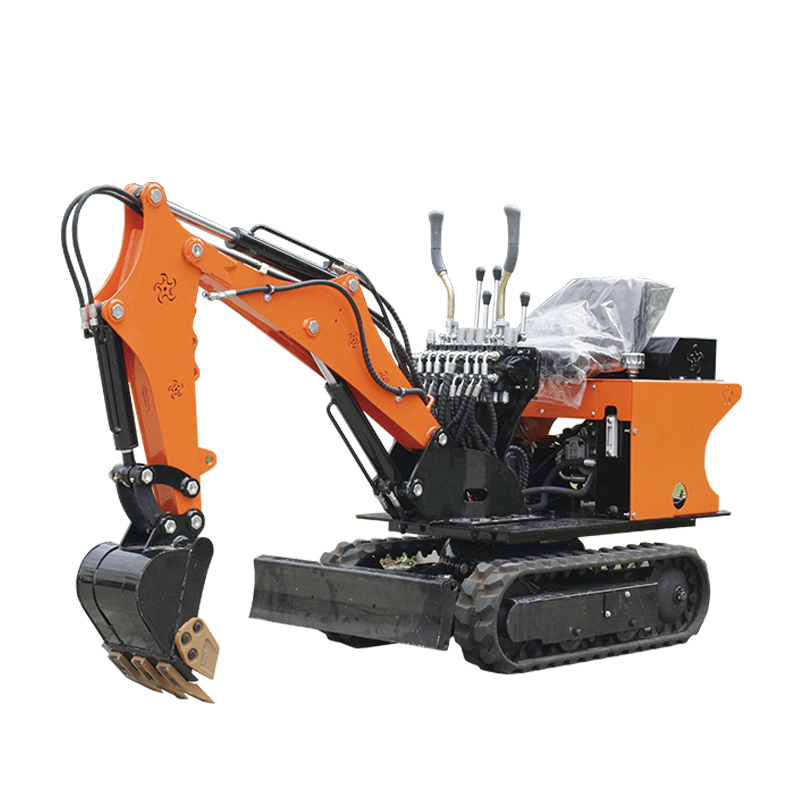
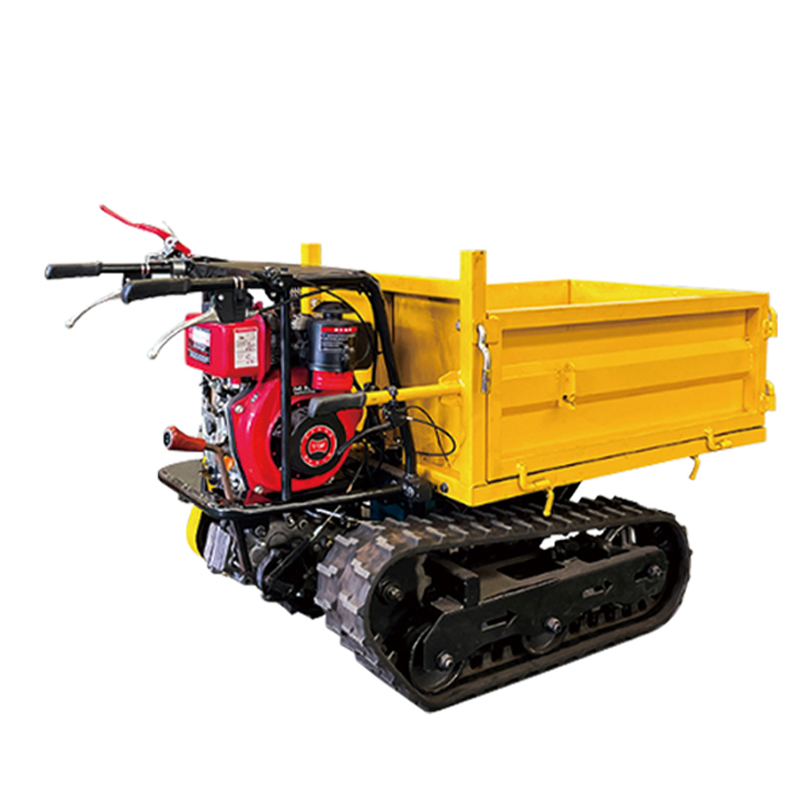
Crawler-type and wheel-type excavators differ significantly in structure, applicable scenarios, and performance, with their respective advantages and disadvantages as follows:
Advantages:
Strong ground adaptability
The crawler has a large contact area with the ground (low ground pressure, usually only 0.05-0.15MPa), enabling stable operation on soft ground (such as muddy areas, swamps, farmland), steep slopes (slopes up to 30° or more), or rough terrain without easily getting stuck.
High operational stability
The wide-based support and uniform weight distribution of the crawler, combined with retractable crawler frames (on some models), provide stronger anti-overturning capability during heavy-load operations such as hoisting and crushing.
Large traction force
Crawler transmission is driven by the friction between the crawler and the ground, making it suitable for driving on slippery or high-resistance roads (such as snow-covered or soft dirt roads), with better climbing ability than wheel-type excavators.
Strong durability
The crawler is composed of metal links, track plates, etc., which are wear-resistant and impact-resistant, suitable for long-term operation in harsh environments such as gravel and construction waste sites.
Disadvantages:
Slow driving speed
The maximum speed is usually only 3-5km/h, and it relies on trailers for transportation during relocation, increasing logistics costs and time.
High ground damage
Track plates (especially toothed ones) can crush the ground, easily damaging asphalt, concrete roads, or farmland, making them unsuitable for scenarios requiring ground protection (such as municipal roads, lawns).
Higher maintenance costs
The crawler structure is complex (including chains, drive wheels, guide wheels, etc.), with wearable parts requiring frequent replacement, resulting in higher later maintenance costs than wheel-type excavators.
Poor maneuverability
Turning is achieved through crawler differential, resulting in a large turning radius, which limits flexibility in narrow spaces (such as urban alleys).
Advantages:
Strong maneuverability
They have a fast driving speed (maximum speed up to 20-40km/h) and can relocate independently without relying on trailers, making them suitable for short-distance operations across multiple construction sites (such as multiple municipal projects in a city).
Ground-friendly
Rubber tires cause little damage to hardened roads (asphalt, cement) or lawns, making them suitable for scenarios requiring ground protection, such as municipal greening and road maintenance.
Flexible operation
Wheels have a small turning radius, making it easier to turn around and move in narrow spaces (such as factories, warehouses), suitable for operations in densely populated urban areas.
Low maintenance costs
The structure of tires and transmission systems (such as gearboxes, drive shafts) is relatively simple, and daily maintenance (such as tire replacement, lubrication) is more convenient and cheaper than that of crawlers.
Disadvantages:
Poor ground adaptability
Wheels have high ground pressure (usually 0.3-0.6MPa), making them prone to slipping or getting stuck on soft, muddy, or steep terrain, with weak climbing ability (slopes usually not exceeding 15°).
Weak operational stability
The support area of wheels is small, making them prone to tipping during heavy-load operations (such as hoisting heavy objects). They may rely on outriggers for assistance (equipped on some models), but deploying outriggers requires additional space.
Easy tire wear
Rubber tires are easily punctured or worn in sites with many gravels and sharp objects (such as mines, construction waste yards), with lower durability than crawlers.
Limited traction
Driven by the friction between tires and the ground, they are prone to slipping on slippery roads (rainy or snowy days) and have poor off-road performance.

| Scenario Type | More Suitable Model | Core Reason |
|---|
| Mines, farmland, swamps | Crawler-type | Low ground pressure, adapts to complex terrain |
| Municipal road maintenance, greening | Wheel-type | Protects the ground, strong maneuverability |
| Long-distance relocation, multi-site operations | Wheel-type | Can drive independently, saves transportation costs |
| Heavy-load hoisting, crushing operations | Crawler-type | High stability, strong anti-overturning capability |
| Operations in narrow urban alleys | Wheel-type | Small turning radius, high flexibility |
Crawler-type excavators are suitable for complex terrain, heavy-load operations, and harsh environments but are inconvenient to relocate and cause significant ground damage;
Wheel-type excavators are suitable for urban operations, short-distance relocation, and ground protection but have weaker terrain adaptability and stability.
The choice should be comprehensively judged based on the operating environment, movement frequency, and ground protection requirements.


 Chinese