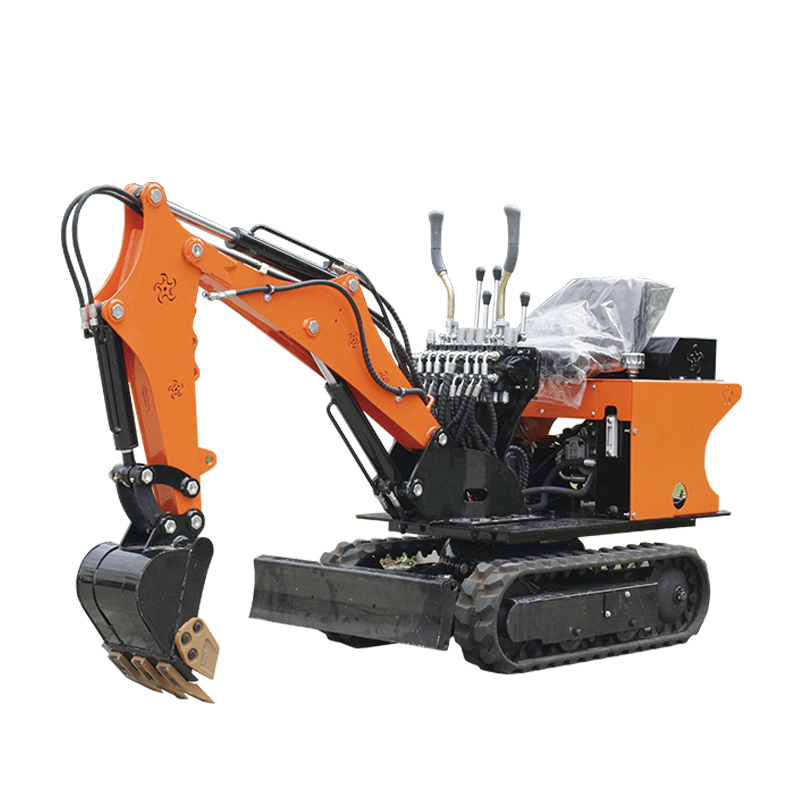
To determine if an excavator's hydraulic oil needs replacement, a comprehensive judgment must be made based on multiple factors such as the oil's condition, service time, and equipment performance. Here are the specific methods and standards:
Color change
New hydraulic oil is usually pale yellow or amber and clear and transparent.
If it turns dark brown or black (severe oxidation), or appears milky white and emulsified (mixed with water, possibly caused by water leakage from the cooler or water entering the oil tank), it must be replaced immediately.
If impurities, metal debris, or sludge are clearly visible in the oil (possibly due to wear of hydraulic components or contamination of the oil tank), the oil must be replaced and system faults must be checked even if the replacement cycle has not been reached.
Abnormal smell
Normal hydraulic oil has no obvious peculiar smell.
If it emits a pungent burnt smell, it may be due to long-term high-temperature oxidation of the oil, or overload wear of the hydraulic pump or motor. The oil must be replaced and the cause of overheating must be investigated.
Viscosity change
New oil has uniform viscosity and moderate fluidity.
If the oil becomes significantly thinner (due to volatilization of the base oil caused by high temperature) or thicker and caked (due to low-temperature aging or mixing with other oils), it will affect the pressure transmission of the hydraulic system and must be replaced.
General replacement cycle: Depending on working conditions, the replacement cycle of hydraulic oil is usually 2000-3000 hours (about 1 year).
If the equipment operates in high-temperature, dusty, or humid environments for a long time (such as mines, swamps) or frequently performs heavy-load operations, the cycle should be shortened to 1500-2000 hours.
If the equipment is idle for more than 1 year, it is recommended to replace the oil even if the working hours have not been reached (the oil will gradually fail due to oxidation).
Note: When replacing hydraulic oil, the hydraulic oil filter element must be replaced simultaneously (replace every 500-1000 hours to prevent oil contamination caused by filter element blockage).
Abnormal hydraulic system
Slow movement: For example, the lifting/rotating speed of the boom or bucket decreases, which may be due to insufficient oil viscosity or contamination leading to reduced efficiency of the hydraulic pump.
Unstable pressure: "Pressure drop" or "jamming" during excavation, or normal operation when the machine is cold but aggravated faults after the machine is hot, may be caused by aging of the oil, resulting in reduced wear resistance and defoaming properties.
Increased noise: Abnormal noise from the hydraulic pump or valve group may be due to wear of components caused by oil contamination, or bubbles in the oil (poor defoaming property).
Increased component wear
If hydraulic cylinder oil leakage, seal ring aging, or abnormal noise repair of the hydraulic pump or motor occur frequently recently, it may be caused by oil failure (insufficient wear resistance and oxidation resistance), and the oil must be replaced simultaneously.
For large equipment or key working conditions, oil testing (sent to a professional laboratory) can be conducted to analyze the following indicators:
Contamination level: Detect the impurity content in the oil through a particle counter (for example, according to the ISO 4406 standard, replacement is required if it exceeds grade 19/16).
Moisture content: If moisture exceeds 0.1% (emulsified or free water), it will cause metal corrosion and accelerate oil oxidation, requiring replacement.
Acid value change: The acid value of new oil is usually 0.05-0.1mgKOH/g. If it exceeds 0.3mgKOH/g, it indicates severe oxidation and requires replacement.
Wear resistance: The extreme pressure performance of the oil is detected through a four-ball test. If the wear scar diameter exceeds the standard, it indicates that the anti-wear additive has failed.
Priority is given to judgment through intuitive conditions such as oil color, impurities, and viscosity, combined with service time, working conditions, and abnormal equipment performance. If emulsification, severe discoloration, obvious impurities, or abnormal equipment movement occur, the oil must be replaced immediately; under conventional working conditions, it should be replaced according to the 2000-3000-hour cycle, and earlier under harsh working conditions. When replacing, be sure to completely drain the old oil (including residues in the oil tank, cylinder, and pipeline), clean the oil tank, and replace the filter element to avoid secondary contamination of the new oil.



 Chinese