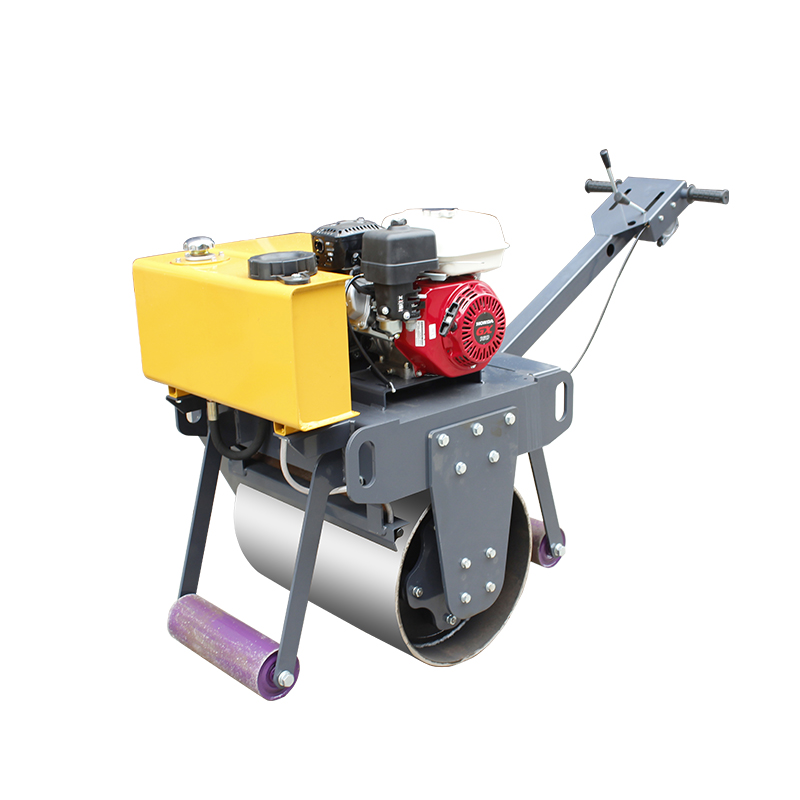
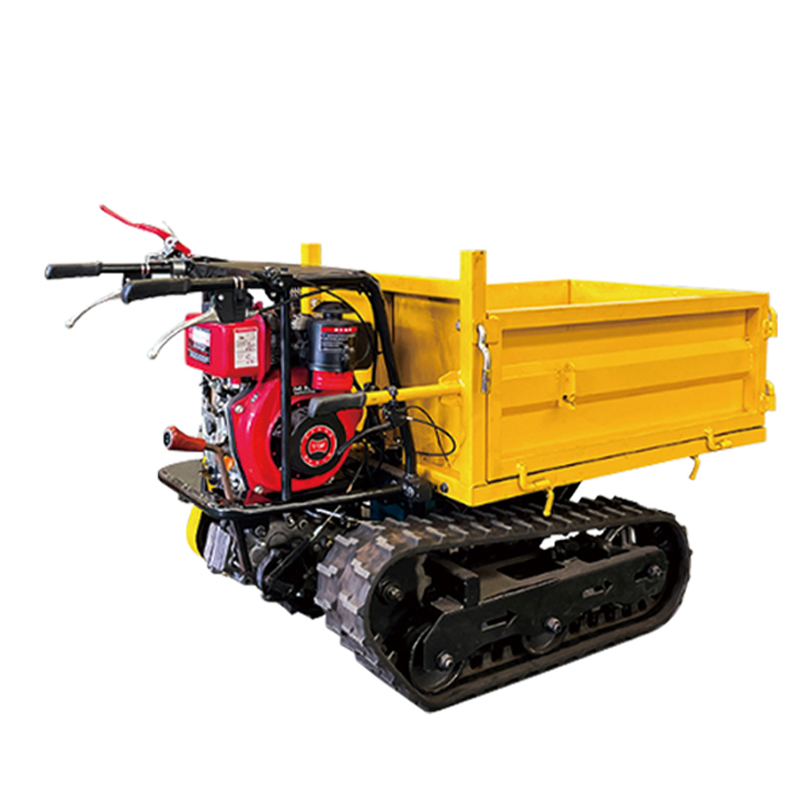
When a road roller operates on slopes (especially those with a large gradient), safety accidents such as sliding and rollover are prone to occur due to the effect of gravity, and at the same time, the compaction quality is difficult to guarantee. The following precautions must be strictly followed:
Site evaluation and slope restrictions
Measure the slope gradient in advance, and it is strictly forbidden to work in areas where the slope exceeds the specified limit of the equipment (different models have different limits: small road rollers are usually ≤ 15°, large vibratory road rollers are ≤ 25°, and the specific information is subject to the equipment manual).
Remove debris such as gravel, weeds, and sludge on the slope surface to avoid slipping during rolling; if the surface is slippery (after rain or muddy), it is necessary to dry it first or pave sand and gravel for anti-slip.
Check whether there is sufficient safety space (at least 5-10 meters) at the upper and lower ends of the slope, which can be used as a buffer area for emergency parking or steering.
Equipment selection and inspection
Priority should be given to road rollers with differential locks and strong braking performance (such as fully hydraulic drive models), and old equipment or those with poor braking systems should be avoided.
Focus on checking the braking system (service brake, parking brake), steering system, tires/steel wheels (normal tire pressure, no wear or cracks), and crawlers (for crawler-type road rollers, check the tightness) to ensure that all components are sensitive and reliable.
Install safety devices: such as rollover protection structures (ROPS), seat belts (must be worn), anti-skid chains (for muddy or icy slopes). If necessary, add counterweights on both sides of the machine body to lower the center of gravity.

Driving route and direction
When driving along the slope, rolling must be done from bottom to top, and it is strictly forbidden to rush down from the top of the slope (gravity acceleration when going downhill may easily lead to brake failure).
The rolling route should be parallel to the direction of the slope, and driving transversely (perpendicular to the slope direction) should be avoided to prevent rollover due to excessive lateral force.
If steering is needed, it should be done in the gentle area of the slope or on the flat ground at the top/bottom of the slope. Sudden steering or U-turn in the middle of the slope is prohibited.
Speed and compaction parameter control
The driving speed is strictly controlled at 1-3 km/h (low and uniform speed), and sudden acceleration or braking is avoided (inertia during braking may easily cause the equipment to slip).
When a vibratory roller is working on a slope, it is forbidden to turn on the vibration function (vibration will damage the stability of the soil and increase the risk of slipping), and only the static pressure mode should be used; if vibration is necessary, it can be carried out only on gentle slopes with a slope of < 5° and after safety confirmation through tests.
For layered rolling, the paving thickness of each layer should be reduced by 20%-30% compared with that on flat ground (for example, 30 cm on flat ground, 20-25 cm on slopes) to ensure uniform compaction.
Center of gravity and load control
When the road roller is driving, the body should be kept parallel to the slope, and tilting of the body (such as one side of the wheel/crawler pressing on the edge of the slope shoulder) should be avoided to prevent the center of gravity from shifting.
It is forbidden to park on the slope overnight. When parking temporarily, the equipment should be parked on the flat area at the top or bottom of the slope, the parking brake should be tightened, and triangular wooden blocks (or stones) should be placed under the tires/crawlers to fix it and prevent slipping.
Personnel protection and supervision
Operators must fasten their seat belts, wear non-slip shoes, and are prohibited from sticking their heads out or jumping out of the cab during operation.
Arrange special personnel to monitor the top and bottom of the slope throughout the process, equipped with communication equipment (such as walkie-talkies), and immediately issue a warning once an abnormality is found.
Emergency treatment
In case of slipping: immediately release the accelerator, gently step on the brake (avoid sudden braking), and slowly turn to the gentle part of the slope at the same time. Do not continue to refuel when slipping.
In case of brake failure: immediately turn the direction to the inner side of the slope (the side close to the mountain), use the friction between the body and the slope surface to decelerate, and at the same time call the supervision personnel to help set up obstacles (such as stacking soil bags).
Downhill operation: If it is necessary to go downhill (such as transferring from the top to the bottom of the slope), the low gear should be engaged, and the speed should be controlled by "point braking". Coasting in neutral is prohibited, and there must be personnel behind to observe and remind at any time.
Crawler-type road rollers: When steering on slopes, operate slowly to avoid crawler slipping; after operation, check whether stones are stuck in the crawler plates to prevent imbalance when starting next time.
The core principle of slope operation is "safety first, prevention first". By strictly limiting the slope, checking equipment performance, and standardizing the operation process, the risks of slipping and rollover are minimized; at the same time, compaction parameters are controlled to ensure that the compactness of the slope soil/material meets the requirements. In any case, if there is any doubt about the safety of the site, the operation should be suspended, and reinforcement measures (such as trimming the slope, paving an anti-slip layer) should be taken before re-construction.


 Chinese