

 Chinese
- HOME >> NEWS >> Industry news
NEWS
Latest Product
Contact Us
What Are the Applicable Scenarios of Remote-Controlled Lawn Mowers? What Terrains Are Not Suitable for Them?
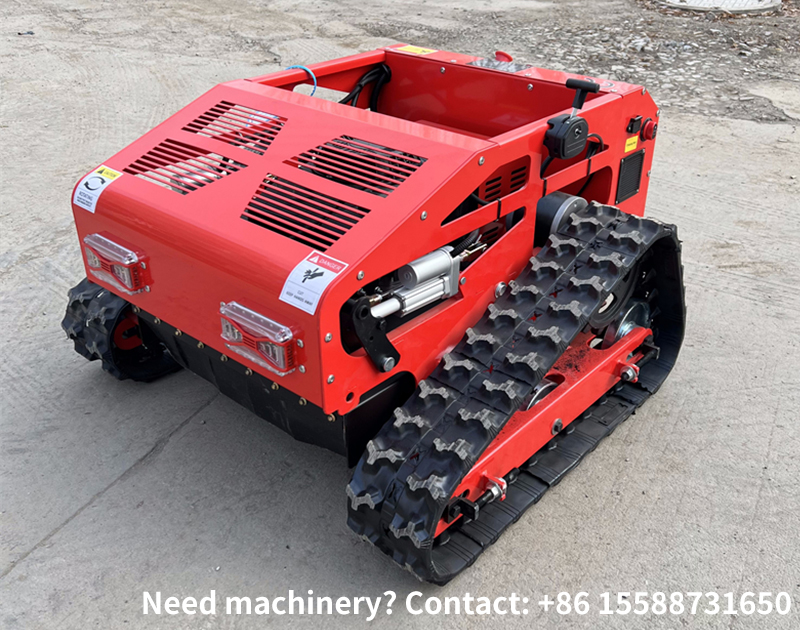
2026-01-15The applicable scenarios of remote-controlled lawn mowers cover a wide range of needs, from small household lawns to complex commercial terrains. Their core advantage is adaptability to areas that are difficult to access manually. The unsuitable terrains are mostly harsh and complex environments that exceed the structural and performance limits of the equipment. The specific classifications are as follows:
I. Applicable Scenarios
Small Irregular Household LawnsSuitable for irregularly shaped lawns in courtyards and villas, as well as narrow areas that are hard to reach with push lawn mowers, such as around flower beds and wall corners. It features flexible control and will not damage green plants.
Steep Slopes and Inclined TerrainsTargeting slopes with an incline of 30°–45° (parameters vary by model), such as hillside tea plantations, river embankment slopes, and villa slopes. Operators can control the mower remotely from flat ground, avoiding safety risks associated with manual climbing operations.
Inter-Row Areas in Orchards and NurseriesFor weed removal between fruit tree rows in orchards and seedling gaps in nurseries. The compact body can navigate narrow row spacing without rolling over crop roots, making it ideal for agricultural weeding scenarios.
Local Areas of Public Green Spaces and Scenic SpotsCan be used for clearing weeds around shrubs in parks, on both sides of trails in scenic spots, and at the edges of green belts, replacing manual labor to clean weeds in corner areas and improving work efficiency.
Electrified or Hazardous AreasFor example, lawns under high-voltage lines and factory areas with equipment hazards. Operators do not need to make close contact and can complete mowing via remote control, ensuring personal safety.
Auxiliary Operations for Large Continuous LawnsUsed in conjunction with ride-on lawn mowers, it is responsible for handling corners and areas around obstacles that ride-on equipment cannot reach, forming a "primary-secondary combination" operation mode.
II. Unsuitable Terrains
Ultra-Steep SlopesSlopes exceeding the maximum climbing angle marked by the model (usually >45°) are prone to rollover and slipping. This not only prevents normal mowing but also causes damage to the equipment.
Terrains Densely Covered with Gravel or Hard DebrisGround with a large amount of sharp gravel, bricks, metal scraps, etc. The high-speed rotating blades will be damaged by collision, and there is even a risk of blade breakage and ejection, leading to safety accidents.
Muddy or Waterlogged TerrainsMuddy ground after rain or waterlogged depressions. On the one hand, it will cause the equipment’s tires to slip and lose mobility; on the other hand, muddy water will seep into the equipment, causing short circuits in motors and circuit boards or corrosion of components.
Terrains with Overgrown Grass and Mixed Dense ShrubsAreas where weeds are over 50 cm tall and mixed with low shrubs. The blades of remote-controlled lawn mowers are mostly small rotary cutters, which cannot cut thick shrub branches and are prone to "grass entanglement" faults, resulting in motor overload and shutdown.
Uneven Terrains with Deep Pits and GulliesGround with obvious deep pits, protruding stones or gullies. The equipment has a low chassis and is likely to get stuck or scratched, causing damage to the body.