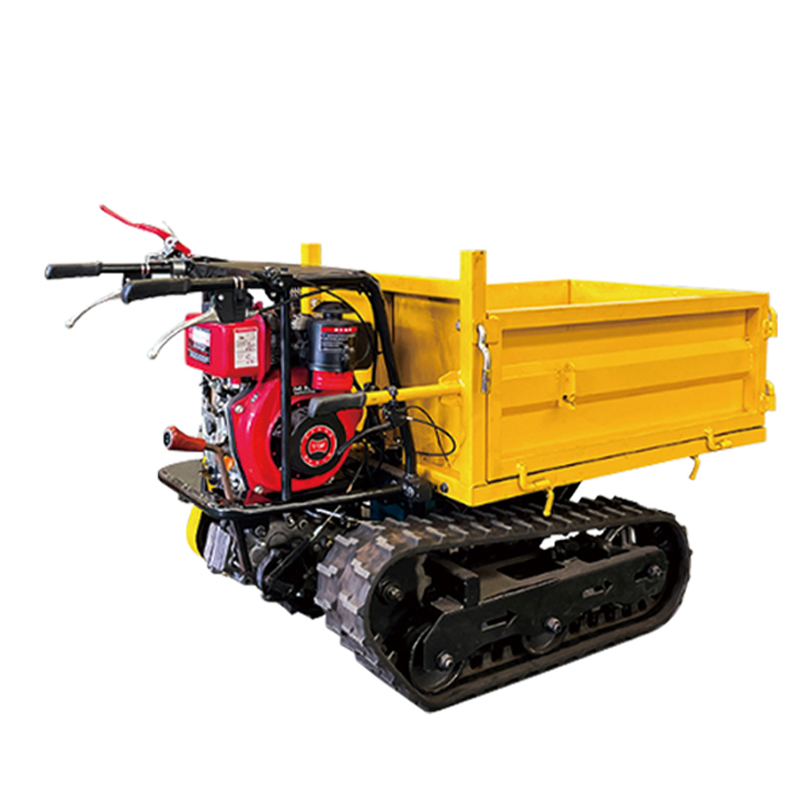
The core application scenarios of tracked transport vehicles cover multiple industries such as agriculture, engineering, and rescue, meeting the operational needs in complex terrains.
Transportation of crops (e.g., rice, corn, fruits and vegetables) in complex plots like mountainous areas and muddy lands.
Transfer of farm supplies, including chemical fertilizers, pesticides, seeds, and agricultural machinery parts.
Transportation of picked fruits in orchards and tea gardens, reducing the compaction of crops and soil.
Transportation of construction materials (e.g., sand, cement, steel bars) and other heavy materials in mines and construction sites.
Transfer of equipment in infrastructure projects, such as construction machinery like small excavators and generators.
Removal of muck in road construction and tunnel engineering, adapting to rough or unformed road surfaces.
Transfer of personnel at disaster sites (e.g., floods, earthquakes) and transportation of rescue supplies (food, medicine, tents).
Transportation of fire-fighting materials in mountainous areas and woodlands to support forest fire prevention operations.
Transfer of emergency rescue equipment (e.g., water pumps, breaking tools) in complex terrains.
Forestry: Transportation of logs after logging, adapting to steep terrain in mountain forests.
Animal Husbandry: Transfer of pasture feed and short-distance transportation of livestock, adapting to grasslands and muddy environments.
Cultural Tourism / Scientific Research: Transportation of supplies (e.g., camping equipment, scientific research instruments) for scenic spots and field surveys, adapting to undeveloped suburban terrains.



 Chinese