

 Chinese
- HOME >> NEWS >> Industry news
NEWS
Latest Product
Contact Us
What are the characteristics of the tire materials (solid tires, pneumatic tires) of electric forklifts, and what operating environments are they suitable for respectively?
2026-01-10The tires of electric forklifts are mainly divided into two categories: solid tires and pneumatic tires. They differ significantly in structural characteristics, wear resistance, and cushioning performance, and are clearly adapted to different operating environments, detailed as follows:
I. Characteristics and Adapted Environments of Solid Tires
Core Characteristics
Ultra-high wear resistance and puncture resistanceSolid tires are integrally cast from high-pressure rubber, with no inner tube or cavity structure. The tire body is thick and dense, capable of resisting punctures by sharp objects (such as iron nails, metal scraps, and gravel). They are not prone to blowouts when driving on rough ground, and their service life is 3–5 times that of ordinary pneumatic tires.
Strong load-bearing capacity and small deformationThe tire body has high rigidity and minimal deformation under pressure, making it suitable for heavy-load working conditions. It can stably support the weight of a fully loaded forklift, avoid fork shaking caused by tire deformation, and improve the stability of stacking operations.
Low maintenance cost and failure rateThere is no need for regular tire pressure checks, and no risk of air leakage or blowouts. Daily maintenance only requires cleaning debris attached to the tire surface, eliminating the maintenance procedures of inflation and tire patching, which is suitable for high-frequency operation scenarios.
Poor cushioning performance and relatively high noiseWithout the shock absorption effect of elastic cavities, vibrations during driving are directly transmitted to the vehicle body and cab, resulting in poor comfort for operators. When driving on hardened roads, the noise is 5–10 decibels higher than that of pneumatic tires.
Adapted Operating Environments
Indoor hardened ground operations: Such as cargo stacking and transferring in e-commerce warehouses, food workshops, and electronic factory warehouses. The ground is flat and free of large sharp obstacles, and the high wear resistance of solid tires can reduce the replacement frequency.
Heavy-load and high-frequency operations: Such as heavy cargo handling in port container yards and raw material warehouses of large factories. The load capacity of forklifts often exceeds 5 tons, and the strong load-bearing capacity of solid tires can meet the long-term operation requirements.
Sites with sharp debris: Such as machinery processing plants and scrap recycling stations, where metal scraps and iron nails are scattered on the ground. Solid tires can avoid machine shutdown caused by puncture blowouts.
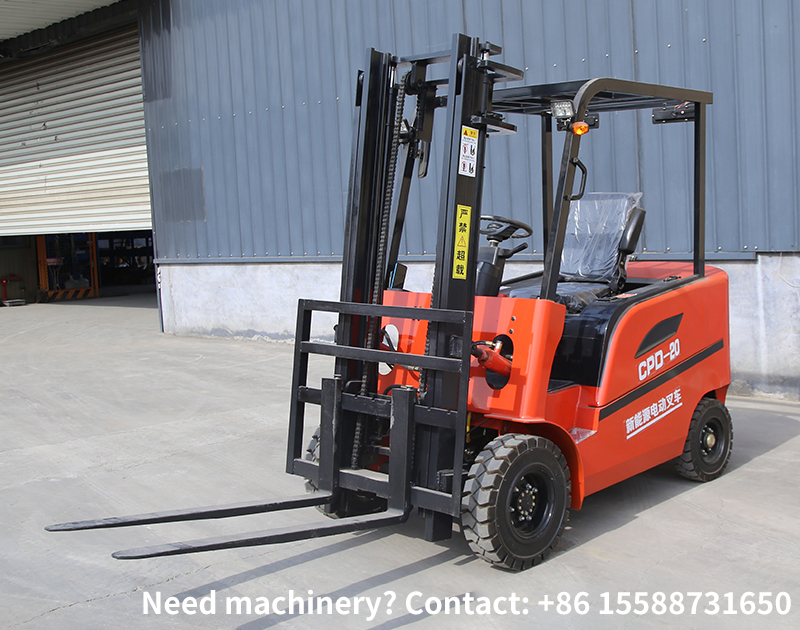
II. Characteristics and Adapted Environments of Pneumatic Tires
Core Characteristics
Excellent cushioning and shock absorption performancePneumatic tires are filled with compressed air, which has good elasticity. They can effectively absorb ground bumps and vibrations, reduce the amplitude of vehicle body shaking, and improve the driving comfort of operators, especially suitable for long-distance driving.
Low noise and ground-friendlyThe elastic tire surface has little impact when in contact with the ground, resulting in low driving noise. Compared with the hard friction of solid tires, pneumatic tires cause less wear to epoxy floors and cement ground, making them suitable for places with ground protection requirements.
Strong grip and adaptability to slightly uneven roadsThe tread pattern can be designed according to working conditions, providing better grip on slightly potholed roads and being less prone to slipping. The elasticity of the tire body can adapt to slight ground undulations.
Weak puncture resistance and high maintenance frequencyThere is a risk of blowouts and air leakage, requiring regular tire pressure checks and inflation. They are easily damaged in sites with sharp objects and need additional anti-puncture layers, resulting in higher maintenance costs and failure rates than solid tires.
Adapted Operating Environments
Indoor and outdoor mixed operations: Such as short-distance cargo transferring in logistics parks, which requires frequent switching between warehouse interiors and park roads. The shock absorption of pneumatic tires can improve the comfort of long-distance driving.
Sites with requirements for ground and noise: Such as pharmaceutical workshops and precision instrument factories, which require low-noise operations and avoid damage to epoxy floors. The gentle contact characteristics of pneumatic tires are more suitable.
Lightly complex terrain operations: Such as material transportation in farms and orchards, where the ground is slightly potholed and gravelly. Pneumatic tires have better grip and cushioning than solid tires, which can reduce the impact of vehicle body jolts on cargo.
Summary
Solid tires: Focus on wear resistance, puncture resistance, and heavy load-bearing, suitable for indoor hardened ground, high-frequency heavy-load, and sites with plenty of sharp debris.
Pneumatic tires: Focus on shock absorption, low noise, and ground-friendly performance, suitable for indoor and outdoor mixed operations, lightly complex terrain, and scenarios with high comfort requirements.