

 Chinese
- HOME >> NEWS >> Industry news
NEWS
Latest Product
Contact Us
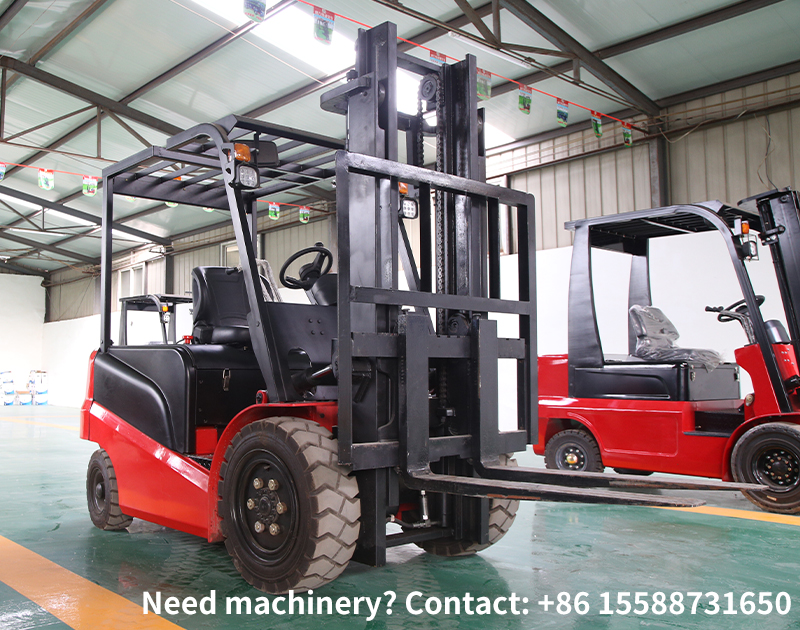
What are the mainstream battery types for electric forklifts, and what are their respective endurance and maintenance characteristics?
2026-01-10At present, the mainstream battery types for electric forklifts are mainly divided into two categories: lead-acid batteries and lithium-ion batteries. Among them, lead-acid batteries include two subcategories: flooded lead-acid batteries and maintenance-free sealed lead-acid batteries. Lithium-ion batteries are dominated by lithium iron phosphate batteries, while ternary lithium batteries are only used in a few scenarios. The two types of batteries differ significantly in terms of endurance and maintenance characteristics.
I. Lead-acid Batteries (Traditional and Popular Type)
Endurance Characteristics
Lead-acid batteries have low energy density, and their endurance capacity is far inferior to that of lithium batteries under the same volume. Taking a 2-ton electric forklift as an example, equipped with a 400Ah flooded lead-acid battery, the continuous operation time after a full charge is about 4–6 hours; the endurance of maintenance-free sealed lead-acid batteries is slightly shorter, usually 3–5 hours.
The endurance of such batteries is greatly affected by temperature. In low-temperature environments (below 0℃), the capacity will decrease by 20%–30%, and the endurance time will be significantly reduced. In high-temperature environments, there is a risk of thermal runaway, so it is necessary to strictly control the charging and operation duration.
In addition, lead-acid batteries have an obvious memory effect. Frequent charging without complete discharge will lead to an irreversible decline in battery capacity, and the problem of endurance attenuation will become more prominent after long-term use.
Maintenance Characteristics
Flooded lead-acid batteries require high maintenance frequency. It is necessary to regularly (generally weekly) check the electrolyte level and timely add distilled water to prevent the electrode plates from being exposed and oxidized; it is also necessary to regularly clean the battery surface to avoid corrosion of the forklift’s metal components caused by liquid leakage. Hydrogen gas is generated during charging, so charging must be carried out in a well-ventilated area to prevent potential safety hazards caused by gas accumulation.
Maintenance-free sealed lead-acid batteries eliminate the step of replenishing electrolyte, and the maintenance process is relatively simplified. However, it is still necessary to regularly check the battery voltage and wiring terminals to prevent terminal loosening and oxidation; a small amount of gas is still generated during charging, so the charging environment must still be well-ventilated.
Lead-acid batteries have a slow charging speed, requiring 8–12 hours to be fully charged, and need to stand for 1–2 hours to dissipate heat before use after charging, which is more suitable for the operation mode of charging during night shutdowns. Their cycle charge-discharge times are about 800–1200 times, and the service life under normal use conditions is about 3–5 years.
II. Lithium-ion Batteries (Emerging Mainstream Type)
Lithium-ion batteries are currently the core choice for the upgrading of electric forklifts. Among them, lithium iron phosphate batteries have become the first choice for industrial scenarios due to their higher safety; ternary lithium batteries have higher energy density but slightly lower safety, and are only used in a small number of niche models with extremely high endurance requirements.
Endurance Characteristics
Lithium-ion batteries have 30%–50% higher energy density than lead-acid batteries, and have obvious endurance advantages under the same volume. Taking the same 2-ton electric forklift as an example, equipped with a 400Ah lithium iron phosphate battery, the continuous operation time after a full charge can reach 6–10 hours, which can meet the single-day operation needs of most factories.
The low-temperature performance of such batteries is better than that of lead-acid batteries. In an environment of -10℃, the capacity attenuation is only 10%–15%, and the endurance stability is stronger. In high-temperature environments, the mature thermal management system can effectively avoid thermal runaway problems, making it suitable for outdoor high-temperature operation scenarios.
Lithium-ion batteries have no memory effect and support charging at any time. Even if charging when the remaining power is 50%, it will not affect the total capacity of the battery, and the endurance attenuation rate after long-term use is much slower than that of lead-acid batteries.
Maintenance Characteristics
Lithium-ion batteries adopt a sealed design and are almost maintenance-free. In daily use, there is no need to check the electrolyte, replenish water or clean the electrode plates; only the wiring terminals and cooling fans of the battery pack need to be regularly checked to ensure there is no looseness or dust accumulation.
Charging speed is a major advantage of lithium-ion batteries. They support fast charging technology, which can be charged to 80% of the power in 1–2 hours, and only 3–4 hours to be fully charged, which is very suitable for multi-shift and high-frequency operation scenarios. Operators can quickly recharge during operation intervals, greatly reducing downtime.
Their cycle charge-discharge times can reach 2000–3000 times, and the service life under normal use is about 6–10 years, which is about twice that of lead-acid batteries. However, lithium-ion batteries need to be equipped with special intelligent chargers, and the charging process is fully monitored by the BMS (Battery Management System), which automatically adjusts the charging current and voltage to avoid overcharging and overdischarging.