To prevent quality defects like shoving, peeling, and cracking during asphalt pavement compaction with rollers, the core lies in strictly controlling the compaction temperature range, matching appropriate rolling equipment and processes, and regulating operational details — all three aspects are indispensable. Specific measures are as follows:
The plasticity and fluidity of asphalt mixtures are directly related to temperature. Excessively high or low temperatures will cause quality defects, and temperature ranges should be defined based on mixture types:
Initial compaction temperature: Not lower than 130℃ for conventional asphalt mixtures and not lower than 150℃ for modified asphalt mixtures. If the temperature is too high, the mixture will have excessive fluidity; roller compaction may easily push aggregates to displace, resulting in shoving and swelling. Rolling must be initiated only after the post-paving temperature drops to the initial compaction threshold, and heavy rolling at high temperatures is strictly prohibited.
Re-compaction temperature: Not lower than 110℃ for conventional asphalt mixtures and not lower than 130℃ for modified asphalt mixtures. If the temperature is too low, the mixture will become hard and brittle; compaction may cause aggregate fracture, leading to surface peeling and micro-cracks. If the temperature drops rapidly on-site, shorten the rolling section length (to 50–80m) or take thermal insulation measures to slow down cooling.
Final compaction temperature: Not lower than 70℃ for conventional asphalt mixtures and not lower than 90℃ for modified asphalt mixtures. Final compaction must be completed before the mixture fully solidifies to avoid cracking caused by rolling hard materials at low temperatures.
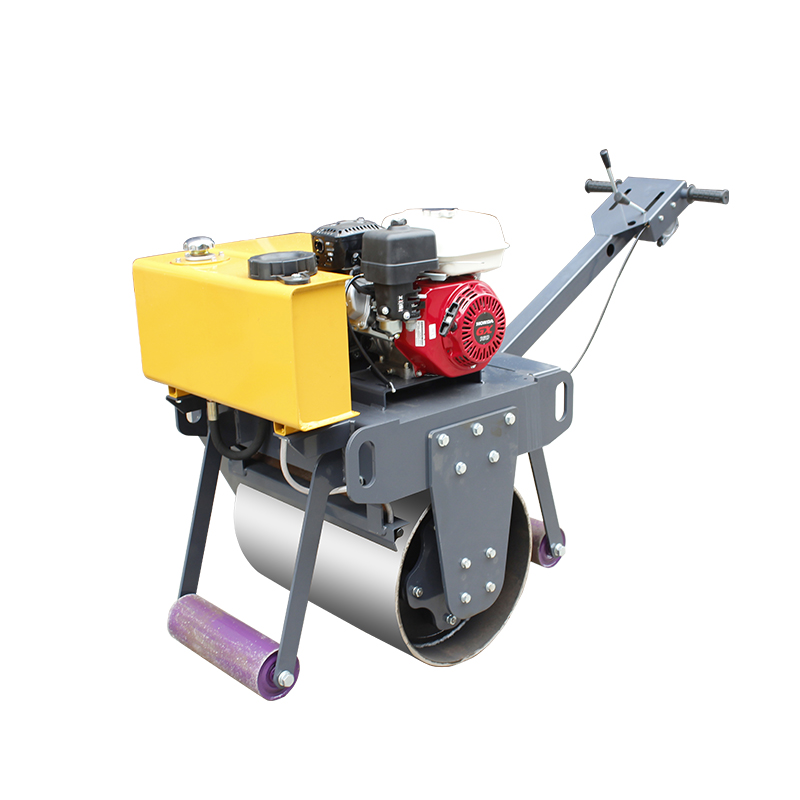
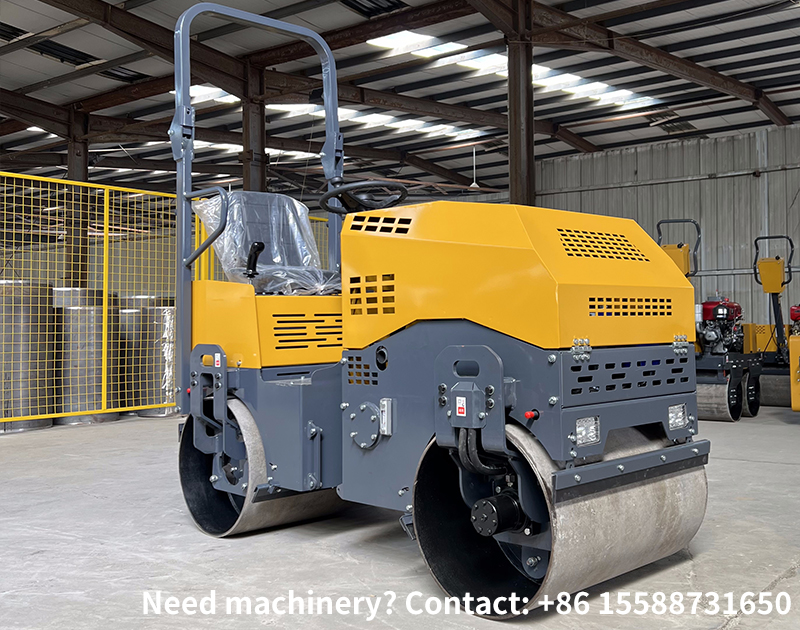
Follow the combination principle of double-drum roller for initial compaction + double-drum/pneumatic-tire roller for re-compaction + pneumatic-tire/double-drum oscillatory roller for final compaction. Using single-drum rollers to compact asphalt pavements is strictly prohibited:
Initial compaction: Use a double-drum roller in static rolling or low-frequency weak vibration mode, and roll 1–2 passes to eliminate paving marks. High-frequency strong vibration is forbidden, as it may impact loose mixtures and cause shoving.
Re-compaction: Prefer a double-drum roller in high-frequency vibration mode (3–5 passes) or a pneumatic-tire roller for flexible kneading (2–3 passes). The kneading effect of pneumatic tires can avoid residual wheel tracks from steel-wheel rolling and improve compaction density. However, tire pressure must be controlled to prevent excessive pressure from piercing the asphalt film.
Final compaction: Use a pneumatic-tire roller in static mode or a double-drum roller in oscillation mode, and roll 1–2 passes to eliminate wheel tracks. Activating strong vibration during final compaction is strictly prohibited, as it will damage the formed pavement structure and cause cracking.
Improper operation is a major cause of quality defects, and the following requirements must be strictly followed:
Rolling sequence: Comply with the principle of "edges first, then center; low areas first, then high areas". For curved sections, compact the inner side first, then the outer side. Overlap adjacent rolling strips by 1/3–1/2 of the wheel width, and ensure the longitudinal overlap length is no less than 2m to avoid missing compaction or over-compaction.
Rolling speed: Control at 2–4km/h for initial/re-compaction and 4–6km/h for final compaction; high-speed rolling is strictly prohibited. Excessively high speed will lead to insufficient compaction energy and inadequate aggregate interlocking. Sudden braking or sharp turns will directly tear the pavement and cause peeling.
Rolling direction: Maintain straight-line driving as much as possible, and avoid frequent U-turns on compacted sections. If a U-turn is necessary, turn off the vibration function first, drive slowly to the uncompacted area before turning, to prevent shoving and cracking at the turning point.
Wheel surface cleaning: Continuously spray water on steel wheels for cooling during compaction (use atomized water spray to avoid excessive water that causes rapid cooling), preventing asphalt mixtures from adhering to the wheel surface. If adhesion occurs, clean the wheel surface promptly to avoid scratching the pavement with adhered materials during rolling.
Ensure uniform thickness of the paved layer, with local thickness deviation controlled within ±5mm, to prevent insufficient compaction in thick areas and cracking due to over-compaction in thin areas.
Strictly prohibit construction in low-temperature conditions (below 10℃), rainy days, or windy and dusty weather. Low temperatures will cause rapid solidification of the mixture, leading to cracking during compaction; rainy conditions will result in excessive moisture content of the mixture, reducing cohesion and causing peeling.
Close the compacted pavement to traffic and only open it when the temperature drops below 50℃, preventing early damage caused by vehicle rolling.


 Chinese