

 Chinese
- HOME >> NEWS >> Company news
NEWS
Latest Product
Contact Us
What Are the Core Structural Design Differences Between Single-Drum Rollers and Double-Drum Rollers?
2025-12-20The core structural design differences between single-drum rollers and double-drum rollers stem from the disparities in their compaction function positioning and applicable working conditions. These differences are specifically reflected in four core modules: compaction drum configuration, traveling system, vibration system, and overall machine weight distribution. Details are as follows:
Differences in Compaction Drum Configuration
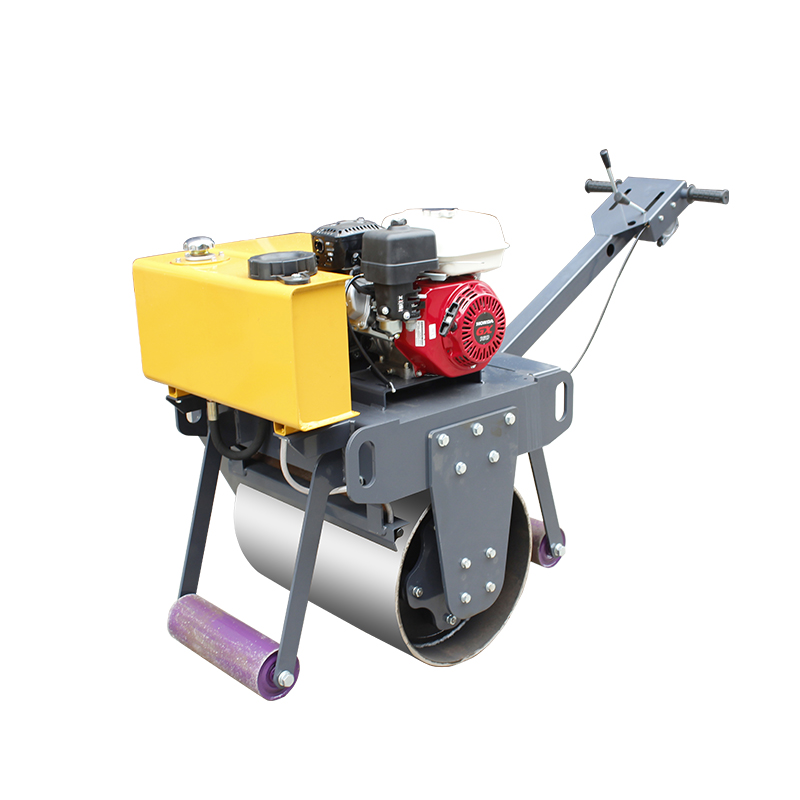
The core feature of a single-drum roller is a configuration of one large-diameter rigid compaction drum on one side paired with rubber tires or a dual-tire assembly on the other side. The compaction drum is characterized by a large diameter and narrow width, with its surface mostly smooth or equipped with protrusions (protruded drums are suitable for cohesive soil and rockfill subgrades). This design aims to enhance linear pressure and strengthen deep compaction effects. The rubber tires on the opposite side mainly bear the load and enable steering, while their flexible contact with the ground reduces slippage of the compaction drum.
A double-drum roller adopts a symmetrical layout with two rigid compaction drums of equal diameter on both sides. The two drums share the same diameter and width, and their surfaces are all smooth (some models can be fitted with patterned drums instead). The double-drum design provides a larger contact area and uniform force distribution, which is originally intended to ensure pavement compaction evenness and avoid wheel track inconsistencies. Some high-end models are equipped with independent vibration/oscillation functions for the double drums, allowing single-drum or synchronous double-drum operation.
Differences in Traveling System and Steering Mechanism
The traveling system of a single-drum roller is mostly rear-wheel drive (driven by the rubber tire side) plus front-wheel steering (steered by the steel drum side). It has a relatively large turning radius, making it suitable for subgrade compaction in open sites. Given the poor flatness of subgrade construction sites, its suspension system features a longer vibration reduction stroke, which can adapt to uneven working conditions and reduce the impact of machine jolts on operators.
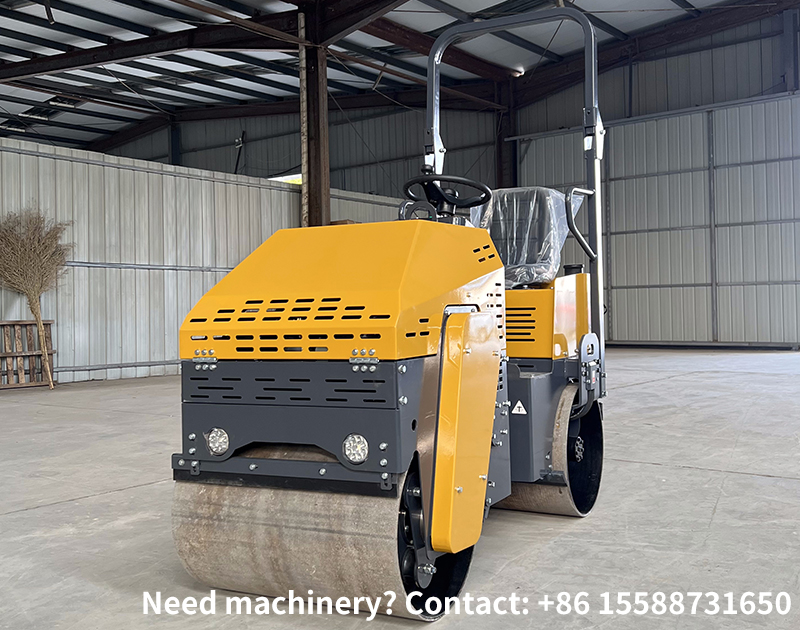
The traveling system of a double-drum roller adopts dual-drum drive plus articulated steering. It has a small turning radius and high flexibility, making it suitable for asphalt surface compaction in narrow sites such as municipal roads and bridge decks. Its steering mechanism adopts a centered articulation point design, which minimizes the trajectory deviation of the two drums during turning and prevents shoving damage to the pavement during compaction. The suspension system offers more precise vibration reduction performance, balancing compaction evenness and operational comfort.
Differences in Vibration System Design
The vibration system of a single-drum roller is only installed inside the single steel drum, adopting an eccentric block excitation structure with a large excitation force (up to 200–500kN). It supports switching between two modes: high-frequency low-amplitude and low-frequency high-amplitude. In the low-frequency high-amplitude mode, the excitation frequency is approximately 25–30Hz with an amplitude of up to 2–3mm, which is used for deep compaction of rockfill subgrades. In the high-frequency low-amplitude mode, the frequency is about 35–40Hz with an amplitude of around 0.5–1mm, which is suitable for compaction of cement-stabilized base courses.
The vibration system of a double-drum roller can be installed in one or both drums, and some models are also integrated with oscillation functions, with a relatively moderate excitation force (80–200kN). In vibration mode, the two drums can vibrate synchronously or asynchronously, which is used for initial compaction of asphalt surfaces. In oscillation mode, the drum generates horizontal shear force through reciprocating torsional oscillation without vertical impact force, which is applied to the final compaction of bridge decks and thin-layer asphalt pavements. The system features a higher vibration frequency (40–50Hz) and smaller amplitude (0.3–0.8mm), focusing on uniform surface compaction.
Differences in Overall Machine Weight Distribution and Body Structure
The counterweight of a single-drum roller is highly concentrated on the steel drum side, and the body structure adopts an asymmetric "front-heavy, rear-light" layout. This design aims to maximize the linear pressure of the steel drum and improve deep compaction efficiency. The machine has a higher ground clearance (approximately 300–400mm) and strong passability, making it suitable for the complex road conditions of subgrade construction.
The counterweight of a double-drum roller is evenly distributed on both sides of the two drums, and the body adopts a symmetrical layout to ensure uniform force on the two drums during compaction. The machine has a lower ground clearance (approximately 150–250mm) and a more stable center of gravity, resulting in less jolting during operation and effectively improving the compaction evenness of asphalt pavements. Some models are also equipped with drum sprinkler systems to prevent asphalt mixture from adhering to the drum surface.