
 Chinese
- HOME >> NEWS >> Company news
NEWS
Latest Product
Contact Us
What Are the Essential Differences in the Core Compaction Mechanisms of Static Rollers, Vibratory Rollers, and Oscillatory Rollers?
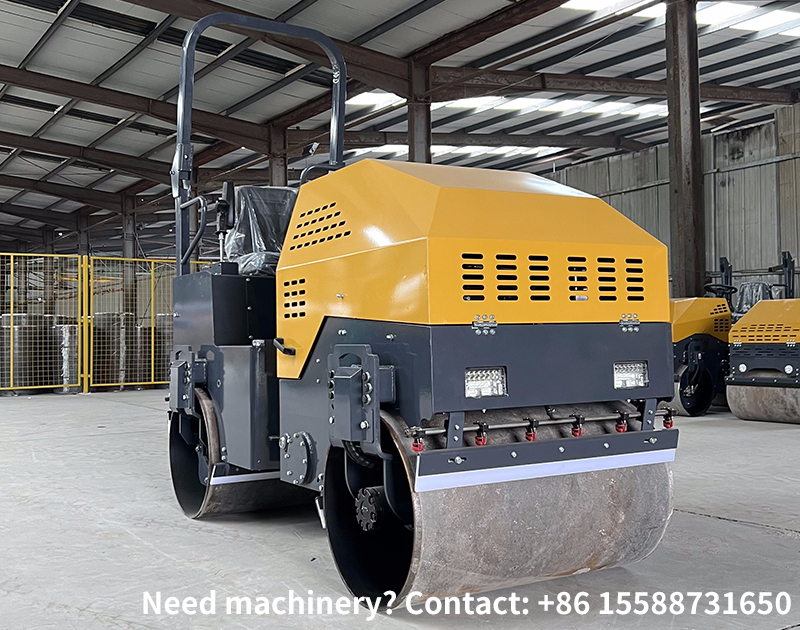
2025-12-20The essential differences in the core compaction mechanisms of static rollers, vibratory rollers, and oscillatory rollers lie in the completely distinct forms of acting force, energy transmission methods, and effects on material particles. The specific differences are as follows:
Static Rollers: Static Load Application for Slow Particle Interlocking and Densification
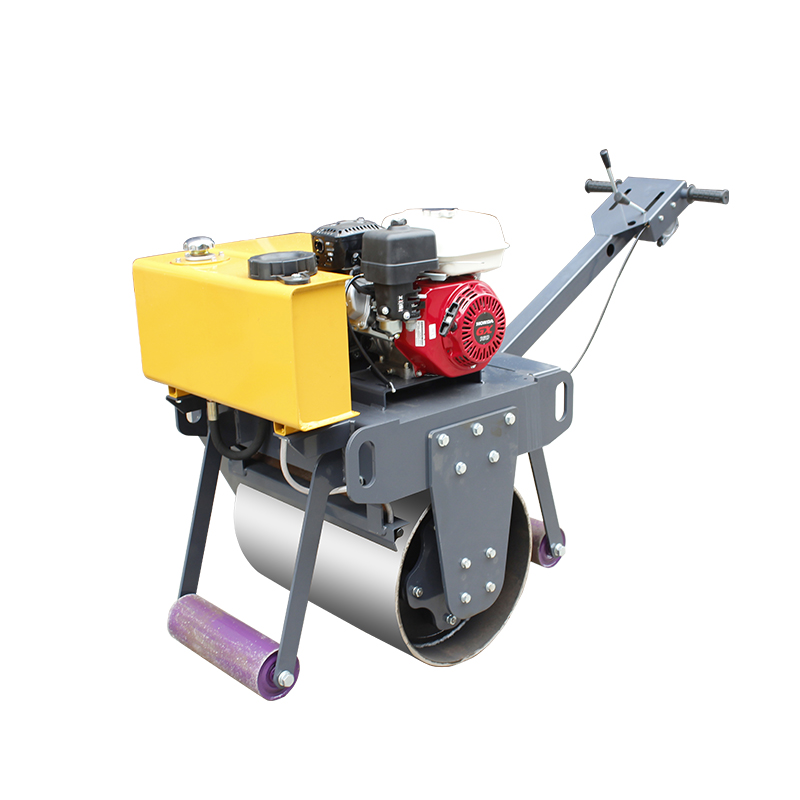
Their compaction relies solely on the continuous vertical static pressure generated by the machine’s dead weight, with no additional power input. When pressure acts on the material surface, it forces particles to overcome friction and cohesion, undergo slow displacement, sliding, and extrusion, and ultimately fill gaps to form a dense structure. This compaction method features limited energy transmission depth, and the compaction effect mainly depends on the roller’s tonnage and number of rolling passes. The process is gentle without impact, and will not damage the morphology of material particles. It is suitable for vibration-sensitive areas (such as around bridges and pipelines), or for initial compaction and stabilization of subgrades, as well as final static rolling and surface finishing of asphalt courses.
Vibratory Rollers: Static Load + High-Frequency Vibration for Particle Resonance and Densification
Their compaction is based on the machine’s static pressure, superimposed with high-frequency alternating exciting force from the vibrating drum. The vibration system drives the compaction drum to vibrate at a frequency of 25–50Hz. When the exciting force is transmitted to the interior of the material, it causes particles to produce a resonance effect — the friction between particles is reduced instantaneously, putting them in an active state similar to "suspension". Under the combined action of static pressure and exciting force, particles rearrange and interlock rapidly to achieve densification. This dynamic compaction method enables energy to penetrate deep into the material, with compaction depth and efficiency far exceeding those of static rollers. By adjusting the amplitude, differentiated effects can be achieved: low-frequency and high-amplitude mode (for deep compaction, suitable for rockfill subgrades) and high-frequency and low-amplitude mode (for surface compaction, suitable for cement-stabilized base courses). Vibratory rollers serve as the main equipment for re-compaction of subgrades and base courses.
Oscillatory Rollers: Static Load + Horizontal Shear for Particle Kneading and Densification
Their compaction relies on an oscillating mechanism to drive the compaction drum to produce reciprocating torsional oscillation, transmitting horizontal alternating shear force to the material instead of vertical impact force. As the compaction drum rolls, both sides of the drum alternately exert extrusion and kneading forces on the material, forcing particles to displace and rotate horizontally, while completing vertical interlocking in combination with the machine’s static pressure. The most prominent feature of this compaction method is the absence of vertical impact, which will not damage the underlying structure or surrounding structures. In addition, the material surface after compaction achieves extremely high flatness without aggregate crushing. It is particularly suitable for re-compaction and final compaction of asphalt courses, compaction of bridge deck pavements, and precision compaction of thin-layer mixtures.