
 Chinese
- HOME >> NEWS >> Industry news
NEWS
Latest Product
Contact Us
How Does a Road Roller Work?
2025-05-29A road roller is a construction machine that compacts materials such as soil, asphalt, and gravel by applying static weight, vibratory impact, or kneading action. Its core principle is to exert vertical pressure to reduce internal voids in materials, thereby increasing density and load-bearing capacity. Different types of road rollers operate on slightly different principles, primarily categorized into static, vibratory, and pneumatic-tire rollers.
I. Core Working Principles of Road Rollers
1. Static Compaction (Static Pressure)
Principle: Relies on the roller's self-weight (steel wheels or tires) to apply constant vertical pressure, rearranging material particles and expelling air and moisture for densification.
Applications:
Initial compaction (e.g., stabilizing freshly laid asphalt).
Vibration-sensitive materials (e.g., sandy soil, certain base layers).
2. Vibratory Compaction (Dynamic Impact)
Principle: Steel wheels contain eccentric weights that rotate at high speed, generating periodic impact forces (typically 30–50 Hz), causing particles to interlock rapidly under vibration.
High frequency, low amplitude: Ideal for surface compaction (e.g., final asphalt rolling).
Low frequency, high amplitude: Suitable for deep compaction (e.g., subgrade, crushed stone layers).
Advantage: 3–5 times more efficient than static compaction with lower energy consumption.
3. Pneumatic-Tire Compaction (Kneading Action)
Principle: Uses inflated rubber tires to apply flexible pressure and a kneading effect, ensuring uniform compaction without surface cracks (common in steel-wheel rolling).
Applications:
Final asphalt compaction (improves surface sealing).
Cohesive soils or mixed-material compaction.
II. Working Mechanisms of Different Roller Types
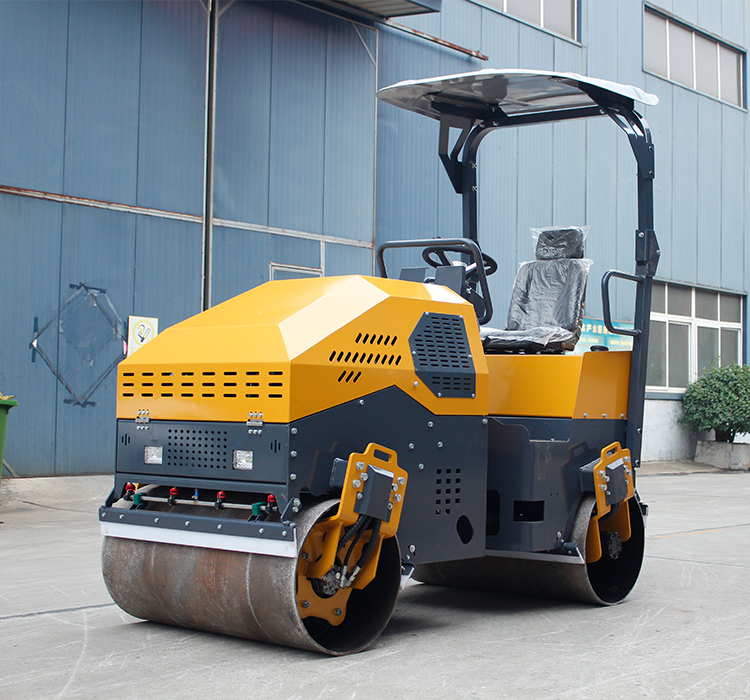
1. Steel-Wheel Rollers (Single/Double Drum)
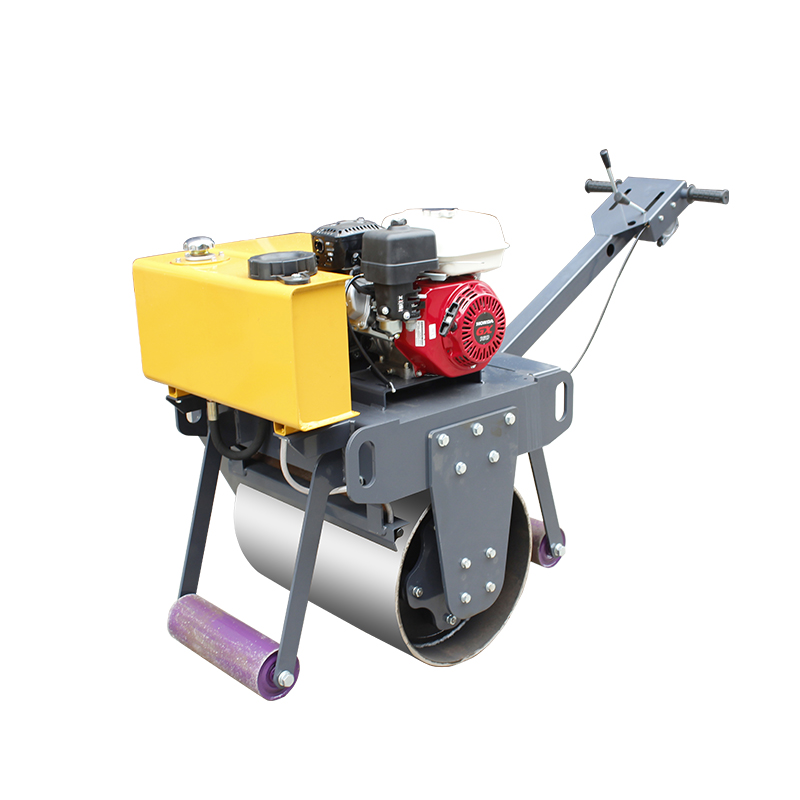
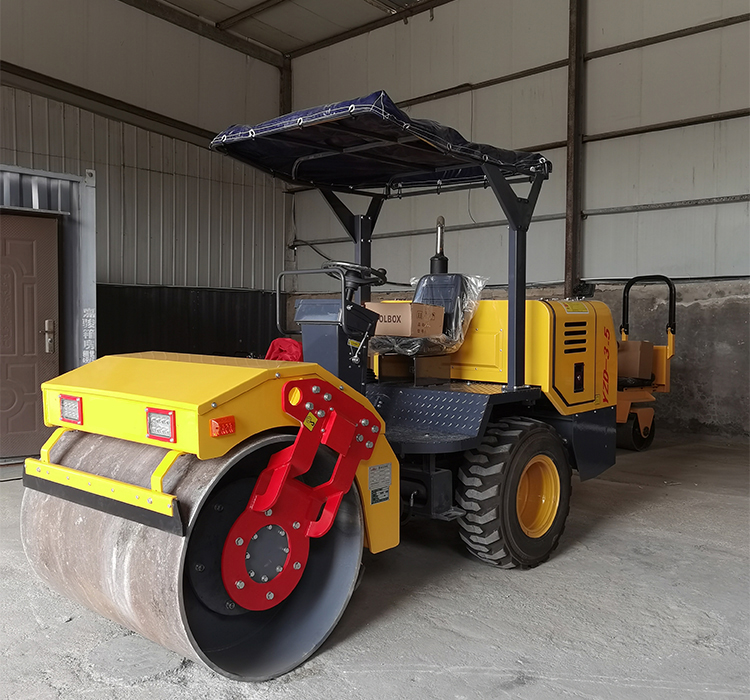
Single-drum: Features a heavy front steel wheel (vibratory/static) and rear rubber tires for propulsion; mainly used for subgrade compaction.
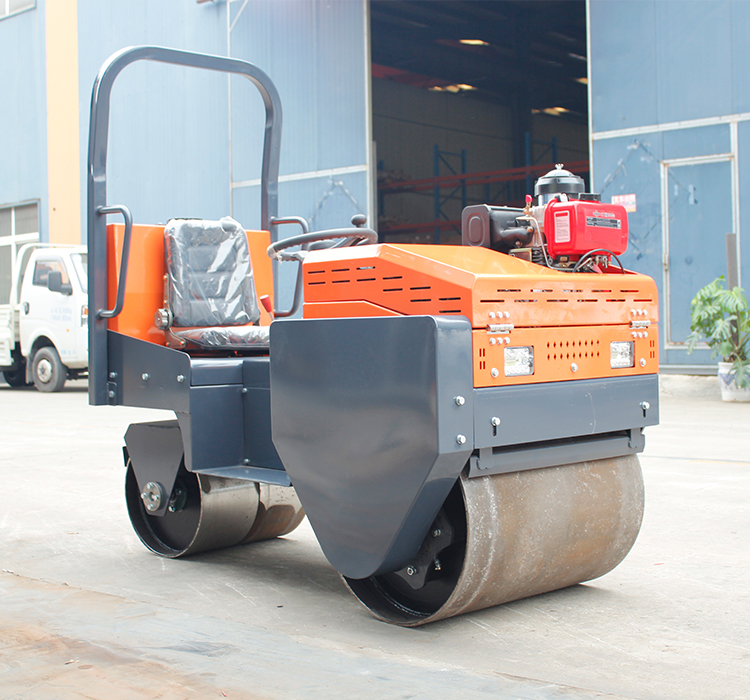
Double-drum: Both front and rear steel wheels (vibratory capable); used for asphalt pavement compaction with adjustable vibration modes.
2. Pneumatic-Tire Rollers
Utilizes multiple overlapping tires for kneading, reducing porosity and ensuring uniform asphalt mix compaction.
3. Combination Rollers
Integrates steel-wheel vibration + tire kneading (e.g., front vibratory drum + rear tires), adaptable to diverse conditions.
III. Power Transmission Process (Vibratory Roller Example)
Engine → Hydraulic pump → Hydraulic motor → Drives wheel rotation/vibration.
Vibration system: Hydraulic motor rotates eccentric weights to generate impact force.
Steering system: Hydraulic cylinders control steering for precise rolling paths.
IV. Key Parameters Affecting Compaction
| Parameter | Role | Typical Range |
|---|---|---|
| Linear load (N/cm) | Pressure per unit length; determines compaction depth | 200–600 N/cm |
| Amplitude (mm) | Vibration intensity; affects depth | 0.3–2.0 mm |
| Frequency (Hz) | Vibration speed; impacts efficiency | 30–50 Hz |
| Rolling speed (km/h) | Excessive speed reduces effectiveness | 2–6 km/h |
V. Summary
Static compaction: Relies on weight; ideal for initial passes or sensitive materials.
Vibratory compaction: Uses high-frequency impacts; highly efficient and versatile.
Pneumatic-tire compaction: Delivers kneading action for superior asphalt density.
Optimizing parameters (amplitude, frequency, speed) enhances results.
Road rollers achieve engineered material density through static pressure, vibration, or kneading, making them indispensable in road construction and foundation work.