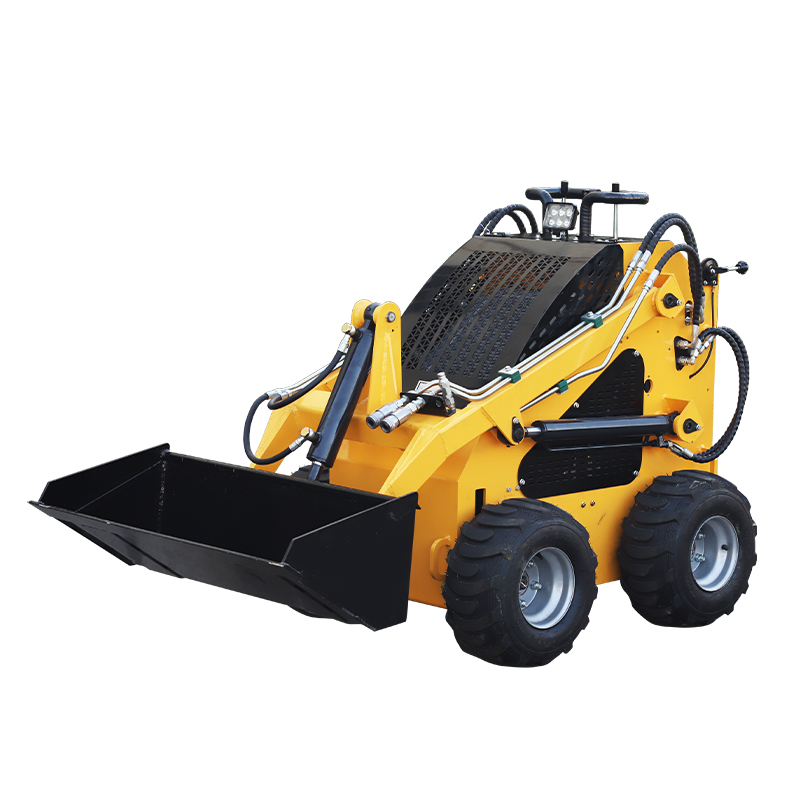
When a loader shovels materials, it is necessary to follow the process of "Preparation - Shoveling - Bucket Retraction - Movement". Operating step by step can improve efficiency and protect the equipment. The specific steps are as follows:
After starting the loader, let it idle for 3-5 minutes until the hydraulic system pressure and engine temperature reach the normal range.
Inspect the operation site, clear obstacles (such as stones and pipelines), and check whether the material stacking area is flat to avoid the loader getting stuck or colliding during operation.
Adjust the bucket angle to keep the bucket flat (with the bucket teeth close to the ground), then drive slowly towards the material pile. Maintain the body at a right angle or 45° angle to the material pile to ensure uniform force bearing.
Approach the material pile at a low speed. When the bucket teeth are about 30cm away from the materials, slightly lift the boom to tilt the tips of the bucket teeth slightly downward (at an angle of approximately 5°-10°), which facilitates cutting into the materials.
Slowly increase the throttle and push the boom control lever to make the bucket cut into the materials at a constant speed. Avoid stepping on the throttle hard or forcing the bucket to cut in, so as to prevent damage to the bucket teeth or slipping of the tires.
After the bucket cuts into the materials to a certain depth (about 2/3 of the bucket capacity), stop moving forward, pull the bucket control lever to flip the bucket backward, and collect the materials into the bucket.
At the same time, slowly lift the boom to keep the bottom of the bucket 30-50cm above the ground to prevent the bucket bottom from scraping the ground. If the materials are relatively loose, you can gently step on the brake or move the body slightly forward and backward, and use inertia to make the materials fill the gaps in the bucket.
Check whether the bucket is full of materials. If the materials on one side are insufficient, you can fine-tune the angle of the body and flip the bucket again to supplement the materials, so as to avoid the body tilting due to unbalanced load.
After confirming that the bucket is full, fix the bucket at an appropriate height (it will not collide with obstacles during driving and is easy to operate during unloading), engage the appropriate gear, and drive steadily to the unloading point. Avoid sudden acceleration, sudden braking or sharp turns during driving.



 Chinese