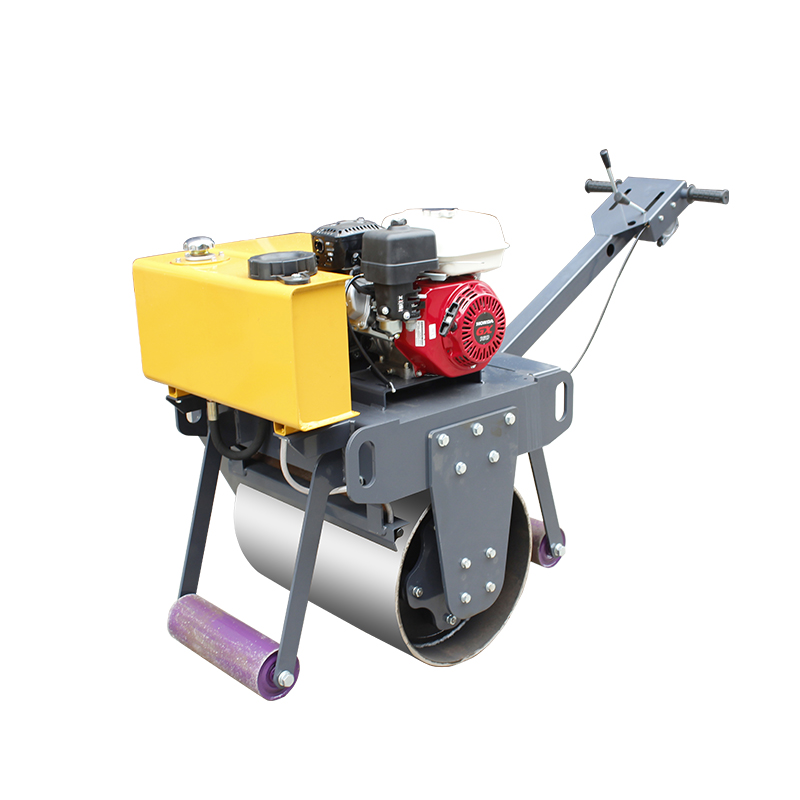
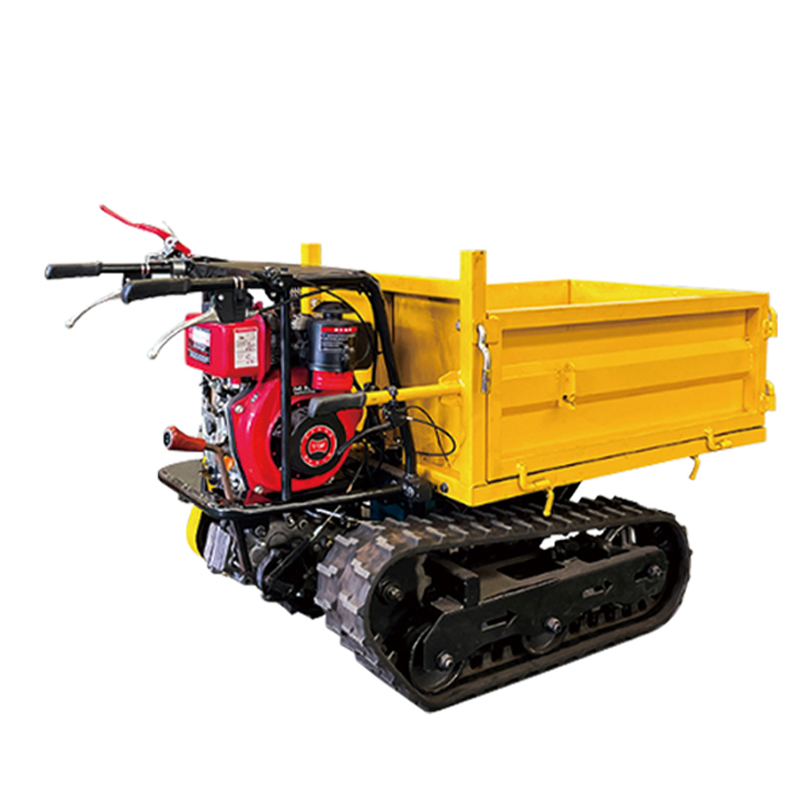
Small-sized crack sealing machines usually have a power range of 5-15kW, a material tank capacity of ≤100L, and their bodies are mainly hand-pushed, small towed, or vehicle-mounted. They are lightweight and flexible, suitable for refined operations under low-load and complex working conditions. The specific scenarios include:
Urban Branch Roads and Community Roads: These roads have low traffic volume, with cracks scattered, short in individual length, and narrow in width. Meanwhile, the roads are narrow with many turns, making it difficult for large equipment to move flexibly. Small-sized machines can accurately handle local cracks.
Sidewalks and Non-Motorized Lanes: Cracks on sidewalks are scattered and close to pedestrian areas. Small-sized machines have low noise and occupy little space, which can reduce interference to pedestrian traffic. Non-motorized lanes have low pavement load, and crack repair mainly focuses on local patching without large-scale operations, so small-sized machines can be efficiently adapted.
Rural Highways and County/Township Roads: These roads have long mileage but extremely low traffic volume, with cracks appearing sporadically. Some road sections have poor conditions (many potholes and steep slopes). Small-sized machines are convenient for transportation—they can be transferred by small trucks or tractors—and are suitable for mobile single-point repair.
Roads in Enclosed Areas: Such as parking lots and residential courtyards. These spaces are limited and have many obstacles (parking lines, speed bumps, manhole covers, etc.), where large equipment cannot enter. Small-sized machines can flexibly move between obstacles to complete repairs.
Emergency Repairs and Small-Scale Maintenance: When a small number of emergency cracks appear on main roads, small-sized machines can be quickly dispatched to complete temporary treatment without affecting the large-area traffic of the main road. They are also suitable for the daily small-scale inspection and repair work of municipal departments.
Road Sections with Special Terrains: For example, local cracks on sharp bends of mountain roads, tunnel entrances/exits, and sidewalk cracks on urban bridges—spaces with restrictions. Small-sized machines have significant advantages in mobility and can achieve precise operations.
Large-sized crack sealing machines mostly have a power of ≥20kW and a material tank capacity of ≥200L. Most are towed or large vehicle-mounted, and some are equipped with functions such as automatic temperature control, high-pressure crack cleaning, and continuous material supply. They have high operation efficiency and are suitable for large-scale, high-load concentrated operations. The specific scenarios include:
Expressways, National Highways, and Provincial Highways: These roads have high traffic volume, with pavement cracks distributed on a large scale (long individual length and high density), and have high requirements for operation efficiency (needing to shorten traffic control time). Large-sized machines can supply materials continuously and process cracks in batches. Their high-pressure crack cleaning and constant-temperature material discharge functions can also meet the strict requirements of high-grade highways for repair quality (such as sealing durability and waterproofness).
Urban Main Roads and Express Roads: Cracks on main roads are distributed in a connected manner due to heavy vehicle loads and long-term rolling. Operations are mostly carried out concentratedly at night to avoid peak hours. Large-sized machines can complete large-area repairs in a short time, reducing the continuous impact of night construction on traffic. Some equipment is equipped with lighting and warning devices, which can also adapt to the needs of night operations.
High-Load Special Roads: Such as airport runways and freight terminal roads. These pavements bear high-pressure loads from aircraft, container vehicles, etc., and have extremely high requirements for the heating stability of crack repair materials and the compactness of crack sealing. The precise temperature control system (ensuring the constant temperature flow of crack sealing materials) and high-pressure grouting device (ensuring full filling of cracks) of large-sized crack sealing machines can meet the durability repair needs of high-grade pavements. At the same time, their batch operation capability is adapted to large-area pavement maintenance plans.
Large-Scale Road Maintenance Projects: For example, crack pre-treatment after highway reconstruction and expansion, and comprehensive crack repair projects for old pavements. These projects have a large number of cracks and concentrated distribution. Large-sized machines can cooperate with supporting equipment such as crack cleaning machines and blowers to form an operation assembly line, greatly improving overall construction efficiency and reducing labor costs.
Long-Distance Continuous Operation Scenarios: Such as crack maintenance of inter-provincial national highways and repair of roads inside large industrial parks. These scenarios require equipment to have long-term continuous operation capabilities. The large-capacity material tanks (reducing the frequency of material addition) and stable power systems (avoiding mid-operation failures) of large-sized machines are more suitable for such long-distance and non-intermittent operation needs.
| Aspect | Small-Sized Machines | Large-Sized Machines |
|---|
| Operation Efficiency | Daily operation volume is only a few hundred meters, suitable for single-point repair. | Daily operation volume can reach several thousand meters, adapted to batch continuous operation. |
| Mobility | Significant advantages, capable of handling narrow and complex terrains. | Poor mobility, dependent on open and flat operation spaces. |
| Applicable Crack Characteristics | Targeting scattered, short, and narrow cracks. | Targeting concentrated, long, and wide cracks. |
| Adaptation to Road Grade & Type | Mostly used for low-grade roads and local areas (branch roads, sidewalks, etc.). | Mostly used for high-grade roads and large-scale projects (expressways, main roads, etc.). |
| Supporting Requirements | Only need manual assistance, no complex supporting equipment required. | Need to cooperate with crack cleaning machines, traffic guidance equipment, etc., to form an assembly line. |
| Cost | Low investment and operation costs, suitable for small-budget projects. | High investment and operation costs, more suitable for large-scale projects. |



 Chinese