
 Chinese
- HOME >> NEWS >> Industry news
NEWS
Latest Product
Contact Us
What Are Common Road Roller Failures and How to Troubleshoot Them?
2025-05-29Road rollers may encounter various operational failures that impact work efficiency. Below are 8 common failure types, including cause analysis and solutions, covering mechanical, hydraulic, and electrical systems.
1. Engine Fails to Start or Lacks Power
Possible Causes:
Dead battery/corroded terminals
Fuel system issues (clogged filter, air in fuel lines)
Severely clogged air filter
Faulty fuel injectors/spark plugs (diesel/gasoline engines)
Troubleshooting:
✅ Electrical Check:
Measure battery voltage (≥12.6V), clean terminals, test jump-start.
✅ Fuel System:Bleed air from fuel lines (manual priming for diesel engines).
Replace fuel filter, check fuel pump pressure.
✅ Air Intake:Clean/replace air filter; inspect turbocharger (if equipped).
2. Vibration System Failure
Possible Causes:
Faulty vibration switch/wiring
Low/contaminated hydraulic oil
Damaged eccentric bearing
Hydraulic motor/pump failure
Troubleshooting:
✅ Electrical Test:
Use a multimeter to check switch circuit continuity.
✅ Hydraulic System:Check oil level, replace clogged filters, bleed air.
Test hydraulic pump pressure (refer to manual).
✅ Mechanical Parts:Inspect eccentric bearings (replace if noisy/loose).
Check for broken vibration drum bolts.
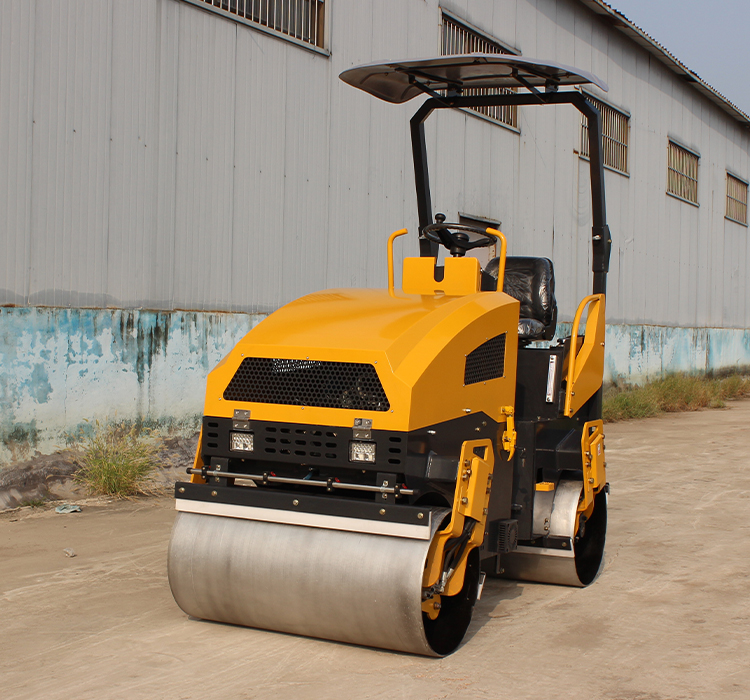
3. Weak Travel or Deviation
Possible Causes:
Uneven tire pressure (pneumatic rollers)
Brakes not fully released
Internal leakage in travel motors
Low oil in gearbox/chain drive
Troubleshooting:
✅ Tires/Drums:
Adjust tire pressure; check drum wear symmetry.
✅ Brakes:Release parking brake; inspect brake caliper return.
✅ Hydraulic Test:Compare left/right motor pressures; repair if uneven.
✅ Drive System:Lubricate chains; refill gearbox oil.
4. Hydraulic Oil Overheating
Possible Causes:
Degraded/low hydraulic oil
Clogged radiator
System overload (relief valve pressure too high)
Troubleshooting:
✅ Oil Check:
Replace contaminated oil; flush tank; use correct oil grade.
✅ Cooling System:Clean radiator fins; check fan belt tension.
✅ Pressure Adjustment:Test system pressure; adjust relief valve to specs.
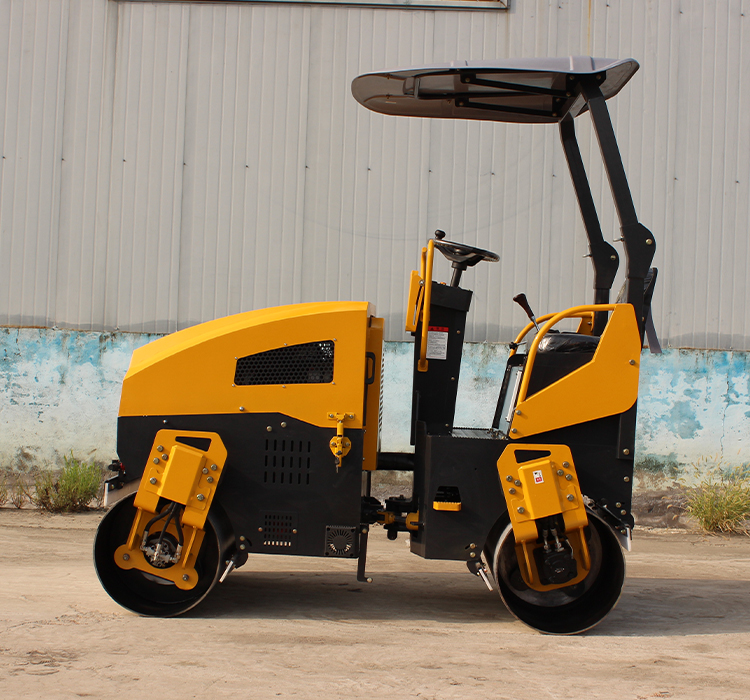
5. Abnormal Drum/Tire Wear
Possible Causes:
Worn/missing drum scrapers
Incorrect tire pressure
Sharp debris in compacted material
Troubleshooting:
✅ Drum Maintenance:
Replace scrapers; repair deep scratches (weld/grind).
✅ Tire Care:Maintain proper pressure (e.g., 0.35 MPa); avoid uneven wear.
Clear rocks/rebar from worksite.
6. Brake Failure
Possible Causes:
Low/contaminated brake fluid
Worn brake pads/discs
Air leaks (air-brake models)
Troubleshooting:
✅ Hydraulic Brakes:
Refill fluid; bleed air; replace pads.
✅ Air Brakes:Fix air leaks; replace desiccant.
7. Dashboard Warnings (Oil/Hydraulic/Temperature)
Possible Causes:
Faulty sensors
Actual oil pressure/overheating
Troubleshooting:
✅ Sensor Test:
Short-circuit sensor wire; if alarm stops, replace sensor.
✅ Actual Values:Check oil pressure (≥0.1 MPa at idle).
Verify temperature with infrared thermometer.
8. Poor Compaction (Low Density)
Possible Causes:
Incorrect vibration frequency/amplitude
Excessive rolling speed
Improper material moisture (soil compaction)
Troubleshooting:
✅ Parameter Adjustment:
Use low frequency + high amplitude for clay; high frequency + low amplitude for gravel.
Limit speed to 2–4 km/h.
✅ Material Handling:Keep soil moisture within optimum ±2% range.
Quick Troubleshooting Flow
Symptom → Check electrical/hydraulic systems → Test pressure/sensors → Inspect mechanical parts → Repair/replace
Preventive Tips
Pre-shift inspection: 10-minute visual check (fluids, tires, fasteners).
Maintenance logs: Track failures to reinforce weak points.
Operator training: Avoid abrupt stops/overloading.
Following systematic diagnostics and maintenance can reduce >80% of common failures, ensuring efficient roller operation.