

 Chinese
- HOME >> NEWS >> Company news
NEWS
Latest Product
Contact Us
What Are the Characteristics of the Turning Radius of Tracked Transporters?
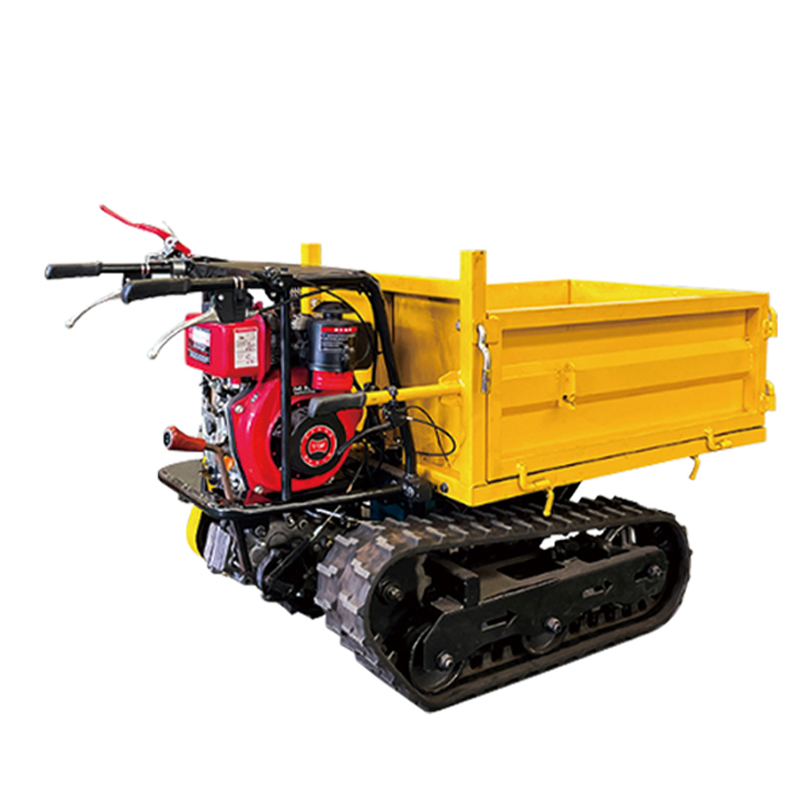
2025-10-16The core turning characteristic of tracked transporters is that they can achieve an extremely small turning radius, even pivot steering (turning in place). This is directly related to their structural feature of independent track drive. The specific characteristics and principles are as follows:
1. Extremely Small Turning Radius, Supporting Pivot Steering
The left and right tracks of a tracked transporter can be independently controlled in terms of rotational speed and direction. By creating a speed difference between the left and right tracks or making them rotate in opposite directions, turns with different radii can be achieved, with the minimum being a zero turning radius (i.e., pivot steering).
2. Turning Radius Not Limited by Wheel Steering Angle
The turning radius of wheeled transporters depends on the wheel steering angle: the larger the angle, the smaller the radius. However, restricted by the physical structure of the steering mechanism, their minimum turning radius is fixed and usually relatively large (for example, the minimum turning radius of small cars is mostly 5-10 meters). In contrast, tracked transporters do not rely on wheel steering; their turning is completely controlled by the speed difference between the tracks, with no physical angle limitations. Therefore, they can adapt to operations in narrow spaces, such as fields, workshops, ruins, and other scenarios that require frequent turning.
3. Relatively Controllable Ground Damage During Turning
Tracks have a large ground contact area. During turning, the friction between the tracks and the ground is sliding friction, which will cause certain scratches on the ground. However, compared with wheeled vehicles (where the local pressure on the tires is concentrated during turning, easily compacting or scratching the ground), tracked transporters cause more uniform damage on soft ground (such as farmland and grasslands) and are less likely to cause local deep sinking.