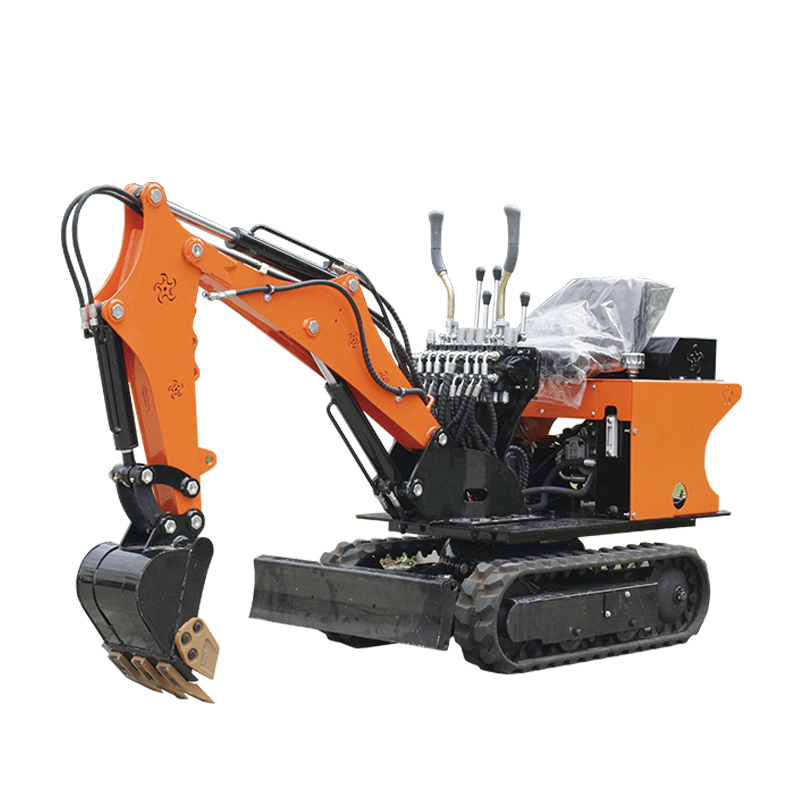
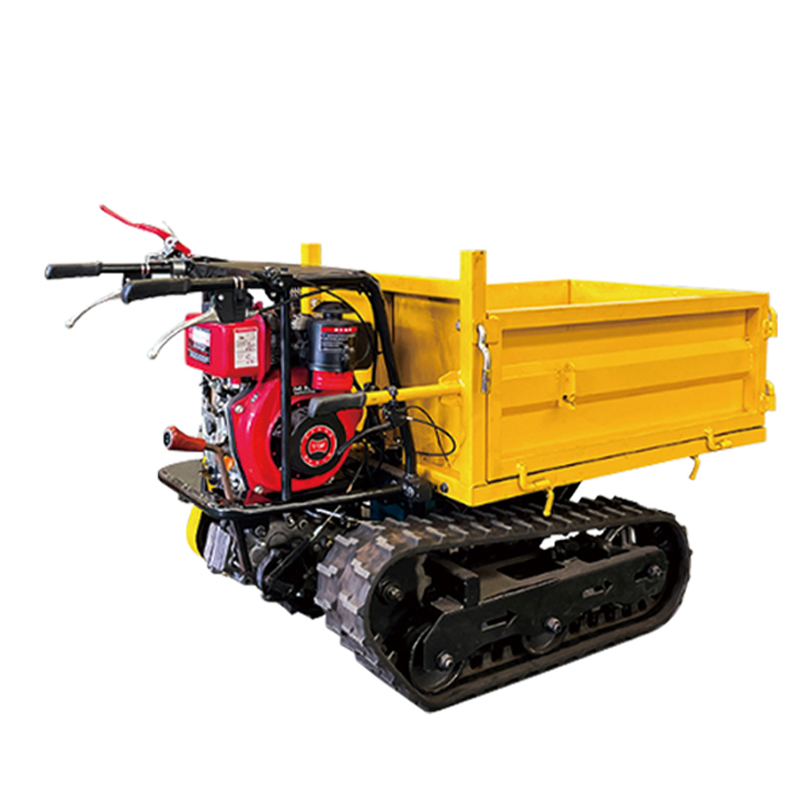
The core of driving a tracked transporter on muddy roads is to prevent the tracks from slipping and getting stuck, and to protect the running gear. Key attention should be paid to three aspects: driving operation, track condition, and route selection. The specific precautions are as follows:
Keep driving at a constant speed and avoid sudden acceleration or deceleration. Sudden acceleration or deceleration will cause a sudden change in the adhesion between the tracks and the mud, which is likely to lead to slipping and even make the tracks sink deeper into the mud.
Decelerate and increase the turning radius when turning. The grip of the tracks on muddy roads decreases; rapid turning or small-radius turning may cause one side of the track to idle, increasing the risk of getting stuck. It is recommended to reduce the speed to 1/3 of the normal driving speed when turning.
Prohibit long-term idling or in-place idling of the tracks. When the tracks idle in place, they will continuously stir the mud, forming a deep pit at the ground contact point, making it impossible for the vehicle to drive out.
Stop regularly during driving to clean the mud between the tracks. Mud is easy to get stuck between the track plates, drive wheels, and idler wheels. Excessive accumulation will cause track jamming, derailment, or increase the load on the running gear, leading to mechanical failures.
Check the track tension. The resistance of mud may cause changes in track tension. Too loose tension makes derailment easy, while too tight tension will aggravate component wear. Adjustments should be made in a timely manner according to road conditions.
If track slipping is found, stop moving forward immediately and try to reverse. When reversing, the stress direction of the tracks changes, which may help the vehicle get out of the deep pit. Do not continue to move forward, otherwise the vehicle will sink deeper.
Prioritize routes with existing ruts. Ruts pressed by other vehicles can reduce the sinking depth of the tracks, lower driving resistance, and at the same time avoid misjudging the thickness of the mud when opening a new route.
Avoid waterlogged areas and soft sections. Observe the color of the road surface; dark-colored areas with water accumulation usually have deeper mud. If obvious depressions on the ground or fallen vegetation (such as weeds) in patches are found, detour is necessary, as these areas have poor bearing capacity.
Clear obstacles (such as stones and tree roots) in advance when encountering them. Obstacles in the mud are easy to be covered; rolling over them with tracks may cause deformation of the track plates or damage to the running gear. It is safer to pass after cleaning the obstacles.



 Chinese