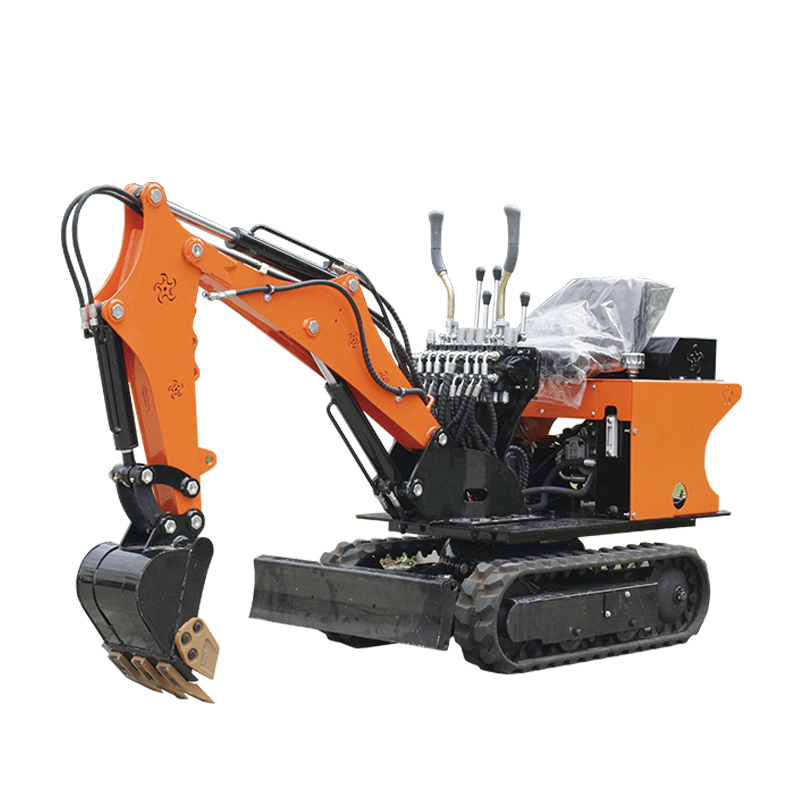
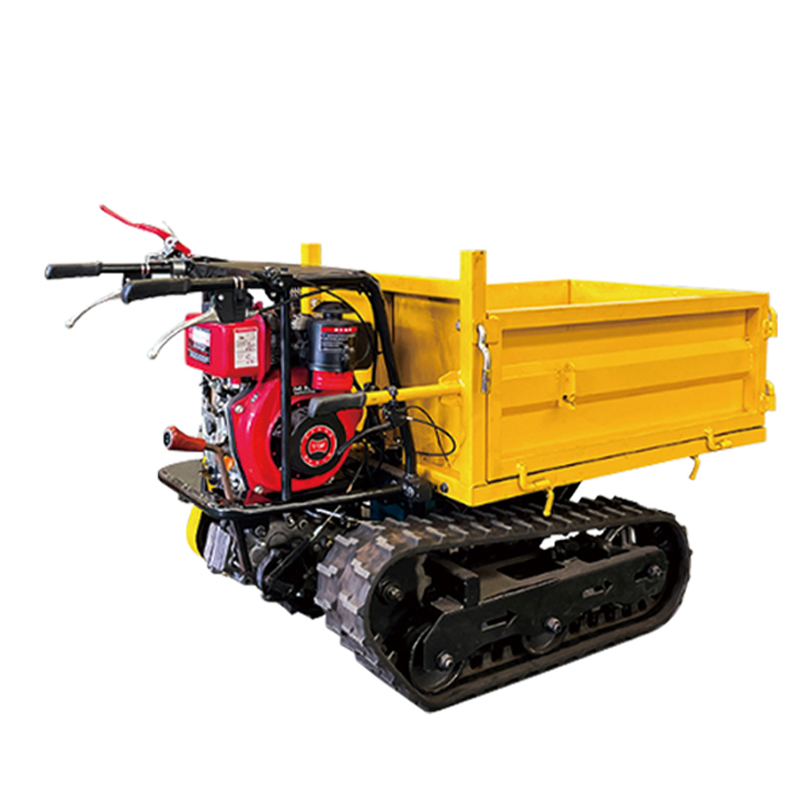
The core of adjusting the track tension of a tracked transporter is to control the track tightness within the standard range by adjusting the expansion and contraction amount of the tensioning device. The specific operation must follow the four-step process of "Preparation - Inspection - Adjustment - Verification". The operation of tensioning mechanisms (hydraulic and mechanical) of different drive types varies slightly.
Park the vehicle on a flat and solid ground, turn off the engine, and pull the handbrake to prevent the vehicle from moving during the adjustment process.
Clean up mud, gravel, and other debris around the track and the tensioning mechanism to avoid impurities jamming and affecting adjustment accuracy.
Prepare corresponding tools: A hydraulic tensioning mechanism requires a hydraulic jack and a pressure gauge; a mechanical one requires a wrench, a crowbar, etc.
First, make a preliminary judgment through visual inspection, then verify it using standard methods:
Visual Inspection: Observe the track sag. Under normal circumstances, when a vertical force (approximately 50-100kg) is applied to the middle section of the track (between the drive wheel and the idler wheel), the track sag should be 30-50mm (refer to the vehicle manual for specific values, as standards vary for models of different tonnages).
Abnormal Conditions: If the sag is too large (track too loose), it may easily cause derailment and abnormal noise during driving; if the sag is too small (track too tight), it will accelerate the wear of track plates and drive wheels and increase fuel consumption.
The hydraulic type realizes expansion and contraction by pushing the idler wheel through a tensioning cylinder, and the operation is more convenient. The steps are as follows:
Locate the oil filling port and oil drain port of the tensioning mechanism, which are usually located inside the guard plate on one side of the idler wheel.
If the track is too loose: Connect a hydraulic jack to the oil filling port, slowly inject hydraulic oil to push the idler wheel to move outward. At the same time, observe the track sag, stop oil injection when it reaches the standard, and close the valve.
If the track is too tight: Slowly open the valve of the oil drain port to release part of the hydraulic oil, allowing the idler wheel to retract inward under the action of track tension until the sag meets the standard, then close the oil drain port.
The mechanical type pushes the idler wheel by adjusting the length of the screw. The steps are as follows:
Loosen the lock nut on the tensioning screw, and use a wrench to turn the screw (turning the screw clockwise moves the idler wheel outward and tightens the track; turning it counterclockwise moves the idler wheel inward and loosens the track).
Check the track sag while turning the screw. When it reaches the standard, use a wrench to lock the nut to prevent the screw from loosening.
Start the vehicle and drive at a low speed for 100-200 meters on a flat road, observing whether the track makes abnormal noise or deviates.
After parking, check the track sag again to confirm that there is no change, and that the tensioning mechanism has no oil leakage and the screw is not loose. Then the adjustment is completed.



 Chinese