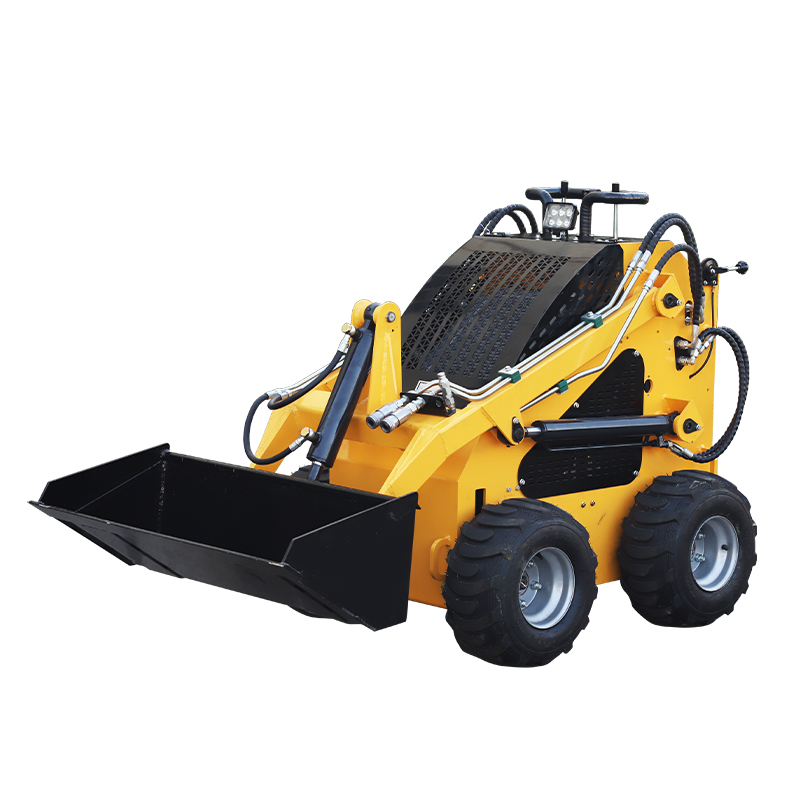
Loader hydraulic oil must be replaced regularly. Unlike engine oil, it does not have intuitive consumption, but long-term use will cause hydraulic system failures (such as slow lifting and component wear) due to oxidation, contamination, and performance degradation. It is generally recommended to replace it every 2,000-3,000 operating hours or 1 year, whichever comes first.
Replacing hydraulic oil is not simply "draining the old oil and adding new oil". If the operation is improper (e.g., residual old oil or mixed impurities), the new oil will be quickly contaminated and unable to function. Key links such as oil selection, system cleaning, and air bleeding must be focused on.
Hydraulic oil gradually "fails" during use, and failure to replace it will directly damage the hydraulic system. There are 3 core reasons:
Oil Oxidation and Deterioration: Hydraulic oil works in a high-pressure and high-temperature environment for a long time (system temperature can reach 60-80°C), and it reacts with air to oxidize, generating impurities such as sludge and carbon deposits. These impurities will clog hydraulic filters and pipelines, reducing oil fluidity and slowing down actions such as lifting and steering.
Contamination Aggravates Wear: During operation, dust and metal shavings (from the wear of hydraulic pumps and cylinders) will mix into the oil. Even with filter filtration, fine impurities still remain. These impurities act like "sandpaper", wearing the hydraulic pump, valve core, and cylinder seals, shortening the service life of components, and in severe cases, leading to pump body scrapping.
Decline in Performance Indicators: Key indicators of hydraulic oil (such as viscosity, wear resistance, and anti-foaming property) will degrade over time. For example, increased viscosity will increase flow resistance, causing system pressure loss; reduced wear resistance will leave hydraulic components without sufficient lubrication, accelerating wear.
The hydraulic oil type must strictly match the requirements in the loader manual, with a focus on viscosity grade and performance rating:
Viscosity Grade: Select based on the operating environment temperature. For example, choose low-viscosity oil (such as ISO VG32) in low-temperature environments (below -10°C), and high-viscosity oil (such as ISO VG68) in high-temperature environments (above 40°C). Using the wrong viscosity will cause jerky lifting at low temperatures and insufficient pressure at high temperatures.
Performance Rating: Loaders commonly use "anti-wear hydraulic oil" (with ratings such as HM46 and HM68). This type of oil contains anti-wear additives to protect precision components such as hydraulic pumps and cylinders. It cannot be replaced with ordinary mechanical oil (such as L-AN oil), otherwise, component wear will be accelerated.
Prohibit Mixing: Even if hydraulic oils of different brands and types have the same viscosity, their additive formulas may differ. Mixing may cause chemical reactions, generating precipitates or rendering the oil ineffective. The old oil must be completely drained before adding new oil.
Residual old oil will contaminate the new oil, shortening the service life of the new oil by more than 50%. Note the following when draining old oil:
Drain Oil While Hot: After 1-2 hours of operation (when the hydraulic oil temperature rises to 40-60°C), the oil has good fluidity, and impurities are more likely to be discharged with the oil. At this time, open the drain valve at the bottom of the oil tank and let the old oil flow out completely (usually taking 30-60 minutes until no oil drips out).
Clean Impurities at the Bottom of the Tank: After draining the oil, open the tank cover and wipe the sludge and impurities at the bottom of the tank with a clean cotton cloth (do not use cotton yarn, as it will shed fibers). If there are many impurities, add a small amount of new oil to rinse the tank and then drain it again.
Inspect and Clean Hydraulic Filters: Hydraulic oil filters (including suction filters and return filters) are key to filtering impurities. When replacing the oil, the filters must be replaced or thoroughly cleaned at the same time (paper filters are recommended to be replaced directly; metal filters can be rinsed with diesel and dried) to prevent impurities in the filters from re-entering the new oil.
The hydraulic system has extremely high requirements for cleanliness (impurities with a particle size exceeding 10μm may damage components). Take dust-proof measures when filling oil:
Use Special Oil Filling Equipment: Use an oil filling 壶 or oil filling pump with a filtering function. Do not invert the oil drum directly for filling (the drum mouth may have dust). It is best to filter the new oil through a filter with a pore size of less than 10μm before adding it.
Keep the Oil Filling Port Clean: Before opening the oil tank filling port, wipe the area around the port with a clean cloth to prevent dust and debris from falling into the tank. When filling oil, do not let the oil outlet of the filling 壶 touch the edge of the filling port to avoid contamination.
Control the Oil Filling Amount: Fill the oil according to the "MIN" and "MAX" scales on the side of the tank. The oil level should be between the two scales (usually filled to 2/3 of the scale line). A too-low oil level will cause the hydraulic pump to suck in air, generating air pockets; a too-high oil level will cause the oil to expand and overflow when heated, polluting the environment and causing waste.
After adding new oil, air may remain in the system. If not bleed, it will cause "jerky lifting and abnormal noise", and even damage the hydraulic pump. Follow these bleeding steps:
No-Load Cycle Bleeding: Start the engine and let it run at idle speed. Lift and lower the bucket, extend and retract the boom, and repeat the operations 10-15 times (each action should reach the limit position, such as lifting the bucket to the highest level and lowering it to the lowest level). This allows air to be discharged with the oil circulation and escape from the vent hole at the top of the tank.
Check for Remaining Air: After bleeding, observe whether the lifting action is smooth. If there is still jerking or abnormal noise, open the air bleed valve at the top of the cylinder (available on some models), slowly lift the bucket until oil without air bubbles flows out of the air bleed valve, then close the valve.
After each oil replacement, keep a record to track the maintenance cycle and avoid omissions:
Record Content: Include the replacement date, operating hours, new oil type, oil filling amount, and filter replacement status. The record can be pasted on the side of the oil tank or entered into the equipment maintenance manual.
Maintain According to Cycle: Based on the record, the next replacement time is calculated according to "2,000-3,000 hours" or "1 year". If the operating environment is harsh (e.g., dusty, high-temperature), the replacement cycle can be appropriately shortened (e.g., 1,500-2,000 hours).
Waste hydraulic oil is a hazardous waste and cannot be discharged or discarded randomly. It must be disposed of in compliance with regulations:
Collect and Store: Put the drained old oil into a sealed special oil drum, mark it clearly as "Waste Hydraulic Oil", and avoid mixing it with other waste liquids (such as engine oil and diesel).
Hand Over to Professional Institutions: Contact a qualified waste oil recycling company for disposal. Do not pour it into the soil, sewers, or incinerate it, as this will pollute the environment and may violate environmental protection laws and regulations.



 Chinese