


What Are the Core Differences Between Skid-Steer Loaders and Ordinary Wheel Loaders?
2025-09-26
Structural Design
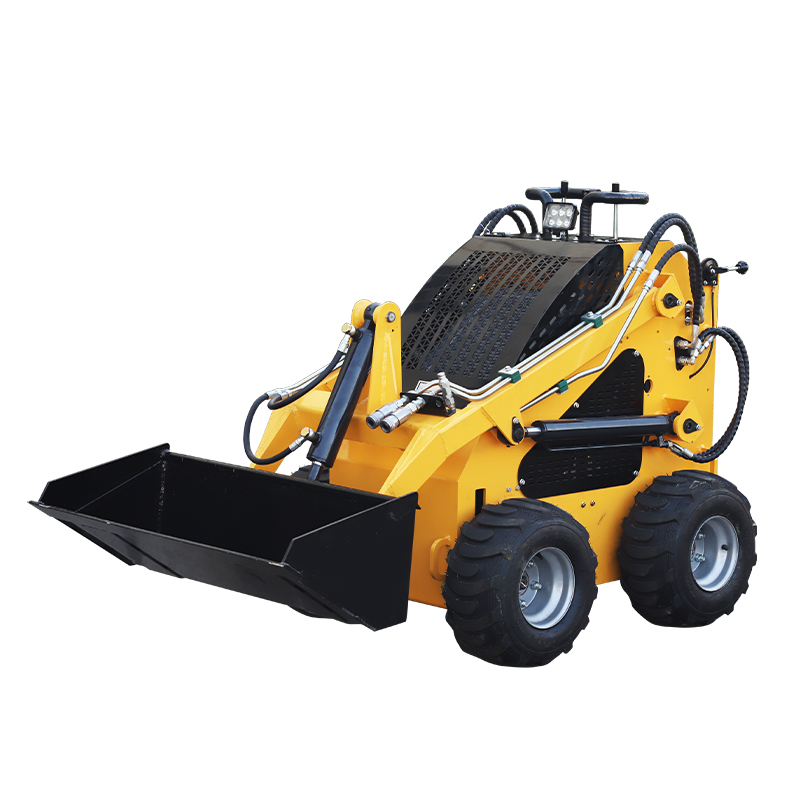
Skid-Steer Loaders: They feature a compact structure, usually adopting an integral frame. Components such as the engine and hydraulic system are compactly arranged within the frame.
Ordinary Wheel Loaders: They generally use an articulated frame, which consists of front and rear frames connected by an articulation point. This structure allows the vehicle body to "bend" during steering, adapting to the need for a larger turning radius.
Operational Flexibility
Skid-Steer Loaders: They offer excellent flexibility. In addition to in-place steering, they can also achieve multi-directional movements such as lateral shifting, enabling complex operations in narrow spaces.
Ordinary Wheel Loaders: Their operational flexibility is relatively poor. They mainly perform forward, backward, and steering movements, and their operational convenience in narrow spaces is not as good as that of skid-steer loaders.
Lifting Capacity and Working Range
Ordinary Wheel Loaders: Due to their larger size and more robust structure, they usually have higher lifting capacity and a larger working range. They can lift heavier materials and load them to higher and farther positions.
Skid-Steer Loaders: Their lifting capacity and working range are relatively smaller. However, some new types of skid-steer loaders with vertical lifting and radial lifting functions have seen improvements in their lifting performance.
Operational Efficiency
Ordinary Wheel Loaders: In large-scale material loading and unloading operations, they achieve higher operational efficiency by virtue of their larger loading capacity and faster driving speed.
Skid-Steer Loaders: In scenarios that are small-scale, scattered, and require frequent replacement of operating tools and work locations, they can quickly replace working devices and move flexibly, thus having more advantages in operational efficiency.
Procurement and Operating Costs
Skid-Steer Loaders: Generally, their overall procurement cost is relatively low. The price of wheeled skid-steer loaders is relatively affordable, while the procurement cost of tracked skid-steer loaders is slightly higher. In terms of operating costs, the tire maintenance cost of wheeled skid-steer loaders is relatively low; the maintenance cost of the track and frame structure of tracked skid-steer loaders is slightly higher, but the service life of the track is longer.
Ordinary Wheel Loaders: Although their manufacturing cost is not high, their overall operating cost cannot be ignored due to their higher fuel consumption and faster tire wear.