
 Chinese
- HOME >> NEWS >> Industry news
NEWS
Latest Product
Contact Us
Which Is More Convenient to Maintain, a Crawler Excavator or a Wheeled Excavator?
2025-12-25Overall, wheeled excavators are more convenient to maintain than crawler excavators. The core difference stems from the structural complexity, component vulnerability, and disassembly difficulty of their respective traveling mechanisms. The specific distinctions are as follows:
Differences in Maintenance Difficulty of Traveling Mechanisms
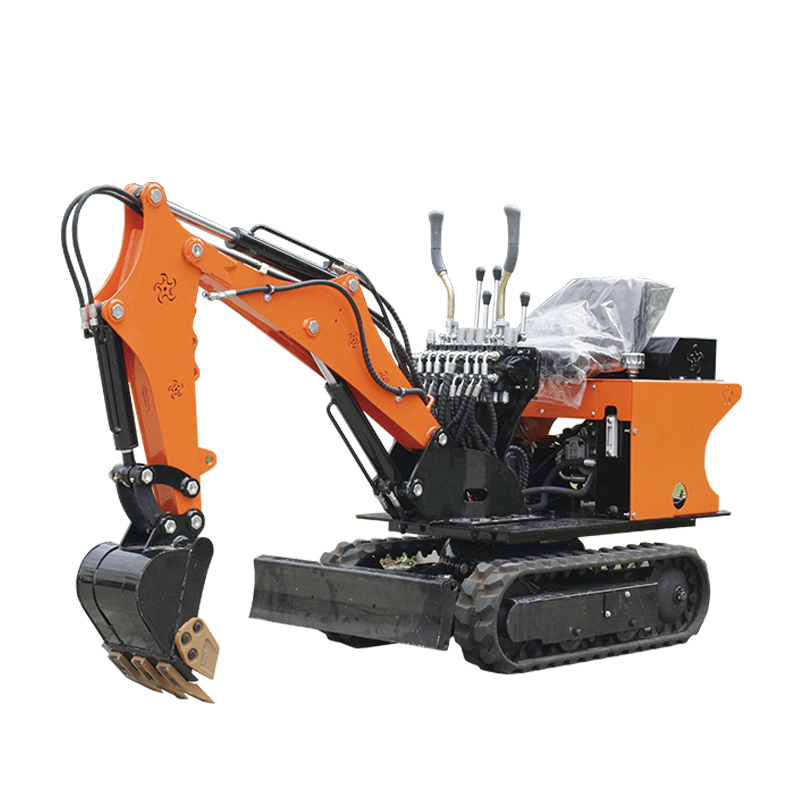
The traveling system of a crawler excavator has a sophisticated structure, consisting of dozens of components such as track shoes, carrier rollers, top rollers, idlers, drive sprockets, and tensioning devices. Most of these components are designed for heavy-duty wear resistance, featuring large size and heavy weight. In daily maintenance, troubleshooting faults like broken track shoes, jammed carrier rollers, or oil leaks in tensioning cylinders requires specialized tools such as cranes and jacks for disassembly. Some components (e.g., top rollers) can only be replaced after lifting the entire machine, which is time-consuming and labor-intensive. Meanwhile, soil and gravel are prone to getting entangled in the tracks during operation, requiring extra time to clean debris from the chassis and component gaps.
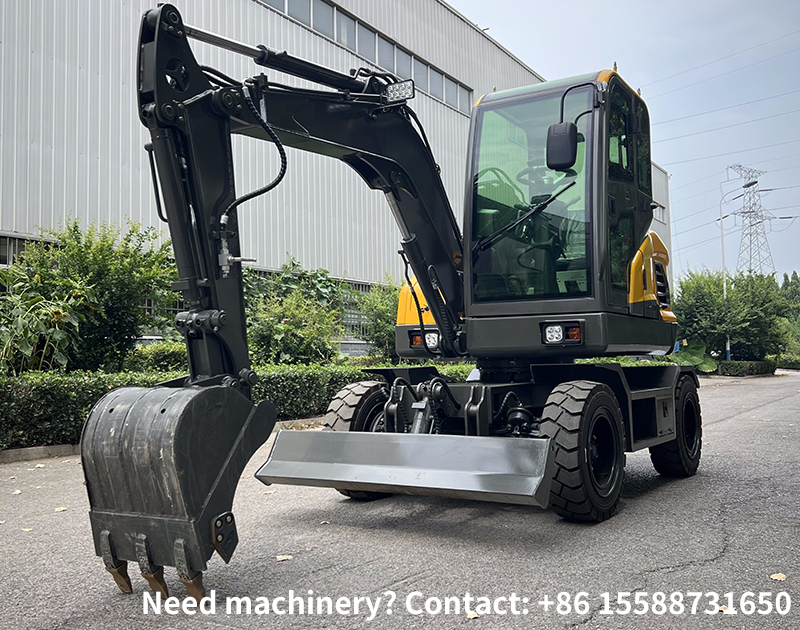
The traveling system of a wheeled excavator is similar to that of an automobile chassis, with core components including tires, wheel hubs, drive shafts, and differentials, resulting in a relatively simple structure. Faults such as tire wear or punctures can be fixed directly with a jack without large-scale tools. Maintenance of the transmission system (e.g., gear oil replacement, drive shaft inspection) follows standardized procedures that can be performed by ordinary maintenance personnel. The wheeled structure also offers a higher ground clearance for the chassis, facilitating inspection and repair of undercarriage components, as well as easier debris cleaning.
Differences in Replacement Efficiency of Wear Parts
The wear parts of a crawler excavator (track shoes, bucket teeth, carrier rollers) have a high replacement frequency. Moreover, some wear parts (e.g., carrier rollers) adopt a sealed structure and must be replaced entirely once damaged, leading to high costs for both parts and labor hours. Adjusting track tension also requires professional operation—over-tightening or under-tightening will accelerate component wear.
The main wear parts of a wheeled excavator are tires and brake pads, which can be replaced quickly and easily. The parts also have high universality (some tires are interchangeable with those of engineering vehicles of the same tonnage), resulting in lower procurement and replacement costs. Daily maintenance only involves checking tire pressure and the tightness of wheel hub bolts, setting a low threshold for upkeep.
Differences in Flexibility for Translocation Maintenance
Crawler excavators have a slow self-propulsion speed (generally less than 5km/h). If a traveling system fault renders them inoperable, a trailer must be arranged to transport the machine to a repair shop, adding extra costs and time for relocation. In addition, maintenance of some large crawler excavators requires on-site service by professional technicians from the manufacturer, with on-site repair conditions often limited.
Wheeled excavators can travel at a much higher speed (up to 30–40km/h). Even in the event of minor faults, they can be driven directly to a nearby repair shop without additional transportation. The layout of their core components (engine, hydraulic pump) is similar to that of crawler excavators, but the more spacious chassis provides greater operating room for maintenance, making disassembly and assembly more convenient.
Differences in Convenience of Daily Maintenance
Daily maintenance of crawler excavators involves numerous lubrication points on the chassis (e.g., grease nipples on carrier rollers and idlers), which require regular and individual grease refueling. The chassis is also prone to mud accumulation, which must be cleaned before maintenance can be carried out. Hydraulic pipelines are close to the tracks and easily damaged by flying gravel impacts, so inspecting hidden areas is necessary when troubleshooting oil leaks.
Daily maintenance of wheeled excavators focuses on the engine, hydraulic system, and tires. With fewer lubrication points that are all externally accessible, routine tasks (e.g., oil replacement, filter change) can be completed quickly. Operations such as tire pressure testing and tire rotation can be performed directly on the job site, eliminating the need to shut down the machine and send it to a workshop.
Supplementary Note: There is little difference in the maintenance difficulty of their core components (engine, hydraulic pump, slewing mechanism). The gap in maintenance convenience mainly lies in the traveling system. For small construction teams or users without professional maintenance equipment, wheeled excavators are more advantageous due to their low maintenance threshold.